Business & Tech
Too Few Women in Technology, Roswell's Hamilton Says
Vicki Hamilton, president of the Women in Technology Foundation, works to take women from the classroom to the boardroom in STEM fields.
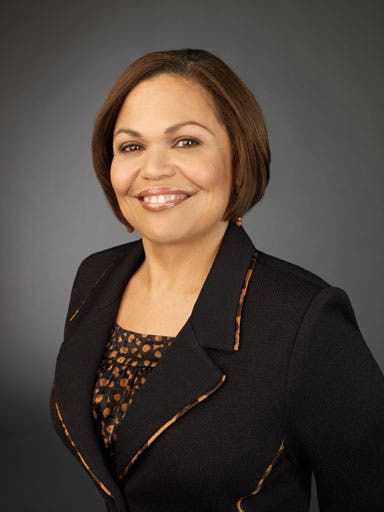
Look into the cubicles where you find software developers and you’ll be struck by the lack of women working as software engineers. That doesn’t sit well with experienced IT executives such as Vicki Hamilton, the current president of the Women in Technology Foundation in metro Atlanta, Georgia.
Hamilton Brings Decades of STEM Experience to WIT
Vicki Hamilton of Roswell knows the struggles of being a woman in what now is a male-dominated field. She’s been working in the technology industry for more than 30 years. She started out as a programmer, worked as a business analyst, moved into operations, then large-scale deployment and next in the executive levels of technology companies. She’s worked in 24/7 global support centers, customer service, network, wide-scaled deployments and as a systems analyst.
In her own company, she partners with people making sure they have the right balance, right skill set and opportunities moving forward.
Find out what's happening in Alpharetta-Miltonfor free with the latest updates from Patch.
Women & Technology by the Numbers
- 37% of the bachelor’s degrees awarded in the early 1980s
- Earned 18.2% of the bachelor’s degrees in computer science in 2012
- 8% of bachelor’s degrees in computer science were earned by minority women in 2012
- 2013 – 26% of computing professionals were female
- 1990 – 35% of computing professionals were female
Why Do So Few Women Work as Software Engineers?
The first computers were women. Female mathematicians created ballistic tables for artillery crews during World War II so they could quickly and accurately aim their guns. Without internal guidance systems or GPS, this was the only way to calculate accurate fire.
As the war ended and electronic machines were created, women stepped in to program these new computers to make the actual calculations for business and government. Cosmopolitan Magazine even ran an article in 1967 saying that programming was a “whole new kind of work for women.”
Find out what's happening in Alpharetta-Miltonfor free with the latest updates from Patch.
But the workplace began to be seen as hostile, with women pushed out of the field or finding themselves unable to return if they took leave for their family. The few women who took computer science classes found themselves isolated in an often hostile environment as well.