Schools
Frankly, My Dear, You Should See This Exhibit
A celebration of "Gone with the Wind" at the University of Georgia includes talks, exhibits, lectures and lunch.


It was 1936.
Newly published “Gone with the Wind” author Margaret Mitchell was already weary of fame when she rolled a piece of paper into her typewriter and tapped out a letter to George Brett, her publisher at Macmillan. She complained of being “fagged out” and needing to travel with her husband “far from the sound of human voices.”
But the attention that came her way that year, we now know, was just a hint of what was coming.
Find out what's happening in Athensfor free with the latest updates from Patch.
“Tomorrow, the Selznick movie people arrive to give screen tests of possible Scarletts and Melanies,” she wrote, in a letter on display at a new exhibit in the Hargrett Rare Book and Manuscipt Library of the “The town is in an uproar as a result, and the tornado has started blowing all over again.”
Literally snowed in by correspondence for the rest of her life, the “Gone With The Wind” author remained unflaggingly cordial and kind – more like her Melanie than her Scarlett - to fans across the globe caught up in her Southern romance. They wrote reams of letters to “Peggy,” wanting to praise her, to talk about their tears, and to chide her for the book’s sad ending. Mitchell answered most of the letters herself.
Find out what's happening in Athensfor free with the latest updates from Patch.
“They still seem so real,” one woman wrote the Atlanta writer in 1938. “I am almost ready for one of Miss Pittypat’s states.”
“I like it much better than the picture,” a child writes. “I also bet my sister a dollar that you would write to me.”
The letters are on display at new exhibit, opening today, to mark the 75th anniversary of the book’s publication. As part of a series of events, Mary Ellen Brooks, director emeritus of the Hargrett, will give a talk Saturday at 11:10 a.m. titled “‘Did She Get Him Back?’ The No. 1 Question of Fans of GWTW: Exploring Margaret Mitchell’s fan mail and her gracious and humorous responses.”
“She always says ‘I don’t know how it ended – I can’t tell you,’” Brooks said. Mitchell told fans that she didn’t know herself how the book would end until she finished writing the last page. Begging for a sequel fell on deaf ears as well.
“I don’t think she ever intended to write another book,” she said.
In one touching letter, Mitchell confides her doubts to a publisher about the book’s first chapter. She has literally rewritten it 40 times in two years and she worries that it is still “clumsy,” “self conscious” and “amateurish.”
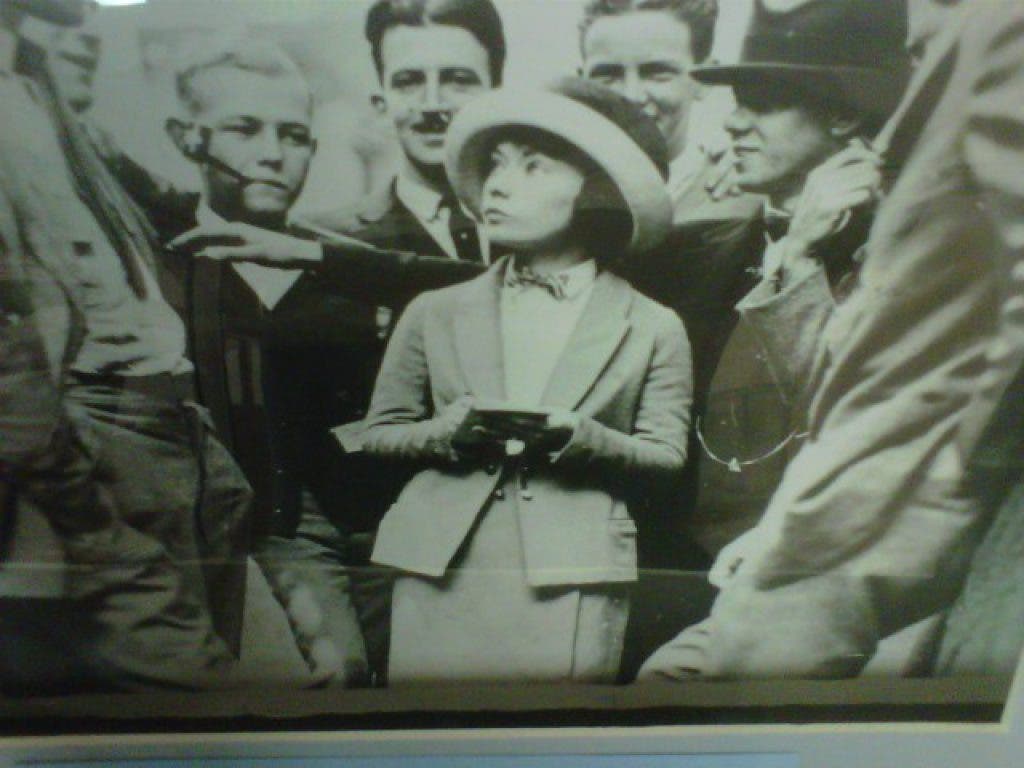
On display are also fetching photos of Mitchell’s early years, which show her sitting on her mother’s knee in a lace dress and cuddling a small kitten. In later years, she’s pictured sporting knickers or clowning in swimsuits. There are early writings for the Atlanta Journal, a photo of herself interviewing Rudolph Valentino, and the telegram confirming her $250 advance for “Gone With The Wind” from Macmillan. (About $3,700 in today’s money.)
The university holds the largest collection of the writer’s private papers, notes and historical family materials.
Mitchell was no shrinking violet, the exhibit shows. A self-described “dynamo,” Mitchell was “highly energetic, had a big imagination, and the reality was, she wanted historical accuracy about everything,” Brooks said. In 1931, Mitchell’s husband John Marsh writes to his mother, mentioning a visit the couple are making to Chickamauga to look at the battle site, part of Mitchell’s ongoing historical research for her novel.
She could be a stickler in personal matters, as well. Like many Southern ladies, she was adamant that her age not be known. And when she made a rule, she stuck to it. After autographing book copies became too taxing, Mitchell adopted the rule that she would no longer autograph her book, and she stuck to that rule, even when Vivian Leigh asked for a signed copy.
It said, “I’m sorry I can’t – but I will send you this (autographed) card and you can put it in your book,” Brooks said.
The exhibit runs through late June. Brooks’ talk will be held in Room 101 of the Miller Learning Center. A full schedule of events can be found here.