Arts & Entertainment
Lyndon House 38th Juried Art Exhibition is Now Open in Athens, Ga.
Our author provides a behind-the-scenes glimpse of the show.
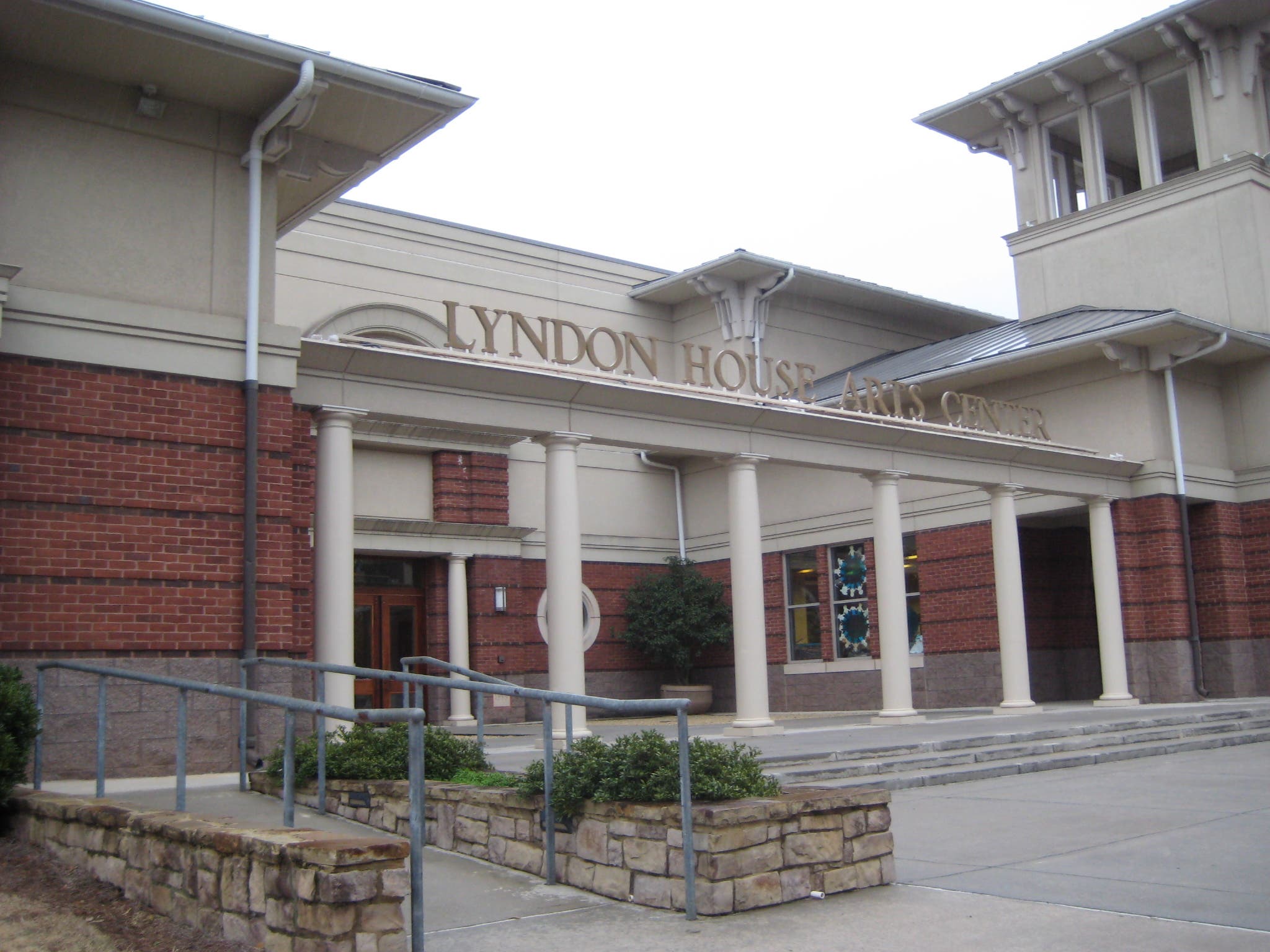
The 38th annual Juried Exhibition at the Lyndon House Art Center is now on display until May 4. Hours are : Tuesday and Thursday: Noon - 9:00 a.m.; Wednesday, Friday, and Saturday: 9:00 a.m. - 5:00p.m.
Depending on whether or not you’ve had your work accepted, the Lyndon House Art Center Annual Juried Exhibition is either an impressive collection of recent work by the region’s best and most committed artists and craftspeople, or a cloying mish-mash of pretentiously clever ideas masquerading as sophisticated manifestations of genius that amounts to little more than a vapid popularity contest.
Find out what's happening in Athensfor free with the latest updates from Patch.
I, like most long-time submitters, vacillate back and forth between the two definitions, but usually admit that, as a showcase for Athens-area visual art, this exhibition has no peer. Each year around 200 artisans crawl out from under their rocks and enter their creations for a chance at public admiration/derision, risking rejection and weeks, perhaps months, of stifled inspiration. The result is always compelling, occasionally sublime and sometimes confounding. Love it or hate it, one leaves these galleries with a fairly accurate sense of what’s going on with Athens art these days.
A former preparator at the Georgia Museum of Art, I take on freelance art installation jobs whenever I can get them. This year Nancy Lukasiewics, the exhibitions curator and co-founder of LHAC, solicited my help in handling the submissions and installing the ones lucky enough to be selected by Michael Sloan, this year’s esteemed juror.
Find out what's happening in Athensfor free with the latest updates from Patch.
Assisting Mr. Sloan
On my first day, I was expecting to assist Mr. Sloan as he waded through the sea of entries. This is a process shrouded in secrecy; what goes on in the galleries on this day is a mystery that lurks in the backs of the minds of most or all participants as they go about their businesses. As a budding artist back in the 1980s, I’d sometimes drive well out of my way to peer from my car at the front of the Lyndon House. “What’s going on in there?” I’d wonder, half hoping to catch a glimpse of the silhouetted juror through a window as she held aloft one of my paintings, then fell to her knees in genuflection. Ultimately I’d find out just like everyone else a few weeks later, pulling from my mailbox a self-addressed postcard with Xs denoting either acceptance or, in the Lyndon House’s gracious wording, non-acceptance.
Not this time. As it turned out, I’d missed the magic. Mr. Sloan had already done his work: Pictures lined the walls of the vast galleries, some with green dots stuck to them and others not with green dots stuck to them. Trying not to look as if I cared how my paintings had fared, I surreptitiously scanned the walls, searching desperately for my landscapes. Nothing. I could feel myself slumping, succumbing to bitterness--and there I stood yet again at the crossroads of maturity and childishness. It’s a sensation I suspect every artist knows. I braced myself for the humble experience of installing a show that had excluded me, an exhibition of works that had somehow fooled Sloan into thinking they were worthy.
Meeting up with my coworkers in the South gallery upstairs, I put on my helpful, professional face and asked how I could assist. Jim and Celia, two longtime artist-preparators at LHAC, were just starting to clear space in two upstairs rooms for the temporary storage of rejected works. Nancy, meanwhile, filled me in on what was happening as we walked toward the paintings cart. “You got two in,” she whispered, knowing how dying I was to know.
Good News Transforms The Galleries
Suddenly the galleries were filled with a stunning showcase of creativity, each worthy of admiration, none better than the others, in sum an impressive reflection of Athens-area genius. My posture seemed to improve. I realized then that it’s not all about competition, that this is really just someone’s attempt to make a coherent statement about the art of our town.
This epiphany contrasted starkly with my assessment of the 2009 show, one from which I’d been rejected. That one was a farcical hodge-podge of glib doodlings scrawled by charlatans and posers.
As I worked with Celia and Jim, it became apparent to me that they hadn’t gotten in, and I braced myself for their resentment. I should have known them better; I was working with adults, and their conduct was impeccably professional as they handled both the accepteds and the rejecteds with equal care and respect.
“Oh, I’m so glad Sarah got in,” gushed Celia at one point, and she meant it.
“These are really nice,” said Jim as he regarded a few photographs depicting reflections off water. He meant it, too.
Would I have been so magnanimous? I’d like to hope so.
After the rejected works were safely quarantined, we turned our attention to the art that remained in the galleries, making sure their information squared with that on the entry forms. Celia counted 185 works of art, while I counted 184 circles on the forms. After finding the cause of the discrepancy, we concentrated on the stack of notification cards that would, before we started hanging the show, be sent out to all the participants.
Here I learned of all the artists, many of whom I’d have considered shoo-ins, who hadn’t been selected by Sloan. (I will not mention their names here, but rest assured that their creations alone could have filled the galleries and comprised a blockbuster exhibition.) The seriousness and sensitivity devoted to this stage of the process was impressive; having been on the raw end of it several times over the years, I had a new perspective. As it turns out, no one had been trying to crush my inspiration those years I’d been rejected. The Xs in the “not accepted” column had been drawn not with derision and indifference, but with respect and sympathy.
Hanging the Winners
Nancy asked me to check the hardware on the backs of all the pictures, and replace anything that didn’t seem to meet the standards. Here I saw some horrific things: screw eyes and wire that couldn’t have supported cotton candy much less a framed painting; backing boards composed of materials banned during the Nixon Administration; frames whose miters seemed to have been chewed rather than sawed; pictures on boards and canvases that during acclimatization had flexed wildly, resulting in geometric shapes I hadn’t seen since my 8th grade geometry class; and hanging instructions scrawled with crayon, inscrutable pencil and, in one case, Liquid Paper.
It was this task that reminded me that there is creativity and there is craftsmanship, and the twain of the two too seldom meet.
Next up on the task list was to assist Shannon, the front desk receptionist and gallery documentarian, in photographing the prize winning entries. I never expect to win a merit award, much less an honorable mention, and this time my expectation aligned with reality perfectly. It didn’t matter; I was happy just to get in the show. Then, as I transported art to the shooting range, it began to matter—just a little. For too many restless visual artists, the laurels of acceptance fade before you’ve had time to rest on them. “Why can’t I be the big winner?” is a bratty lamentation that somehow finds purchase in one’s greedy head. Perhaps it comes from the childhood need to stand out from the pack, to be noticed—which for some of us is a big reason we started making pretty things in the first place.
Shannon’s professionalism in this task shamed me into stifling those pangs of disappointment. She placed each object in the most flattering light and position she could find, even for the ones that raised her eyebrow. “Really?” she asked rhetorically as she placed one piece, an object that shall remain eternally anonymous, before her backdrop. Like her colleagues, she put her personal preferences aside, taking painstaking care in getting that picture just right.
So now I had more secrets to keep to myself. Somehow, since I’d begun work on the juried show, the artists who’d entered it were coming out of the woodwork. Everywhere I went, it seemed, I’d see one and have to order myself to gag. If people have a tendency to blame the messenger, they also give credit to the one who bears good news.
The Final Design
I held my tongue. By the time everyone found out his or her fate and experienced the resulting high or soul-crushing low, it was old news to me. In my mind, I’d moved on. The exhibition became just another show to me, a bunch of stuff that needed to be put on walls or pedestals. Nancy, who has been arranging the exhibition since Jimmy Carter was our underappreciated president, laid it all out over a weekend. When I reported on Monday, she told me her pedometer indicated that she’d walked over thirty miles in doing so. More than a marathon! I asked if she had to crawl the final two miles.
Nancy is masterful at designing a show. The groupings of works were congruent, thoughtful and never obvious. After installing (along with Celia and Jim) and aiming lights at all the art, I let myself stand back and admire it all as if I’d just wandered in from the street. There was some damned good art in there; I was proud to be a part of it.
The most impressive thing about the opening reception, apart from variety of cheeses on the buffet table, was the appearance of artists who’d been excluded from the show. That’s when I realized that the Lyndon House Juried Exhibition, rather than gleaning the good art from the bad, actually separates the children from the adults. Putting aside broken dreams of fleeting stardom, these resillient Rejecteds reinserted themselves into the creative equation of our town. They would not be denied, not by some guy named Sloan from South Carolina, not by the lack of alcohol at the drinks table, not by their own nagging self-doubt.
Or maybe they just had a hankering for some good cheese.