Schools
Pesky Caterpillars + Oaks = Not Good
Leaf munching caterpillars may severely damage Athens' beloved oaks, UGA researchers fear.
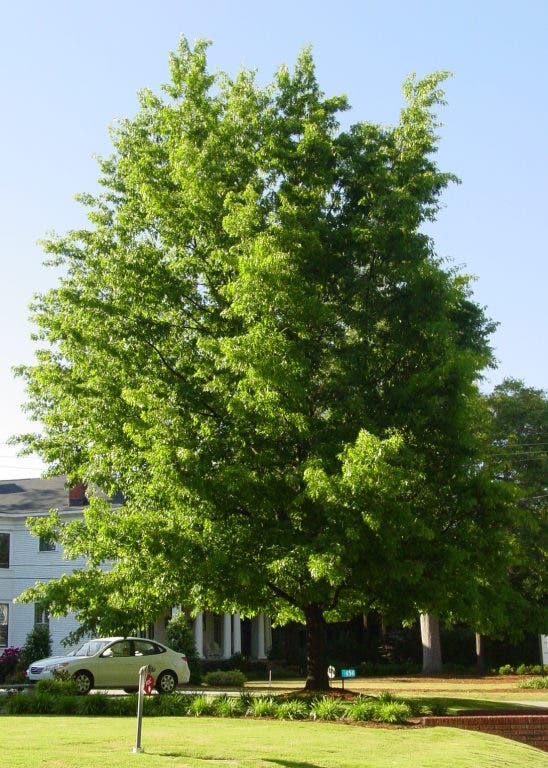
Athenians who care anything for the white oak trees scattered about town -- to say nothing of several other significant oak varieties seen throughout Northeast Georgia -- would do well to stock up on beetles, lizards and spiders, and perhaps even wasps. Anything that might take an interest in eating pesky caterpillars that have been making mincemeat of oak leaves in these parts.
For reasons largely unknown, Athens-Clarke County and environs are experiencing a second-straight spring outbreak of grayish-brown caterpillars, which eventually transform into black-dotted brown moths (scientific name Cissusa spadix). The species was not previously considered a significant pest, at least not around here.
But researchers at UGA’s Warnell School of Forestry knew something was up last spring when several local residents came in with caterpillars distinguished by a black head and a white line down each side. The creatures were feeding on oak leaves, primarily at night, and the damage being done was alarming.
Find out what's happening in Athensfor free with the latest updates from Patch.
The March 2010 caterpillar outbreak occurred at locations in both eastern and western Clarke County. Kamal Ghandi, assistant professor of entomology at the Warnell School, wasn’t entirely sure of the species and sent samples to renowned University of Connecticut moth expert David Wagner, who identified them as Cissusa spadix. This spring even more caterpillars are on the attack, in Athens-Clarke as well as several adjacent counties.
"This moth has a pretty wide distribution in the U.S.," said Gandhi, who is studying the insect with several UGA associates. “What is unusual is the extent of the outbreak. This year the caterpillars came earlier and in higher numbers.”
Find out what's happening in Athensfor free with the latest updates from Patch.
Some researchers suggest that warm, damp conditions the past two autumns may have led to the outbreaks. These conditions are beneficial for the development of oak trees and their leaves, so a connection with the caterpillar invasions seems plausible.
Gandhi and her post-doctoral researcher, David Coyle, are investigating the Cissusa spadix life-cycle as well as its dietary preferences, the extent of damage it can inflict, and possible methods of controlling the caterpillars. This includes looking at NPV, or nucleopolyhedrovirus.
NPV is a naturally-occurring, species-specific, disease-causing organism generally considered safe for other organisms because of its high specificity. And since it affects predominantly butterflies and moths, NPV may be the best bet for controlling Cissusa spadix, although Gandhi is still waiting on her test results.
In fact, quite a bit remains uncertain. “We don’t yet fully know the caterpillars’ life-cycle,” Gandhi said. “And we don’t know whether they’ll be back again next spring.”
Got Caterpillars? Here’s What To Do:
- Place several bird feeders and/or bird baths in your yard. Most winged creatures like nothing better than eating caterpillars, so attracting birds should help.
- Wrap a one foot-wide length of burlap around the trunk of each endangered tree; secure the burlap with a string tied around the tree, with 6 inches of the material folded over either side. Caterpillars will get caught up in the burlap and can then be disposed of.
- Wrap a sticky insect strip around each tree trunk. These “no-pest” strips contain the controversial insecticide DDVP and should never be placed within reach of small children or animals. But they are quite effective in combating caterpillars.
- Encourage various caterpillar-eating insects to hang out in your yard. Gandhi recommends the shiny green “caterpillar hunter beetle,” Calosoma scrutator. It’s one the largest ground beetles and will happily climb trees in search of prey.
- Wait it out. The caterpillars are beginning to pupate and shouldn’t be much of a problem by next week. Adult moths will emerge next spring; whether another wave of caterpillars also appears is anyone’s guess.