Schools
School board agrees on budget plan to cut early childhood programs
District cuts may mean less seats for needy infants and toddlers in early childhood programs next year.
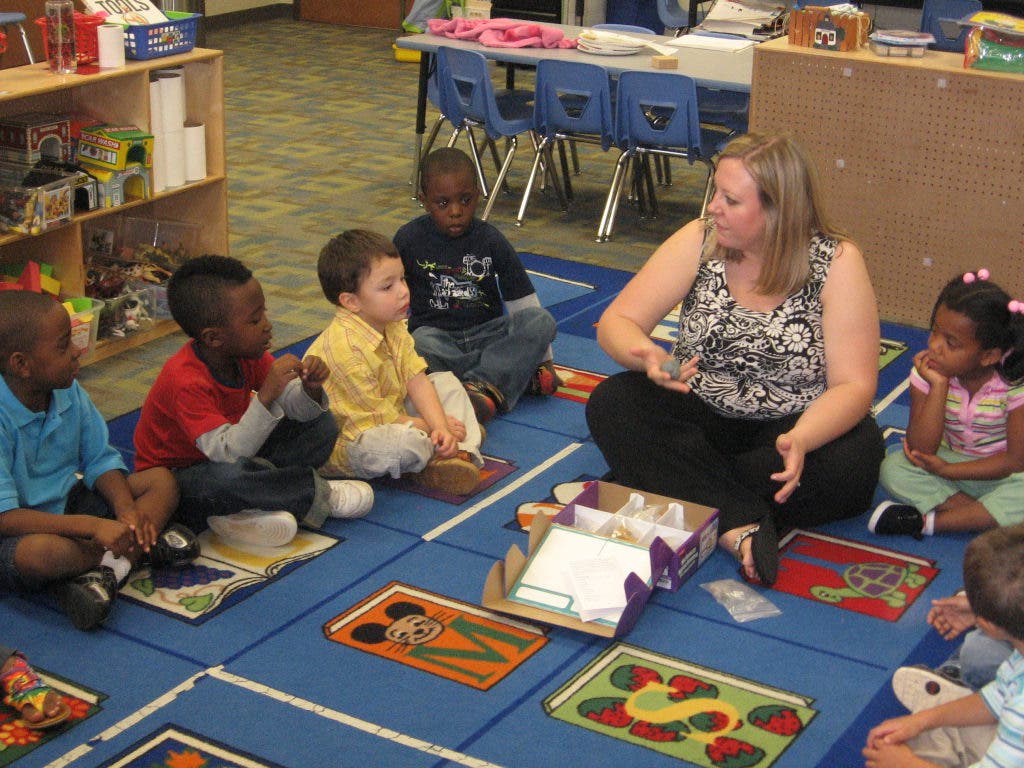
One of the Clarke County School District's best tools for helping poor students to read and prepare for kindergarten could be cut in half next year, leaving many young and uneducated parents on their own to do the job.
School officials late Thursday approved a tentative plan to cut 42 teachers from the district's Office of Early Learning, after the last of $1.5 million in American Reinvestment and Recovery Act funds were used to expand federal Head Start and Early Head Start programs.
With less funding proposed for next school year, administators overseeing both the Head Start and Early Head Start programs, which serve children from birth to age 3, expect to reduce enrollment from 300 students down to 152, according to Gregory Hull. He coordinates the pre-K program and other programs for the district's Office of Early Learning at the H.T. Edwards Center off West Broad Street.
Find out what's happening in Athensfor free with the latest updates from Patch.
“The bottom line is that yes, some children may not be back here who very, very much need these services,” Hull said. “The whole point of this is to get these children in to close that achievement gap, so a lot of children who were coming here are already behind. We are here to close that achievement gap. We can't offer those services if we can't have the funding to do that.”
Teachers in Head Start and Early Head Start programs help children who are poor or who have disabilities to expand their vocabulary and improve other social skills so that they may be better prepared to succeed. Acquiring these skills early means they are less likely to drop out of school.
Find out what's happening in Athensfor free with the latest updates from Patch.
Aside from the cuts to the two federal programs, Office of Early Learning administrators are also planning to operate with $1.5 million less from other grants that funded additional staff, teacher training and classroom materials.
The employees who will lose their jobs next year include academic interventionists, who work alongside teachers and assist with students who are struggling in smaller groups, child development specialists, literacy specialists and coaches.
Six homebound educators and family engagement specialists, who were dedicated to helping new moms and fathers learn how to care and support their children in school at home, are also expected to lose their jobs.
Congressional leaders still may decide on several other amendments to the 2011 fiscal year budget, and could authorize additional funding that would keep the expanded Head Start and Early Head Start programs going an additional six months, according to Shelley Goodman, director of the Office of Early Learning.
“We're just cautiously optimistic that it will go through,” Goodman said. “If it does get passed, we'll be good for one more year.”
If the two programs are approved for additional funding, some fired employees may become eligible to be rehired over the summer and the office wouldn't have to reduce enrollment next fall, Goodman said.
District officials also went ahead and signed off on other changes in the proposed budget. These reflected Gov. Deal's recommendation that pre-K be scaled back by $54 million to help keep the program's primary revenue generator, the Georgia Lottery, from going bankrupt.
Clarke County's Pre-K program serves 900 4-year-old students. The state funding cuts will bump up classes from 20 to 22 students, slash 20 days from the school year and reduce teacher salaries by 10 percent, Hull said.
“It's a domino effect all over,” Hull said. “These cuts go across the whole department in many, many ways. We could possibly lose some veteran teachers that we spent a lot of time energy and money training who might chose to go to another grade level. We feel like we were just on the cusp ... we had really gotten our present teachers trained with some wonderful professional learning and they we're just starting to implement it and now they might be gone.”
For years, both the state funded pre-K and federally funded early childhood programs have provided students with the necessary reading and vocabulary skills, as well as social and behavioral skills, that kindergarten teachers require. Over the past 30 years the program has taken on more students, but there are still many children – about 1,200 under age five - who could qualify. But these children can't find a seat in Pre-K, Head Start or Early Head Start classrooms, according to Tim Johnson, executive director of Family Connection/Comunities in Schools of Athens.
“Early childhood education is the area where we should be putting the most resources, because all the research says it has had a significant impact on students being successful when they get to kindergarten,” Johnson said. “The national research says it's the most effective way to improve academic outcomes and other outcomes where children come from families that don't have a whole lot of education.”
THE TAKEAWAY: School officials will now give the public three additional days to comment on the proposed budget before officials accept a final budget June 9. The budget hearing dates are May 17, May 21 and May 26.