Business & Tech
The Great Locavore Experiment
Can I feed my family a completely local diet for a weekend? Sort of.
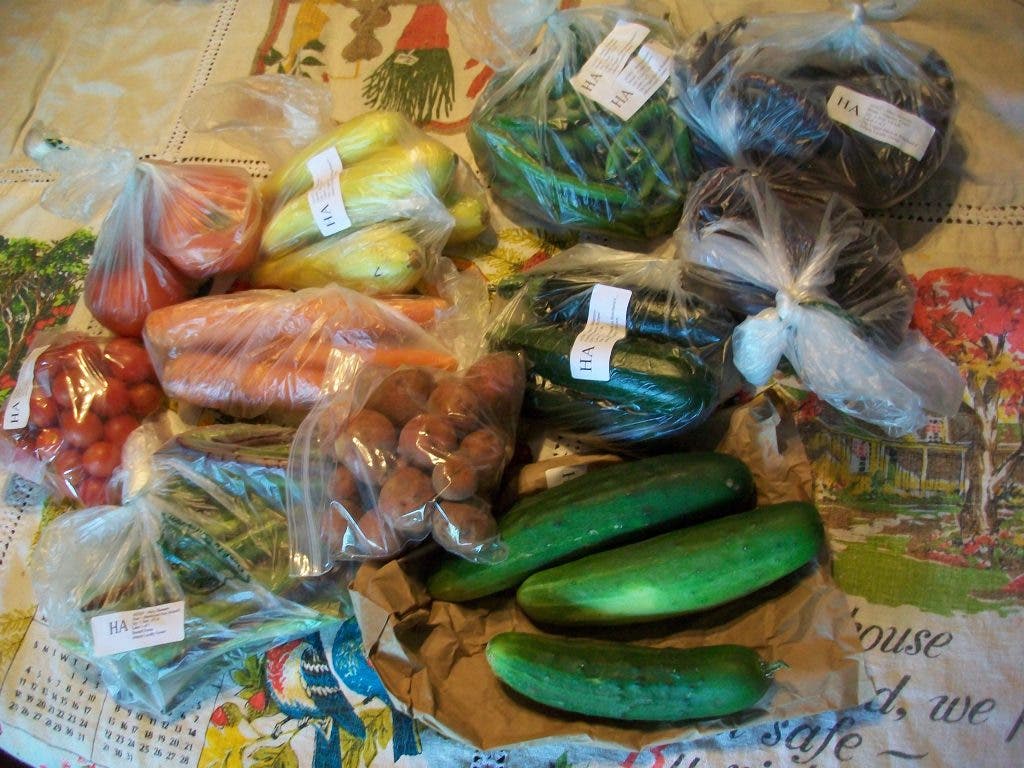


Here’s the deal. I’m going to feed my family—me, my husband, and our 4-year-old son—only locally grown food for at least a day. Two if I’m lucky. Well, however long I can push it.
Why? Good question! I want to see what it’s like to be a locavore.
Locavores eat food that is locally grown (for many people, that means within a 100 mile radius of your home) in an effort to reduce consumption of things that need a lot of packaging and fuel to get to your store. They also want to support local farmers who use sustainable agricultural practices. I’m attracted to the notion because locally grown food just tastes better to me, and when you know where your food was grown and who tended to it, it makes your connection to your meal more personal, more mindful—which in turn leads to healthier, more intentional eating practices.
Find out what's happening in Athensfor free with the latest updates from Patch.
That’s my hope, anyway. But once I start planning for a weekend of local food, I quickly realize that I might need to make amendments to the concept of “local”—at least for this experiment.
I’ve been vegan, or someone who doesn't eat animal products (including meat, dairy and eggs), for over 10 years. I became vegan to avoid contributing to factory farming's abuses to both animals and the environment. I stuck with it for the health benefits, as detailed by the mainstream American Dietetic Association. And I realized that I just happened to really, really like that way of eating.
Find out what's happening in Athensfor free with the latest updates from Patch.
But it does mean I buy a lot of packaged items most certainly made father than 100 miles away. Since I avoid soy and fake meats for health reasons, I rely a lot on whole grains, beans, nuts and other legumes for protein and other good stuff. My husband is also vegan, and at four our son eats what we fix for him at home. While our son makes his own food choices while out and about, we are basically a vegan household.
Looking at a typical day’s menu, I realize what has to change. Breakfast: Steel cut oats with fruit and nuts stirred in, toast and tea. Lunch: PBJ with some kind of vegetable on the side. Dinner: whatever I can throw together with the least amount of time and effort, generally some plant-based protein with vegetable and whole grain. Snacks: the usual suspects, including fruit, vegetables, crackers, nuts, popcorn, homemade popsicles (usually fruit or vegetables blended with juice or non-dairy milks—“Ice Pop Joy” by Anni Daulter is a new favorite recipe book), and so on.
Like most everyone, we are on a pretty tight budget. I save money by buying in bulk, cooking from scratch and making enough for lots of leftovers. We buy organic very selectively, and I rely on a lot of generic store brands of food. As the daughter of an older father who lived during the Great Depression, I am innately talented at being cheap.
But who knows where my food is coming from?
When you eat local, you know where it’s coming from. Still, I have a lot of questions.
Such as: what about my beloved oatmeal? Does locally processed grain count as local? (Is the grain also grown locally?) I can’t live without hot tea—does anyone grow tea leaves around here? I can make my own bread (thanks to a recent $5 bread machine yard sale score—you have to tape down the lid, but hey, it works), but is there locally made molasses? Sugar? A friend of mine has made her own almond milk so I know that's possible, but are almonds grown anywhere near Athens?
I suspect if I merely went vegetarian for this experiment, it’d be plenty easy—everyone and their brother has eggs from backyard chickens these days. But I’m quite happily staying vegan, so I have to make the decision to cut myself some slack. How about 90 percent local?
Crummy deer have obliterated my backyard garden, so I’ll have to buy my vegetables, and I know just what to do: order from Athens Locally Grown. Every Sunday night, a list of available products is e-mailed out and you place your order online; pickup is every Thursday next to Ben’s Bikes.
I spend $27.50 ordering the following: over a pound of Big Boy tomatoes; 1 pint of cherry tomatoes; half a pound of carrots; half a pound of black-eyed peas (in the shell); one pound of crookneck squash; 1 pound of red potatoes; 1 pound of zucchini; 1 pound of cucumbers; half a pound of purple greens (that turn green when cooked); half a pound of green beans.
Our first locally grown dinner, made by my husband, is on a Thursday following the Locally Grown pickup: black-eyed peas, roasted red potatoes with rosemary from our yard and sautéed squash. It is delicious and we all enjoy it except for Tommy, who is overtired, cranky and cannot understand why his dinner was not a burrito. His Majesty consents to apple slices with peanut butter (neither local) before passing out.
Friday morning, the kid and I head out to in Watkinsville to pick a bucket’s worth of blueberries for $9, then stop by Thomas Orchards to get a bag of 17 locally grown peaches, also $9. I decide to bake whole wheat bread in the machine, which is technically not locally grown, but definitely locally (as in my kitchen) made. We snack on the local cherry tomatoes and cucumber slices. Dinner includes the local zucchini, squash and green beans sautéed together, along with yet more cherry tomatoes and homemade bread. (Everyone eats every bite.)
Saturday, the husband is off to work and the kid and I head to the Athens Farmers Market and buy a whole wheat loaf of bread for $5, plus locally made blueberry and peach lemonades, respectively, $3 each. I would never spend that much money on bread or juice at a grocery store, but I am caught up in the groovy spirit of the market. I do notice someone selling locally made pasta—a staple in our house—but it is made with eggs, so I abstain.
I decide to make bread for less money and drive to The Granary in Watkinsville, where they purchase grains and other foods from all over but process them at the store. I figure it’s about as local as brown rice is going to get. A cookbook author friend of mine assures me the selection is impressive and the prices, competitive. I spend $26.31 and buy 2 pounds of steel cut oats; 2 and a half pounds of fresh whole wheat flour; 3 pounds of all-purpose unbleached, unbromated flour; 2 pounds of bulgur wheat; 2 pounds of white corn grits; 1 pound of raw sunflower seeds; 1 pound of organic whole wheat spaghetti; 2 pounds of rolled oats; 2 pounds of long grain brown rice; almost a pound each of vegan whole wheat apple cinnamon bars, sesame seeds and unsulphured mango.
As I spread not-local peanut butter and jam on the (admittedly) delicious $5 bread for lunch, I start thinking of potential local sources for both of these items. Should I grind up peanuts or almonds in a food processor? (Facebook friend survey says yes, though a scientist advises not to buy any locally made nut butters that are not tested for aflatoxin). I ponder making my own jam, using local author Liana Krissoff’s guide, “Canning for a New Generation: Bold Fresh Flavors for the Modern Pantry." (Local artist Rinne Allen did the photography, making it even more locally grown, if you will.)
With my new Granary treats, I bake bread and make granola, using this recipe (note: my baking time is shorter by about 10 minutes). Dinner includes local vegetables with Granary-bought spaghetti, topped with oregano from our yard.
On Sunday morning, I awaken to Peachcopalypse: at least one (maybe two?) of my local peaches have burst open, filling the bowl with juice and soaking the rest of the peaches. I swing into action, blanching and icing and peeling and freezing. There. Saved. (Two could not be saved, alas, and went into the compost.)
I manage to incorporate local bits and pieces into breakfast and lunch—Granary oats, homemade granola, a million handfuls of blueberries—but dinner is a wash. After a lovely long hike at the State Botanical Garden of Georgia, mother and son are cranky and tired; my husband arrives from an out-of-town day trip shortly before dinner. I have a long night ahead of me writing articles. Dinner is a mash-up of leftover pasta and microwaved vegan bean burritos. And then I’m off to have office hours at 5 Points Jittery Joe’s, where the coffee is locally roasted and quite delicious.
When the Sunday evening e-mail list arrives from Athens Locally Grown, I decide to skip a week’s order to make up for all the money we spent on local food over the past few days. But throughout the next week, there are subtle changes to the day: I blend the frozen local peaches into sorbet for a snack. We eat more local cucumber slices and blueberries. We enjoy more homemade bread. I make plans to go to the Granary again. We pick more blueberries. (We go through them very quickly.) There is the evening when I have to go out of town and the guys order a pizza, but I notice it’s been awhile since I’ve been to a regular grocery store. When Thursday rolls around, I miss my Athens Locally Grown produce and plan to order some next week.
Can I afford to buy completely local every week? At the moment, no. But it’s important enough to me to make it a priority whenever I can.
More than anything, this experiment has made me want to get serious about my vegetable garden. I already have grand plans for next year’s raised beds. You can’t get much more local than your own backyard.