Schools
UGA Heat Study Hopes to Prevent Deaths of High School Athletes
The Georgia High School Association adopts new guidelines.


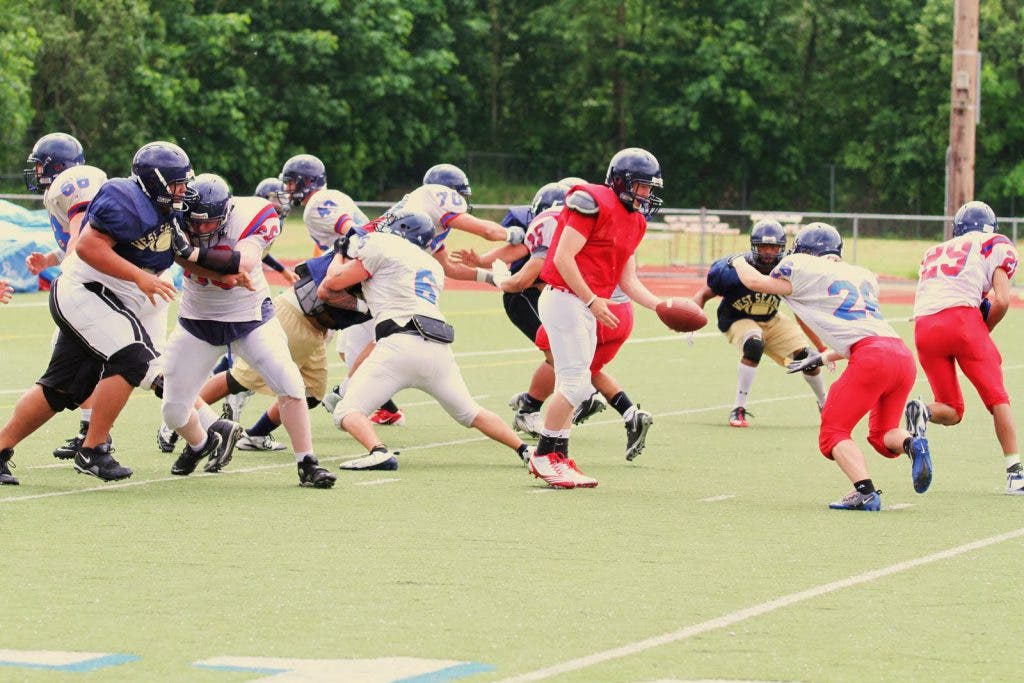
High school athletes need 10 to 14 days to acclimate to the heat stress in preseason practices in late July and August. Gradual acclimatization to these conditions can help minimize the risk of exertional heat illnesses, or EHI, according to a three-year study by University of Georgia researchers, according to a UGA press release.
Between 1994 and 209, heat-related deaths among football players across the country tripled to nearly three per year. The previous 15 years, there was an average of one death per year, according to another UGA study. Georgia led the nation in deaths with seven fatalities. Last August, there were two deaths in Georgia.
Find out what's happening in Athensfor free with the latest updates from Patch.
“Our previous research shows heat illness rates are highest in the Southeast,” said Michael Ferrara, professor of kinesiology and associate dean for research in UGA’s College of Education, who co-directed the study with Bud Cooper, associate department head for the department of kinesiology.
“Heat stroke is a preventable death with proper acclimatization, recognition of the condition, and immediate and rapid cooling when a heat stroke is suspected,” said Ferrara.
Find out what's happening in Athensfor free with the latest updates from Patch.
On Monday, Georgia became the latest state to adopt preseason heat acclimatization guidelines for secondary school athletics. In the past year, Connecticut, New Jersey, Texas and North Carolina adopted them.
Three years ago, the Georgia High School Association decided to develop guidelines to protect the health and safety of their athletes. They partnered with other groups and a foundation to fund the UGA study to looked at the rate of EHI in 25 high schools throughout the state.
UGA’s Director of Sports Medicine, Ron Courson. said after the Bulldogs started using preseason guidelines for acclimatization “…the overall injury rate went down because the athletes were not as tired and worn down during the preseason period. We actually had improved performance of our athletes and less injuries.”
The results of the UGA study were presented at a meeting in June 2011 and to the GHSA football subcommittee in January 2012. The GHSA’s executive committee voted Monday to adopt the study’s recommendations.
The new guidelines require that the first week of practice consist of single-practice days with sessions no longer than two hours with helmets only.
During the second week, teams can start two-a-day practices with full equipment, but they cannot have consecutive double-session days. A double-practice day must be followed by a single-practice day. There has to be at least three hours of rest between sessions on a double-practice day. Double-day practice sessions cannot exceed five hours.
The GHSA previously required every school to monitor the environment, but there was no guideline about how to measure weather conditions, the length of practice duration, the number of practice sessions, or the amount/type of equipment worn. Nor were there were guidelines relating these factors to acclimatization or heat stress.
“We wanted to develop a policy that would be practical and allow student athletes exposure to the environmental conditions but be as safe as possible,” said Ralph Swearngin, executive director of the GHSA. “We are confident that we are taking the right steps.”
The current standard for measuring environmental heat stress is with the Wet Bulb Globe Temperature, which considers air temperature, humidity and radiant temperature. The scale is broken into categories on how to modify activity.
The UGA study showed there is an increase in the number of exertional heat injuries when the WBGT reaches 82 degrees. The modifications to the scale will include an increase in rest breaks, hydration periods, equipment modifications and duration of practice as heat stress rises.
“We wanted to provide flexibility to schools and coaches in designing their practice to be as safe as possible,” said Ferrara. “No injury is 100 percent preventable, but using our evidence, we feel we have developed reasonable guidelines for the student-athlete.”
Get more local news delivered straight to your inbox. Sign up for free Patch newsletters and alerts.