Schools
UGA Officials Change Rules for Students Showing Severe Behavior
UGA officials discuss policy on students suspected of posing a threat and Adams weighs in on Occupy Wall Street--Athens.
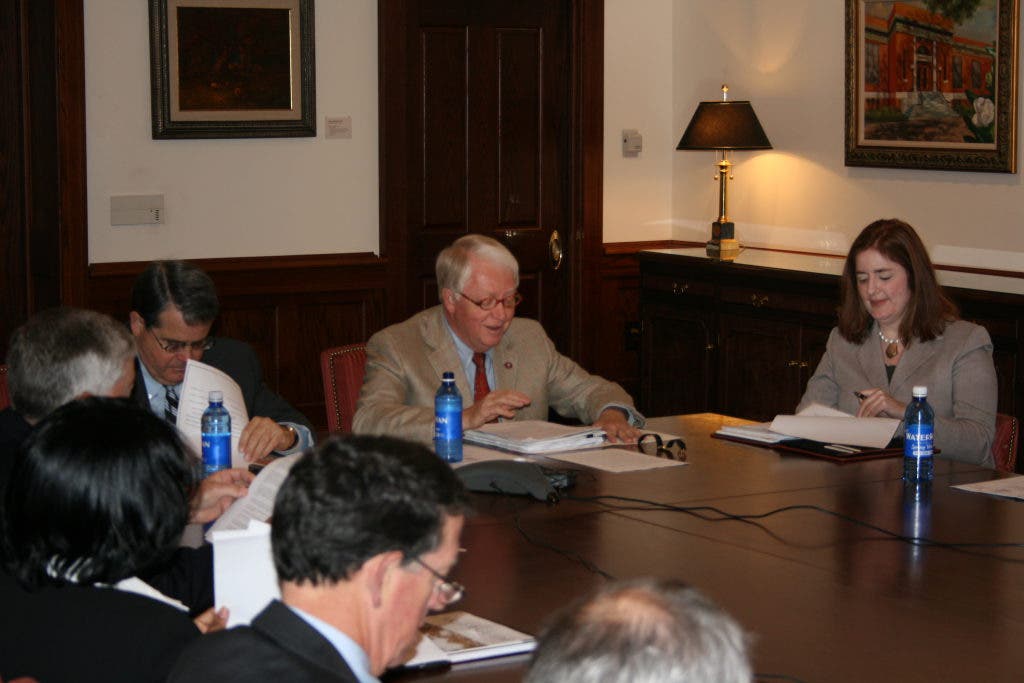

UGA officials on Thursday amended a policy outlining how responds to students with excessive and potentially dangerous behavioral problems. The amendment gives a council of administrators the authority to place students on a medical withdrawal or suspension.
The university's Behavioral Assessment and Response Council can determine whether a student displays “a high probability of harm to himself/herself or others and not simply a speculative risk.” They can then issue a notice of an administrative medical withdrawal following an objective assessment of a student in question based on “specific knowledge and evidence,” according to the policy.
Additionally, students who receive a medical withdrawal from UGA would have the right to petition the decision.They would also be given an opportunity to re-enroll if they show they are stable and ready to return to campus life and offer a written evaluation from a physician or psychologist.
Find out what's happening in Athensfor free with the latest updates from Patch.
The Behavioral Assessment and Response Council was formed in 2007, in the wake of the shootings at Virginia Tech. Institutions across the country adopted new measures for monitoring students with severe mental health or behavioral issues. In the past, the UGA council had authority only to bar a student from campus and issue an interim suspension.
The new amendments give university officials the legal justification for dismissing a student who they suspect poses a potential danger to the university community, President Adams said.
Find out what's happening in Athensfor free with the latest updates from Patch.
“It's a tweaking and establishment of policy to justify, in some ways, what has had to happen in a case or two where the justification was not as clear as it needed to be,” Adams said. “There's been sort of a grey area there as to how to address that situation.”
Other UGA news of note from Media Briefing includes:
82 percent of UGA students graduate in six-years or less, according to the most recent student achievement data.
Fall enrollment is the second highest ever this year, with 34,816 students. Adams said he'd like enrollment to remain around 35,000 students for the forseable future, but would like to increase the number of graduate students in the medical and engineering fields.
The university will open a new daycare facility on the Health Sciences campus in January. So far, 60 children are enrolled in the program and there are 40 open seats.
James Shepherd, whose parents created the Shepherd Rehabilitation Center, will give the fall commencement address to university graduates. Shepherd, a UGA alumnus, was paralyzed in a swimming accident in 1973. His parents started the center after they couldn't find adequate rehabilitation care for their son in Georgia. Two UGA baseball players, who attended the rehabilitation center, will also be part of the ceremony, Adams said.
Tim Burgess reported that the university community is using energy more efficiently. As the university expanded by more than 4 million square feetover the past decade, energy use on campus has decreased by 13 percent, he said. The university is on track to reduce energy use by 20 percent from its total energy use in 2007 by 2020.
The Princeton Review ranked the UGA Food Services department No. 6 in its list of top campus eateries. UGA also received an A+ from Campus Prowler, an online college guide.
UGA Career Center Executive Director Scott Williams reported the department makes 34,000 contacts with students every year and is using more social media tools to reach out to students and provide them with helpful job hunting tips and news. And while 14 percent of student graduates are still looking for employment, the percentage is much lower, at 2.5 percent – if they've met at least once with a career counselor, Williams said.
Here's what Adams had to say on the issue over how the University has responded to the local after from the archway steps:
“They (the protestors) are within their rights, and we want to protect their rights to protest,” Adams said. “They have constitutional rights to do so. The university community has rights to ingress and egress the campus. You have to balance those two sets of rights. I think on balance this has worked well. I think (Police) Chief (Jimmy) Williamson has handled the situation well.
"There have been a few times where he felt ingress and egress was blocked and he asked them to not do that. There have been other times that perhaps people have not been as considerate to the protestors as they needed to be. And so we want to protect the rights of the protestors and we want to protect the rights of the greater university community, visitors, staff and faculty to ingress and egress the campus.
“The way this has been handled to me has sort of been emblematic of the way we've come to do things at the University of Georgia," Adams said. “There hasn't been pushing and shoving, stone throwing and threats like some other places. We've respected their rights, they've respected our rights. That's what we're about.”