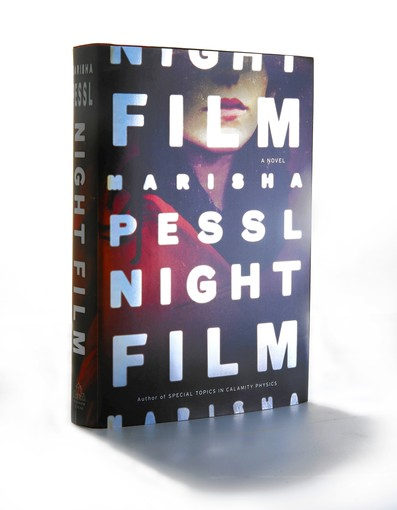
I'm not a huge mystery/thriller reader, but a couple of days ago I finished reading Night Film by Marisha Pessl, and if it wasn't thrilling I don't know what is. The Random House marketing department, though, was careful to label the novel as a "brilliant, breathtakingly suspenseful, literary thriller." It's not a grocery store paperback mystery, they're saying, it's a literary event, and in that sense, they are right. Pessl's first novel, Special Topics in Calamity Physics, was named one of the "Ten Best Books of 2006" by the New York Times, so her second novel was highly anticipated. I might not have picked it up, but I heard good things from friends, and we picked it for a book club I'm in, so I'm happy I had a reason to dive in.
When I was in 7th grade, I started reading Dean Koontz thrillers. They were dark, sexy, and sometimes supernatural, and even though I wouldn't recommend them to every twelve year old I know, I loved them. I've since moved on from Koontz, but I've rarely been so reminded of that reading experience than reading Night Film. It's narrated by a fallen investigative journalist who sees a woman in a red coat while running in Manhattan, and learns, days later, the woman is the daughter of a famously sinister underground film director who committed suicide the same night he sees her. From then on, the plot doesn't stop. Each chapter leads to the next clue, which leads to the next chapter, and I had forgotten what a pleasure it is to be so propelled by a novel, never wanting to stop moving forward (or stop reading). But what makes this kind of novel "literary?" Can we make such a distinction?
I think so. At the risk of sounding snobby (I was an English major, after all), I'll admit I'm a little biased against the whole thriller/mystery genre. It's never the first section I find in a bookstore. I usually gravitate to literary fiction, nonfiction, and young adult (the literary merits of YA fiction is another blog post entirely), but reading Night Film made me question what makes a book literary, and I found this was a valuable question to ask myself. I've always equated "literary" with "value." I've felt like reading books that aren't literary was a waste of time, but then I have to think about all the people, many of whom I love and respect, who read thrillers and mysteries I wouldn't call literary, but love them as much as I love Toni Morrison. How do we differentiate between the two?
Part of the answer, I think, is that many readers just don't care if what they read is literary or not. Since finishing the book, I've been thinking about what makes it thrilling in a literary way, and what I've come up with is that Pessl is writing a great plot, yes, but she's also trying to do something more. The novel goes beyond whodunit, to ask questions about humanity as a whole. How does fear change us? Does the truth matter, or is it only a figment of our imagination? I won't write a dissertation here, but I think it's these kind of questions that push any novel into literary territory. Sure, not everyone is looking for this kind of thought provocation, and I've come to believe that's totally fine. The pleasure of reading anything, literary or not, is too potent to deny, but if we want to dig a little deeper, "literary" is not a bad distinction to use.