Politics & Government
How Main Street Businesses In GA Could Recoup Tariff Costs
Congressional Democrats and small business advocates say Main Street businesses should be first in line for tariff refunds.

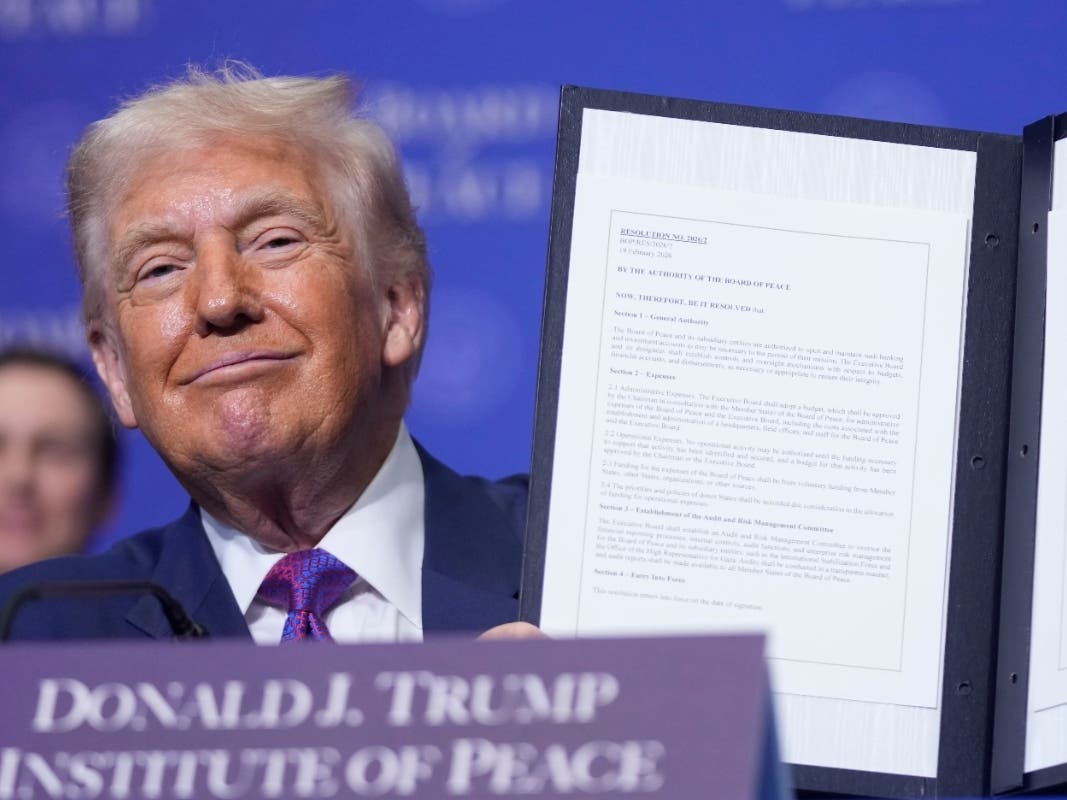
It’s unclear when — or if — Georgia’s small businesses will get a refund on President Donald Trump’s import tariffs struck down Friday by the U.S. Supreme Court.
In the 6-3 opinion stating Trump’s use of the Economic Emergency Power Act to impose the tariffs was unconstitutional, the court didn’t offer any clear next steps on refunds of the roughly $175 billion collected so far.
Congressional Democrats and small business advocates say Main Street businesses should be first in line for refunds. An analysis last week from the Federal Reserve Bank of New York found that almost 90 percent of the “economic burden” of tariffs fell on consumers and businesses.
Find out what's happening in Atlantafor free with the latest updates from Patch.
Nationally, 36.2 million, or 99.9 percent of all businesses, are classified as small businesses. Nearly half (45.9 percent) of the U.S. population, or 62.3 million people, are employed by small businesses, according to the U.S. Small Business Administration.
In Georgia, 1.4 million small businesses make up 99.7 percent of companies in the state. The 1.8 million small business employees make up 42.5 percent of the state’s workers, according to the SBA.
Find out what's happening in Atlantafor free with the latest updates from Patch.
Areas in central Georgia stretching to the state’s Southeast region are saturated with employees who work at small businesses.
Between March 2023 and March 2024, the SBA reported 38,952 small business openings and 34,762 closings.
Small companies offering services that do not include public administration top the list of industry leaders for small businesses with the highest number of employees in Georgia. Then came small businesses that provide professional, scientific and technical services with 165,839 employees.
RELATED: GA Leaders Speak On SCOTUS Ruling On Trump's Illegal Tariffs
Jobs offering transportation and warehousing fourth, followed by construction.
Arts, entertainment and recreation-based small companies are ninth in the industry with 59,662 employees.
The agricultural, mining and utility industries all have less than 10,000 employees in Georgia.
Democratic Sens. Ron Wyden of Oregon, Ed Markey of Massachusetts, and Jeanne Shaheen of New Hampshire unveiled a bill Monday requiring the CBP to issue refunds over the course of 180 days and pay interest on the refunded amount.
“Trump’s illegal tax scheme has already done lasting damage to American families, small businesses and manufacturers who have been hammered by wave after wave of new Trump tariffs,” said Wyden, stressing that the “crucial first step” to fixing the problem begins with “putting money back in the pockets of small businesses and manufacturers as soon as possible.”
The measure prioritizes tariff refunds for small businesses and urges larger companies to pass savings to customers. Though unlikely to become law, the bill shows how Democrats are pressuring the Trump administration, which has resisted returning tariff revenues.
In fact, Trump said Saturday, a day after the court struck down his central economic policy, that he plans to raise the global tariff rate to 15 percent. The White House has yet to formally implement these higher tariffs.
"I will vote NO on Trump’s tariffs when they come up for a vote in the Senate," U.S. Sen. Rev. Raphael Warnock, D-GA, tweeted Tuesday. "Why on earth would I support a new 15% tax on virtually everything you buy? Things are expensive enough to begin with."
Small businesses, whose 2025 tariff bills tripled in some cases, were handed a series of difficult choices, said Richard Trent, executive director of Main Street Alliance, a network of 30,000 small business owners.
Their message is clear, Trent said in a statement: “This was a raw deal.”
“They were forced to absorb higher costs or pass them on to customers. That is not economic strength. That is a squeeze on Main Street,” he said.
According to the group’s survey of small businesses:
- 81.5 percent raised prices to offset tariff costs;
- 31.5 percent expected to lay off personnel
- 41.7 percent delayed expansion plans
- Only 14 percent said they could realistically shift production to the United States
Main Street Alliance is working with lawmakers on reimbursement mechanisms, building on bipartisan proposals previously introduced to refund small businesses harmed by tariff overreach.
“Every penny taken from small businesses under this framework should be returned,” Trent said, adding that refunds would restore working capital, stabilize hiring and investment, and help ease the inflationary pressure tariffs helped entrench.
Many businesses faced tariff rates exceeding 100 percent, with no phase-in period and constant revisions. In some cases, rates moved from 104 percent to 125 percent to 145 percent within days, creating planning paralysis for manufacturers, retailers, restaurants, and service businesses, Trent said.
“Our members were not just facing higher costs. They were facing chaos,” Trent said. “You cannot build a factory in two weeks. You cannot grow coffee in Minnesota. And you cannot plan payroll when tariff rates change overnight.”
Get more local news delivered straight to your inbox. Sign up for free Patch newsletters and alerts.