Business & Tech
Hurricane Matthew: Delta Cancels More Than 100 Florida Flights
Delta issued a severe weather travel waiver allowing impacted customers to make changes to their travel plans.


ATLANTA, GA — Delta has canceled 120 flights to and from Miami, Fort Lauderdale and West Palm Beach airports beginning about noon Thursday.
Arrivals into Miami are expected to resume late Thursday evening after Hurricane Matthew passes, while a reset of flying to and from Fort Lauderdale and West Palm Beach is expected Friday morning.
In a video, Delta meteorologist Mike Heyings explains the predicted impact of the storm.
Find out what's happening in Atlantafor free with the latest updates from Patch.
Find out what's happening in Atlantafor free with the latest updates from Patch.
Delta's forecast indicated airports north of West Palm Beach, including Melbourne, Orlando, Daytona Beach and Jacksonville would see some impact from the storm Friday with Brunswick, Ga.; Savannah, Ga.; Charleston, S.C.; and Myrtle Beach, S.C., seeing disruptions through the weekend.
Delta expects to reduce its operations at those airports and will cancel flights as updated models are analyzed and forecasts developed. Delta’s forecasts show the slow-moving hurricane will begin its track eastward into the Atlantic Ocean as it passes over Charleston on Sunday.
Operations at Nassau and Georgetown, Bahamas, were canceled Wednesday and Thursday. Flights to Port-au-Prince, Haiti, and Providenciales, Turks and Caicos, resumed Wednesday after Matthew’s exit. Delta flew an extra flight to Port-au-Prince to accommodate those customers whose travel plans had been disrupted by the storm.
Delta issued a severe weather travel waiver to allow customers flying to, from or through the storm’s path to make one-time changes to their reservations. The waiver was expanded to include airports as far north as Raleigh-Durham, N.C.
Thousands of Georgians had begun fleeing the coast Thursday morning, as the outer bands of Hurricane Matthew began lashing Florida in advance of what looked to be a trip up the Atlantic coast for the deadly storm.
Local officials had begun issuing evacuation orders, some of them mandatory, in coastal areas. Meanwhile, Gov. Nathan Deal expanded a state of emergency declaration to 13 southeast Georgia counties while urging residents of the state's coastal areas to evacuate.
"Hurricane Matthew has the potential to be the first landfall of a major hurricane in Georgia in 118
years," said Jim Butterworth, director of the Georgia Emergency Management and Homeland Security Agency.
"Although it is too soon to tell what the impact on Georgia will be, now is the time for residents who live in southeastern and coastal Georgia to take action -- stay weather aware, stock your disaster supply kit, make emergency plans and begin preparations to protect property."
By 8 a.m. Thursday, the National Hurricane Center had issued a hurricane warning as far north at Altamaha Sound, near Brunswick, and a hurricane watch for all of the Georgia coast.
Keep up with Hurricane Matthew: Download the new Patch news app for real-time notifications.
Matthew had weakened to a Category 3 hurricane Thursday morning, with sustained winds of 125 mph. But forecasters expected it to strengthen back into a Category 4 as the day went on.
It was moving northwest at 12 mph and expected to come very close to making landfall along the Florida peninsula by Thursday night.
A likely model Thursday morning was showing the storm hugging the Atlantic Coast, staying just offshore as it worked its way up through Florida, Georgia and the Carolinas before veering back out to sea.
Under that model, Georgia would feel the brunt of the storm late Saturday.
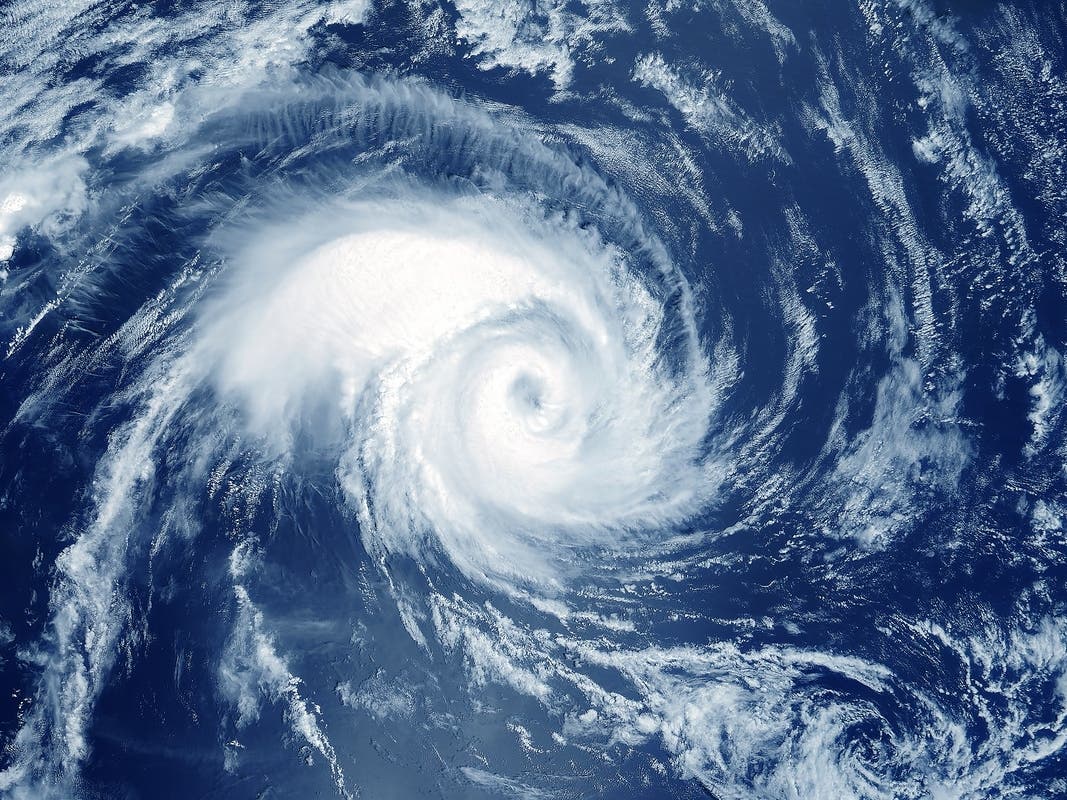
Image via the National Weather Service's Facebook page
Get more local news delivered straight to your inbox. Sign up for free Patch newsletters and alerts.