Health & Fitness
Twinkles the Elephant and Transparency in Government
A nearly universal lack of trust in government stands as an understandable impediment to the upcoming T-SPLOST referendum. Yet, history shows how to deal with government malfeasance.

In discussions about the upcoming T-SPLOST vote, much has
been said on the subject of government integrity or, more accurately, its
conspicuous absence. History is replete
with examples of the most appalling instances of ineptitude and malfeasance
imaginable – all at the hands of government.
While the list is legion, the goal here, for those who are not simply content with criticism, is to end it – or at least to limit it as much as possible. This begs the
question: does history give us an example of truly egregious mismanagement and
corruption that was rectified in a means applicable in this situation, today?
It just so happens that, very recently, in fact, we here in
Atlanta came face-to-face with the most heartless kind of cruelty that
bureaucracy can dish out, and turned it completely around in stunning short
order.
Find out what's happening in Brookhavenfor free with the latest updates from Patch.
It all began with an elephant named Twinkles.
Many people who call metropolitan Atlanta home do not
remember the Grant Park Zoo. Until the
late 1980s, the Zoo was run by a menagerie of city employees within the
Department of Parks and Recreation.
Find out what's happening in Brookhavenfor free with the latest updates from Patch.
In those days the Zoo had managed to maintain the rustic
quaintness of a bygone era, sort of like the chambers of a medieval surgeon. Still, the citizens had a genuine affection
for the creatures wiling away the hours of their incarceration within tiled
cells smaller than my freshman dormitory.
Atlanta’s de facto mascot was a gorilla who was named after the city’s
mayor and best known for watching soap operas all day (the gorilla, not the
mayor).
Next in line of fame were two Asian elephants. Cocoa was the flamboyant showoff, but so
vindictively jealous of her top-billing that she had to be separated from her
shy, arthritic counterpart, Twinkles, for the protection of the latter.
Like many a family dog, the timid, ailing Twinkles was
eventually sent to a farm in the wilds of Alpharetta where she could “run and
play and maybe we’ll all go out and see her one of these days”. Tragically, the scenario turned out to be a
bit too much like that of the family dog.
In 1984, the body of an elephant was found in a shallow
grave along a highway in North Carolina.
Not surprisingly, the most casual sleuthing by authorities promptly
found the guilty party: a third-rate travelling circus. What did come as a shock, however, was the
excuse offered by the circus owner. He
was quick to protest that he had been duped by the Atlanta Zoo into buying a
sick performer who promptly died. Shock
turned to horror when the postmortem proved that the perished pachyderm was
actually the presumed to be happily retired Twinkles.
No one was a bit amused.
People asked, “what kind of zoo does something like that!?” We soon found out.
A reporter named Ron Taylor (who sadly died just last month)
set about investigating the matter further and found that the city was running
little more than a concentration camp for exotic animals.
At about this time, two Kodiak bears were shot outside of a
roadside wildlife exhibit (of sorts) in North Carolina. This time the animals had not been sold by
the Zoo, though. Instead, they had
merely been “loaned” years before to the owner of the roadside menagerie by Zoo
officials who had simply forgotten all about them. (At least the city made a few bucks off of
poor Twinkles)
The investigation also found other examples of
malfeasance. It seems that at one point,
city workers, overzealous in their pothole filling duties, entombed the entire
collection of hibernating prairie dogs in their burrows with concrete. A desperately ill tiger was strapped to the
bed of a pickup truck and driven all the way to Auburn, Alabama where aghast
veterinary doctors mercifully euthanized her on the spot. In a few weeks, the same truck pulled up with
a similarly ill lion that had to be likewise dispatched by the now presumably
exasperated vets.
Just when it seemed that things couldn’t get any worse, it
was revealed that Zoo employees were supplementing their own diets with
“surplus” animals from the children’s petting zoo.
Around the country editorial cartoons began to lampoon the
city and this scandal. An apt example depicted
the entrance to the Atlanta Zoo brandishing the iron letters that spelled:
“Arbeit Macht Frei”. With pre-scandal attendance
almost exclusively limited to public school field trips in which none of the
attendees were permitted to refuse, even that became an activity worthy of the
intervention of the Department of Family and Children Services.
The city government naturally blamed it all on a lack of
funding and even had the temerity to propose a bond referendum to borrow
it. In response to demands that some
assurance be given regarding the use of these funds, the city demurred. Not surprisingly, indignant voters flatly
refused to approve the referendum and began to openly discuss plans to feed
city leaders to the more fearsome carnivores before closing the Zoo for good.
Desperate for a compromise, civic leaders reluctantly
transferred ownership and care of the Zoo to the Zoological Society, and within
but a few years Zoo Atlanta emerged from the shameful ashes of this affair, phoenix-like,
as among the best in the world.
It is still difficult to fathom the breadth and scope of
this transformation or its speed.
Atlanta’s kaleidoscope of animal cruelty had become a showplace of
zoological stewardship. The entire
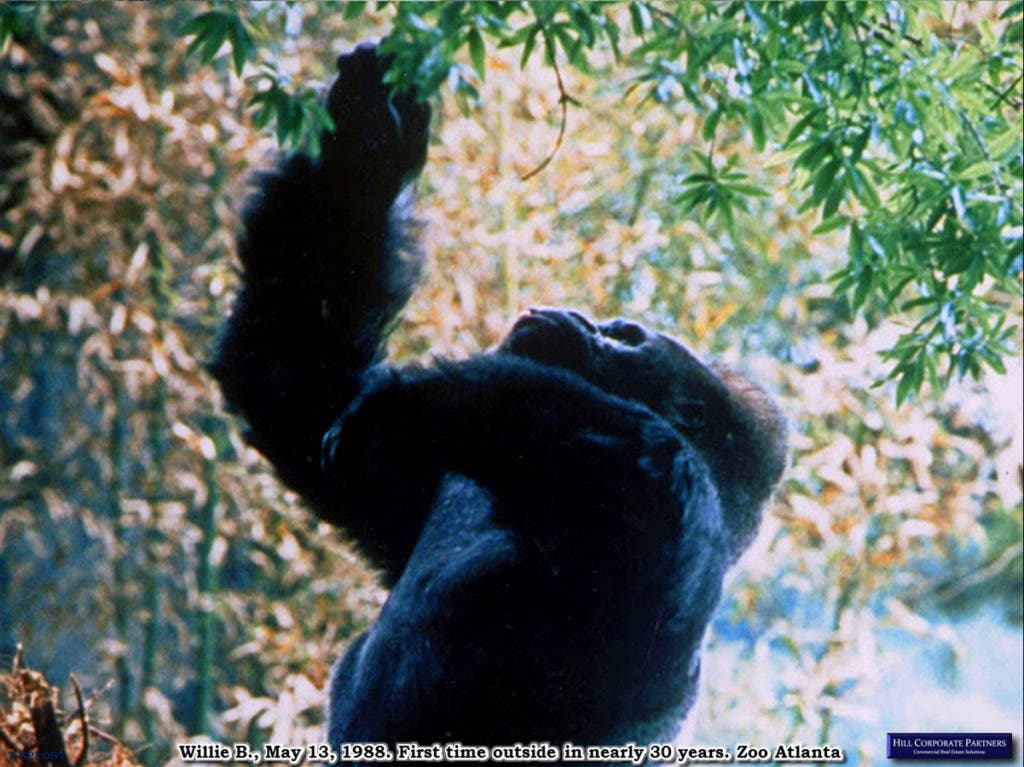
region cheered when Willie B. stepped into the sunshine and felt the earth
under his feet for the first time in nearly 30 years. (He went on to father several children by
different mothers in the years to come, leading some to suspect that he had
been paying far more attention to all of those episodes of “Secret Storm” than
anyone suspected.)
How was this amazing transformation possible? Certainly, there were many factors, but most
of the credit can be summed up in a single word: transparency.
After all, the Zoological Society could have produced the
same results as the city and its Department of Parks and Recreation. Granted, it may have required contracting the
duties out to Hannibal Lecter or the Manson Family, but look around, the world
is chock full of nincompoops and not all of them work for government. (“New Coke” came out at that time, too, if
you recall.)
The simple fact that the Zoological Society had to follow
accounting rules and disclose their records to the public gave their staff
ample reason to keep to the straight and narrow. The fear of public reaction to the revelation
of “employee compensation” that included line items like “Zoo animals to be
eaten by employees”, “revenue” from “sick animals sold to circuses”, and losses
due to “inadvertent burial in cement” was, in and of itself, enough reason to
institute proper governance.
The provisions of the upcoming transportation referendum
make it a crime to even comingle the money from the T-SPLOST with other
funds. They cannot be used as grants for
the Cowboy Poetry Society (which isn’t a joke, by the way), the Fund for
Incumbents’ Bribes, or, indeed anything other than the stated projects. Then, each year, a complete accounting of the
finances and activities pertaining to the stated projects must be made public
and will be reviewed by a Citizens’ Review Panel whose annual report will also
be made public.
P. J. O’Rourke sagely observed that money and power are to
politicians what whiskey and car keys are to teenaged boys. And, like teenaged boys, politicians behave
differently when they are being watched.
We may not yet be able to force our own government to adhere to the same
accounting rules to which the rest of us are legally bound, but under this
plan, for these projects at least, they will not be able to hide their
actions.
If transparency could turn around the Atlanta
Zoo in the 1980s, it’s worth imposing on our government, today.