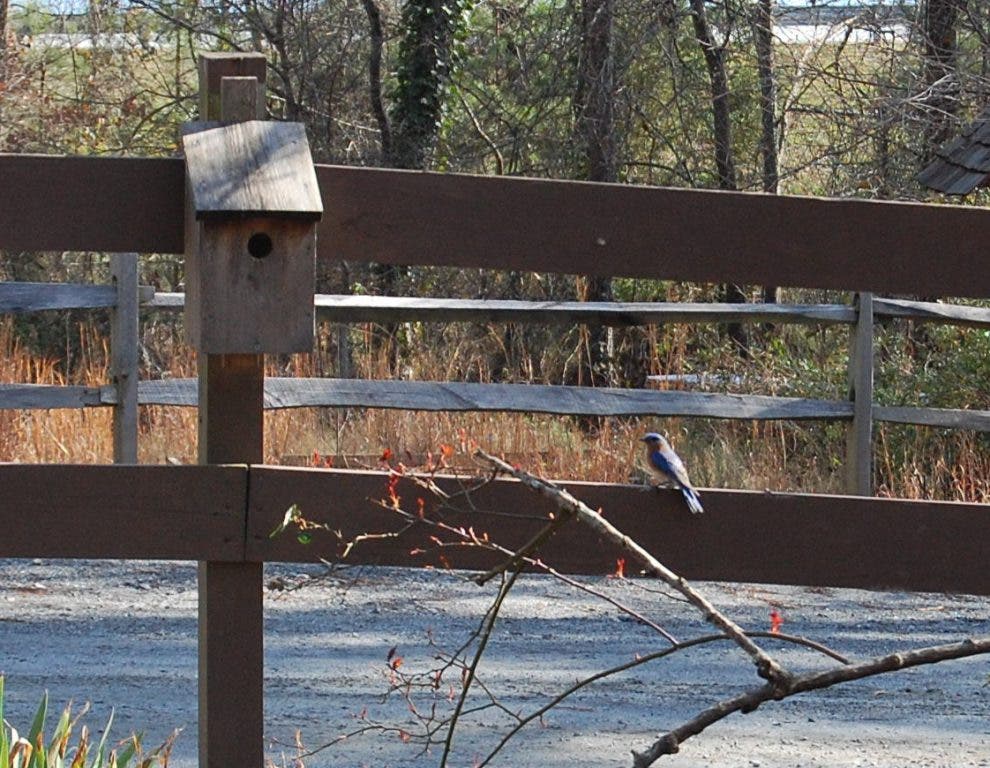
The Blue Birds (Sialia sialis) were active today, inspecting the various bird houses along the fence line. We generally get one pair of Blue Birds in one of these nests every spring. We have far more Blue Birds hanging out at the Preserve, but most must nest in other locations throughout the 46 acres.
Blue Birds are cavity-nesters, meaning that they prefer to deposit their eggs and raise their young in a secluded tree hollow or some other place. Typically, the male will seek suitable cavities (usually near a field or other open space, like our front lawn). After finding a good cavity, the male will try to sell the location to his mate. In doing so, he will engage in singing and wing-flapping behaviors. If all goes well, he will retrieve some nesting materials and place them in the cavity. All of this is in hopes that the female will accept the nesting site, and finish construction of the nest (there is a joke in here somewhere….).
Blue Bird populations had declined to as little as an estimated third of their historic population size by the mid 1970s. This is due to a host of factors, notably (as with virtually all species in decline) habitat destruction and the introduction of non-native cavity-nesters. These introduced species (especially the House Sparrow (Passer domesticus) and Common Starling (Sturnus vulgaris) ) out compete the blue birds for nesting opportunities. Through public education programs and the introduction of thousands of Bluebird houses across the country, their numbers seem to be rebounding.