Health & Fitness
The Elusive Foam Roller
Do you see people using foam rollers? Have you ever wondered what it does, why it works, or how to use it? Read this blog to find out more!


I have patients ask me all the time about things they can do at home to help keep them pain free and active. One of my go to responses is to ask if they have a foam roller at home. This is how a typical conversation goes:
Patient: “What can I do at home to help keep my muscles loose?”
Me: “Do you have a foam roller?”
Patient: “Yeah, but I don’t really know how to use it,” or “Yeah, but it hurts so I don’t use it,” or “Yeah, but I’m not really sure when to use it.”
This is usually followed by me trying to explain and demonstrate the proper way to use the foam roller and why it helps.
Find out what's happening in Johns Creekfor free with the latest updates from Patch.
All the muscles in the body are covered in a tissue called fascia. To better understand it, think about the muscle and fascia as a sausage link. The muscle is the meat inside and the fascia is the casing of the sausage on the outside.
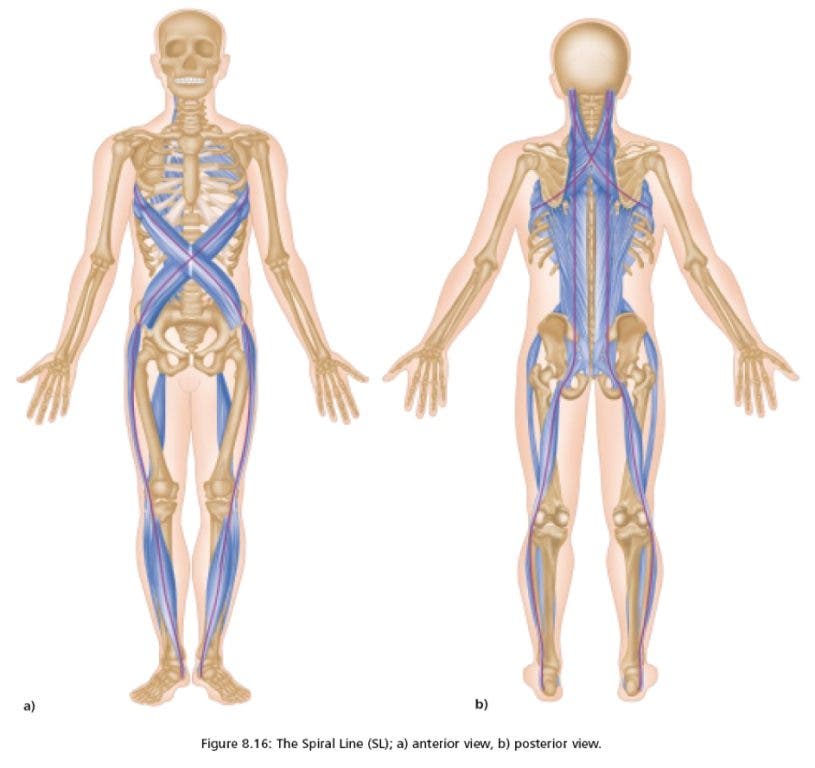
The fascia of the body connects many different muscles together and actually has the ability to contract itself. An example of one fascial line in the body is as follows: it starts at your toes, goes along the bottom of your foot, up the backs of your legs, up your back, to your neck and finally attaches to the tops of your eyebrows. This is called the superficial back line (Thomas Myers’ Anatomy Trains).
Find out what's happening in Johns Creekfor free with the latest updates from Patch.
If one area within this line tightens it can affect an area higher up or below. By rolling out the fascial line and relaxing any trigger points that may have formed within the fascia or muscles you free up the rest of the line and muscles.
Now that we know why it works here are some other questions I get from patients:
“When should I use it?”
“How do I use it?”
“Will it help me?”
Foam rolling can be used either before or after a workout. If you roll correctly before you exercise you can actually help prevent injuries! If you roll after the workout it helps loosen tightness and tension that has formed during your strenuous activities and can help “smooth” out your body. Rolling helps improve circulation, a goal for your warm-up, and will also help break down knots that limit motion.
So now you are thinking “Great, I’m on board!” but I still don’t know how to use it properly. Luckily there are several videos on YouTube for you to reference.
A great source of videos can be found at Runner’s World. However, I would adapt the technique to conform to these ideas:
- Go slow
- Find the area of tenderness
- Hold the roller in that spot and let the muscle relax. Relaxation is key!
- Move on to the next area of tightness
Dr. Mike Clark, the CEO of the National Academy of Sports Medicine told Outside Magazine to properly roll you go until “you find the most tender point in each area, then keep the roller on that spot for 60 seconds. Concentrating on sensitive spots will help relax your muscles.” For you science nerds, a deep pressure will help stimulate a receptor called the Golgi tendon organ. This receptor in the muscles aids in the relaxation of muscles and allows you to stretch it better. After you are done foam rolling then you should do a dynamic warm up to get more blood flowing.
Key points:
- It’s critical to take your time and relax your muscles so you can get a deeper relaxation
- When you find a tender spot it’s going to be uncomfortable! SO BREATH!
- Go slow and don’t rush it
Any Questions?
Dr. Darcee
Dr. Lee Chiropractic
6290 Abbotts Bridge Rd #204, Johns Creek, GA, 30097
770-559-4236