Crime & Safety
Fire Academy Cadets Jump Into First Aid, CPR
American Heart Association video class instruction on first aid and CPR provided real-life scenarios in classroom setting.
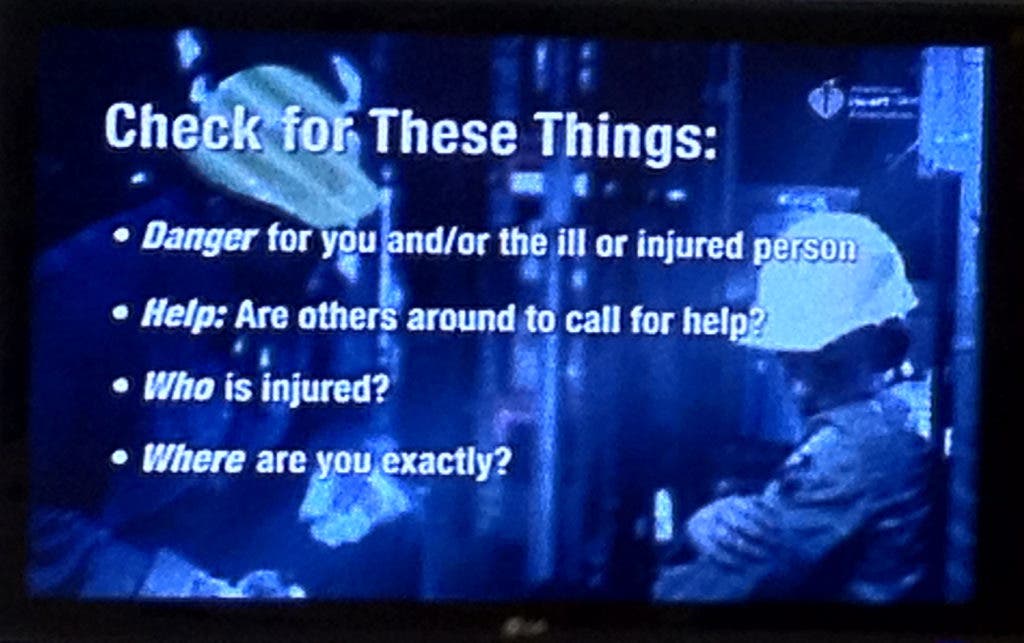


Make sure the scene is safe.
If first aid had a Ten Commandments, this life-saving mandate would surely sit at the top of the list.
Everything from the number and depth of chest compressions to render during CPR on adults and children to the proper application of triage in a first aid event were just a few demonstration-only exercises Johns Creek Citizens Fire Academy cadets participated in Saturday during an intensive six-hour session at Station 62.
Find out what's happening in Johns Creekfor free with the latest updates from Patch.
The academy allows ordinary Johns Creek adult residents who can pass a criminal background check extraordinary access to JCFD operations, equipment and procedures.
Saturday's Week 4 class, led by JCFD Fire Training and EMT Coordinator Lt. Tom Johnson, proved that fire officials’ commitment to the safety of Johns Creek citizens was equal in its expectations of fire academy cadets’ performance and understanding of emergency protocol.
Find out what's happening in Johns Creekfor free with the latest updates from Patch.
“Today’s class isn’t intended to certify y’all to do this without proper instruction and training, although there are many courses available out there that you can take to get certified,” Lt. Johnson said. “But after reviewing the video and exercises today you should be able to identify when a person is in need of emergency care and how best to respond and call in the professionals.”
A series of professionally produced how-to videos by the American Heart Association and rubber life-size practice mannequin busts put cadets in hands-on mode with various CPR techniques.
The AHA videos provided step-by-step instruction from a narrator while cutting to scenes where other actors played out emergency events in white and blue collar workplace settings.
During the CPR section, a heart-thumping sound effect sequence provided cadets a rhythmic, metronome cadence to gauge their chest compression ratio -- 30:2.
Another sequence provided instruction on how to properly react to someone having an allergic reaction by assisting them with administering their automated, spring-loaded epinephrine injection device called an EpiPen: Remove the end cap, hold the device's cylinder in the palm of the hand, and plunge it into one of the vicitim's thighs between the hip and knee and hold it there for 10 seconds.
Yet another scenario provided proper technique on applying and removing non-latex gloves and other protective gear to prevent contamination in the event someone is vomiting, bleeding or has open cuts or lacerations - including how to properly apply a tourniquet.
It's equally important to know liability issues citizen emergency responders may face. Many states, including Georgia, have laws against unlicensed people dispensing prescription medications or controlled substances no matter the situation, Lt. Johnson said.
But to assist someone with their own prescription if the victim is able to consent is acceptable, he added. Over the counter drugs, like aspirin, are exempt.
The first aid instruction also provided team-building scenarios. Groups of three practiced how to approach a distressed victim, identify a problem, announce their first aid training and get the victim’s consent to help while they’re stabilized until emergency responders with better training and equipment could arrive.
“I enjoy volunteer and community service work,” said fire academy cadet Gerry Lewis, who also participated in the first-ever Johns Creek Citizens Police Academy and now volunteers in the course when police trainers conduct traffic stop and felony arrest demonstrations.
“When it comes to helping others, this was probably the most valuable six hours I've ever spent,” Lewis added. “I hope I never need to use CPR, AED [Automated External Defibrillator] and first aid training. But I do feel confident that, if the need arises, I’ll know what to do until the professionals arrive."
See also: