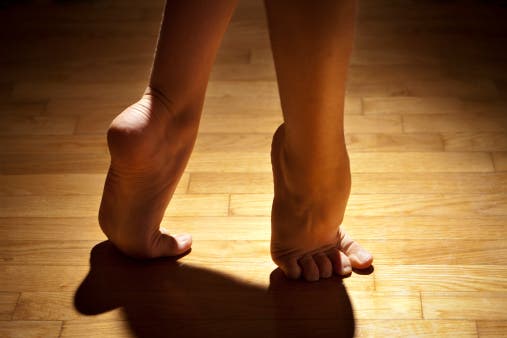
Dance is an art form that doubles as a fun and sociable form of exercise. Just as there are many styles of dance (Ballet, Ballroom, Salsa, Jazz, Hip- Hop, Irish) there are, correspondingly, many types of lower extremity dance related injuries that orthopaedic surgeons evaluate and treat.
Dancers are athletes in every sense of the word. One measure of the athleticism of the dancer comes in the form the amount of stress dancers put on their lower extremities. Consider, for example, a study analyzing the Irish Dance Rock Step calculated ground reaction forces at 4.5 times the dancer’s body weight and the joint contact forces at the level of the ankle joint where calculated at a whopping 14 times the dancer’s body weight! The ability of the dancer’s body to repetitively adapt to and to manage these levels of stress leaves me in awe.
Some of the most common dance related injuries that I treat include: stress fractures, ligament sprains, posterior ankle impingement syndrome, sesamoiditis, blisters and callouses. Many of these injuries are preventable.
Find out what's happening in Kennesawfor free with the latest updates from Patch.
Dance injuries will occur, and when they do, they should be promptly evaluated and treated by a qualified expert. Attempting to “dance thru” an injury will commonly compound the original or primary injury and lead to separate secondary overuse injuries due to a subconscious attempt to compensate/ avoid the initial pain while continuing to participate.
Thankfully, many dance related injuries can be prevented. The old adage holds true: “an ounce of prevention is worth a pound of cure.” And here we explore some proven philosophies for injury prevention in dancers:
Find out what's happening in Kennesawfor free with the latest updates from Patch.
1) Proper Fitting Shoes: Wear professionally fitted shoes appropriate for your style of dance. The proper dance shoes best distribute load, dissipate shock and help support the maintenance of alignment of the foot and ankle joints. Improper shoe fit is frequently the cause for blisters, callouses, ingrown toenails and bruised toenails.
2) Proper Instruction / Dance Mechanics (aka: technique and posture): Don’t “go it on your own”. Always use qualified and seasoned instructor who will teach proper technique and posture and will help you best choose a dance style that is best suited to your abilities and body type. An instructor will emphasize technically correct posture and technique. Talk with your dance instructor if you have a problem or injury. They may be able to teach a variation in your technique to help avoid further or future injury.
3) Proper Warm Up: Before a dance session or event always: warm up, stretch and then participate. After the session, perform an immediate cool down stretching program then ice injured or strained areas.
4) Hazardous Environment: The dance surface must be inspected and confirmed free of worn or ripped carpet or any peeling or unleveled surfaces. Avoid hard, rigid surfaces. Surfaces can become wet from perspiration as frequently as consumable liquids and present a real injury risk.
5) Overtraining/ Fatigue: Dancing for too long or too frequently will lead to an array of overuse injuries from shin splints to stress fractures to tendonitis It is critical to build duration and intensity of your dance routine slowly and gradually over time. This gradual buildup of stress allows the muscle tendon units to adapt and increase their endurance in holding contractions and managing stress. As muscles fatigue they lose their elasticity as well as the ability to maintain a contraction which inhibits the dancer’s ability to hold proper form. When a fatigued muscle tendon unit is called on to perform repetitive maneuvers with ground reaction forces approaching five times the dancers body weight it is a wonder overuse injuries aren’t more common.
6) Failure to rest/ treat an injury: Returning to dance before an injury has healed can aggravate the condition and lead to secondary injuries thru compensation. Remember your body has the capacity to heal. It merely needs rest and support to do so. Stop if you feel pain. Treat soft tissue injuries (bruises, sprains, strains) with Rest, Ice, Compression (bandage the swollen area) and Elevation (aka: R.I.C.E). Seek advice from your doctor as soon as feasible. Don’t resume dancing until you have fully recovered and rehabilitated from your injury.
Dr. M. Shay Womack practices at Resurgens Orthopaedics’ Kennesaw and St. Joseph’s offices. His areas of expertise include foot and ankle surgery; arthroscopic surgery of the knee, shoulder, and ankle; and sports medicine. He completed his medical degree at the Medical College of Georgia, and completed the joint residency program at Georgia Baptist Medical Center and Scottish Rite Hospital. Dr. Womack completed fellowships at Atlanta Orthopaedics & Sports Medicine (sports medicine), Kendrick Hospital (foot and ankle surgery), and Emory University (foot and ankle surgery). He is board-certified by the American Board of Orthopaedic Surgery and is an active member of the American Academy of Orthopaedic Surgeons, American Orthopaedic Foot & Ankle Society, Atlanta Orthopaedic Society, Medical Association of Georgia, and Georgia Orthopaedic Society.
Learn more about Dr. Womack: http://www.resurgens.com/staff/physicians/159/M._Shay_Womack,_M.D.