Health & Fitness
The Golden Rule of Groceries
Those things you learned in Kindergarten that are All You Need to Know? The test on whether you learned them is at the grocery store.

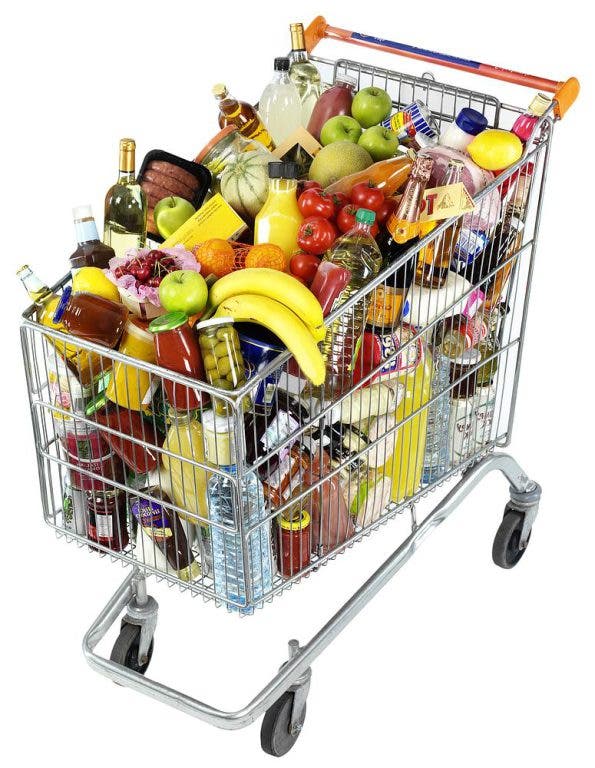
A few weeks ago I posted a few Rules of the Road, which I thought were fairly obvious tips for driving without inciting the wrath of everyone around you. I’ve been thinking about doing one regarding rules for behaving in public that your mother should have taught you, but apparently she didn’t. (Of course, I’m not talking about you. You are always kind and considerate. I’m talking about that other guy over there.) Composing it in my head, as I generally do before committing it to paper, I could not seem to get out of the grocery store. So we’ll use the grocery store here as a metaphor for life and living in society.
Modern grocery stores sell an awful lot of stuff. To make it easier for you to buy an awful lot of stuff (and thus increase the bottom line profit) the stores provide you with these giant carts with which to store the 12 pack of Cream of Mushroom soup and other goodies before you make it up to the cashier. These carts are not always that easy to maneuver. They have a turning radius of one city block, and generally have one wonky wheel that makes going in a straight line impossible. So I will forgive navigational errors to some degree. But surely this is not your first time in an American-style grocery store, and you should know from experience that you are going to have these troubles, so you should adjust accordingly. This means do NOT come barreling out of the aisle as if your groceries will be free if you make it out of the aisle in record time. Pretend like there is a stop sign, and look both ways before crossing the intersecting aisle.
The size of these carts also means that it is painfully easy to block people in. Floor space doesn’t contain sellable merchandise, so the people who design grocery stores aren’t going to give you any more of it than is absolutely necessary. But they are usually considerate enough to make each aisle a two-lane highway. This means if you keep to one side, someone can get through on the other side. There is no reason whatsoever for you to park your cart in the center of the aisle while you decide whether to buy the Kellogg’s Corn Flakes or the Publix brand. Also, when someone else is parked on one side, don’t park exactly next to them, even if the Hamburger Helper selection is directly opposite where they are standing. Park your cart a few yards down the aisle and then take your time to decide whether or not you want the “Cheesy Lasagna” or “Taco Pie” variety so people can still get by.
Find out what's happening in Loganville-Graysonfor free with the latest updates from Patch.
You are unlikely to be injured by walking an extra 12 feet down the aisle or carrying the box that far back to the cart. Same goes for when you run into your friend at the store and just have to discuss the merits of the new soccer coach.
Checking out is the worst area for offense. There are some simple rules that if we would all follow, we would all spend less time standing around doing nothing but increasing our blood pressure. Following are a list of the top few my doctor wants me to avoid witnessing:
Find out what's happening in Loganville-Graysonfor free with the latest updates from Patch.
- That express line that says “15 items or less”? It means if you have more than 15 items you shouldn’t be in that line. It is designed for people who just want to get in and out of the store. It does not mean that if you have 27 containers of yogurt that they count as one because it is all yogurt. The cashier still has to scan all 27 containers, thus defeating the purpose of the ‘express’ line.
- If there is no bagger at the end of your lane, bag your own stinking groceries and load them into your cart. No one wants to wait for the cashier to finish ringing things up so she can bag them while you stand there like royalty waiting to be served because putting a head of lettuce into a plastic bag is beneath you, or because your cell phone conversation is more interesting than what you are doing or those around you.
- Presumably, if you are buying groceries, you are familiar with the fact that you have to eventually pay for the groceries. I don’t care how you pay for them – cash, credit, debit, check, money order, wampum: it is all the same to me. I’m just saying that you should make that decision and you should locate the implements necessary to make such a transaction (credit card, checkbook, etc.) before the cashier tells you what the total is. It’s not like it is a surprise what is going to happen next.
I’m anticipating a lot of criticism that I’m just some middle-aged fusspot who wants everything done her way. And, maybe I am. But I think it is larger than that. Every single thing I have described in here is all based around one larger concept: no one has the right to hold anyone else up unless it is absolutely necessary. When you take someone’s time from them, you are sending the message that your time is more important than theirs. You are, effectively, holding them (me) hostage, even though the FBI is unlikely to make this situation a priority and send out a negotiator.
And I know, I should be more patient, I should use the time to meditate or pray or figure out how I’m going to get my oil changed and still make it to both soccer practice and “Annie” rehearsals. That’s true, but it is just as true that we should all be aware of how the smallest of our actions and choices affect those around us and make our decisions accordingly.
That said, if I want to buy a gallon of milk using dimes and pennies I dug out of the cushions of my car seats because we really need milk and I really didn’t have time to go by the ATM, you’re just going to have to wait.