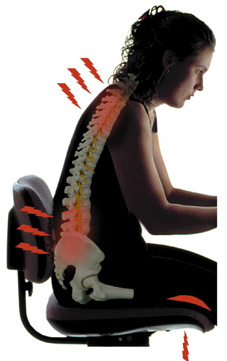

Is Your Posture Killing You?
Most of us have been told that it’s important to maintain a good posture, but few of us have been told why, or what effects poor posture can have on our health. Good posture is about much more than just looking good. The American Journal of Pain Management has states that “Posture effects and moderates every physiologic function from breathing to hormone production.”
In a world where we depend on technology more than ever, we’re seeing an increase in slumped shoulders and forward head posture as a result of increased use of computers, tablets and smart phones. Most people are failing to realize that this is becoming a major health concern. Along with aches and pains, poor posture can lead to cervical disc injuries, arthritis, breathing difficulties, gastrointestinal distress, depression, decreased immune function, hormonal imbalances, muscle imbalances and shoulder problems.
Find out what's happening in Loganville-Graysonfor free with the latest updates from Patch.
Effects of Forward Head Posture
Ideally, in a relaxed posture the ears should fall directly over the shoulders. When the bodily is aligned in this way, the weight of the head is evenly distributed through the muscles of the neck and the joints of the cervical spine. For every inch that the head moves forward, it gains 10 pounds in weight in regards to the amount of work the muscles in the upper body have to do. This constant pressure the muscles in the back of the neck are under can lead to headaches and further muscle imbalances in the chest and middle back. As the head pulls the thoracic cage forward there may also be up to a 30% loss of vital lung capacity. Along with this decreased lung function, people may develop a hump in the upper thoracic spine known as a Dowager Hump.
Find out what's happening in Loganville-Graysonfor free with the latest updates from Patch.
Normal Cervical Curve
The cervical curve, also known as the cervical lordosis, is quite possibly the most important curve in the human spine. Scientists commonly refer to it as “The Arc of Life,” as this region houses the lower brainstem and upper spinal cord. Research has shown that a loss of the cervical curve can stretch the spinal cord 5 to 7 cm, creating pathological tension. Loss of the normal cervical lordosis can also lead to degeneration of cervical discs and arthritis. Some people may develop a cervical kyphosis, otherwise known as a reverse curve, which along with arthritic changes, may lead to pinched nerves.
How Can You Improve Your Posture
One of the easiest ways to improve your posture is to simply be more aware. If you’re around other people, simply take a look around and notice how normal activities promote slouching and forward head posture. Pay attention to how your sitting in a chair or standing and make an effort to keep your head up and shoulders back.
Next, it’s important to have your spine checked by a chiropractor. Chiropractors are trained to properly identify cervical spine dysfunction through physical examinations as well as x-rays. Even when posture seems normal, there may be underlying problems with the cervical curve and the early stages of degenerative changes to the spine. A chiropractor will also use adjustments and traction exercises to improve any loss in the cervical lordosis.
Another way to improve posture is to begin doorway stretches for the chest. One of the most common muscle imbalances associated with forward head posture is tightening of the chest muscles. The exercise I've included can be performed at home and is beneficial for improving these muscle imbalances.
At Loganville Family Chiropractic, Dr. Sedlock specializes in diagnosing these postural imbalances and works to develop individualized plans for correcting these problems. It is crucial to have your spine checked and correct these issues before they progress to further problems down the road.
Dr. Jeremy M. Sedlock
Loganville Family Chiropractic
www.loganvillefamilychiropractic.com
770-554-5292