Health & Fitness
Intensity - The True Path to Fitness
While everyone out there has their idea of how you should get fit, the science has been settled. Adding intensity to your workouts has been proven to be the most effective way to get fit.

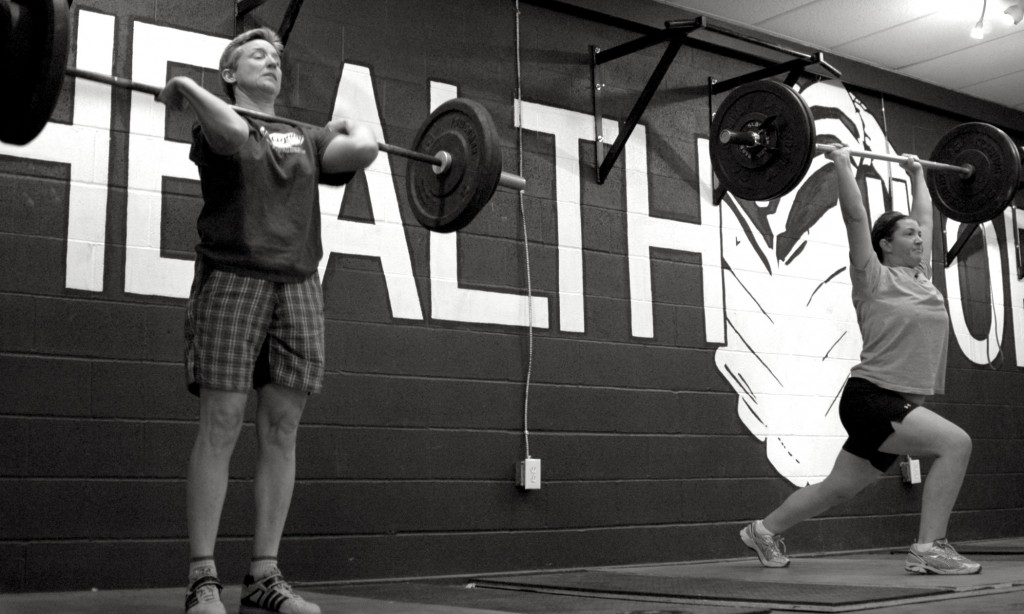
The conventional wisdom on how to get fit is filled with misinformation. Most of it is made to be comfortable and most of it is wrong.
The Amerian College of Sports Medicine says, "Adults should get at least 150 minutes of moderate-intensity exercise per week." And every personal trainer at Gold's Gym and LA Fitness says that you should seek to get your heartrate at 50-70% of max for maximum fat burning potential.
The former is not bad advice, per se, but the latter is flat out bad science. While encouraging a sedentary person to get up and get moving is a great thing to do, there are better and worse ways to exercise that have either better or worse results.
If you're going to spend time at a gym or at a park with the goal of getting in shape, don't you want the most "bang for your buck?" Don't you want to know the BEST way to get in shape, and not just A way to get in shape?
Intensity: The Missing Ingredient
Find out what's happening in Peachtree Cornersfor free with the latest updates from Patch.
How many times have you tried to get in shape? How many times have you failed? If you're like I was and most everyone else, you don't know. You've lost count. Let's try again with science behind us!
The next sentence is a bit of a mouthful, but it's worth reading twice. Intensity is the independent variable most commonly associated with maximizing favorable adaptation to exercise. What does that mean?
Find out what's happening in Peachtree Cornersfor free with the latest updates from Patch.
It means that all the things you want from your workout comes through intensity. It means that no matter what you are measuring, increasing the intensity of a workout program will lead to a larger increase in that variable.
Let's say you're measuring V02 Max (that is the amount of oxygen your lungs can process in a minute and a pretty good indicator of fitness). If you are trying to increase your V02 max, then increasing intensity of your workout program will lead to a larger increase in V02 max. The same thing goes for:
- increased muscle mass
- fat loss
- lower blood preasure
- lower triglycerides
- flexibility
- better lactate threshold
- increased bone density
- increased strength or power
- or the holy grail of fitness, increased work capacity
Increase intensity and you see an increase in anything you care to measure.
What is Intensity?
If you look at the globo gyms, intesity is how loud you're grunting while doing the bench press. If you ask a runner, their intensity is measured by the heart rate monitor on their wrist. In truth, neither of these are a true measure of intensity.
If you ask an exercise physiologist (the people who know), they will tell you that intensity is exaclty equal to power output. It is a simple scientific equation.
Intensity = Power = (Load X Distance) / Time
Your power output (your intensity) is measure by how much weight you move, how far you move it, and how quickly you move it there. The load can be your body weight, grocery bags, or a barbell.
The distance can be from the ground to full extension as in a pushup or moving a barbell from the ground to above your head as in the clean and jerk.
The time is how fast you do it. So, in order to increase intensity, you need one or more of the following while keeping the others unchanged:
- More weight
- More Distance
- Less Time
The Good News
The best part about the whole intensity thing is that you don't have to be intense for an hour. You don't even have to be intense for half an hour.
A japanese researcher named Izumi Tabata has published numerous studies on the efficacy of High intensity interval training to increase V02 max, among other markers for fitness.
The tabata protocol calls for as little as 4 minutes of exercise per day, 3 days per week, and has shown fantastic results. Don't believe me? Try it. It'll only take 12 minutes!
Go to Tabata Timer and set it for 8 intervals of 20 seconds of work and 10 seconds of rest. Then, pick any movement you'd like (I'd pick burpees), and do them as fast as you can for 20 seconds then rest for 10 seconds and repeat that 8 times for a total of 4 minutes of exercise.
Really, try it and let me know in the comments what you think. Also, check back next week when we talk about the hormonal and metabolic changes that make high intensity workouts so effective. Of course, you can't hope to get the most out of a workout unless you're eating right.
Disclaimer: Not everyone should undertake a high intensity workout program. With certain heart conditions and other risk factors, high intensity exercise can be dangerous. Speak with your doctor and a well trained fitness professional before embarking on a high intensity fitness regimen.