Politics & Government
Simpsonwood Property Sale: A Case of Broken Trust?
Without a fight, the North Georgia Conference and the Simpsonwood Retreat Center was able to get Miss Ludie Simpson's wishes overturned. The Peachtree Corners property is now up for sale.


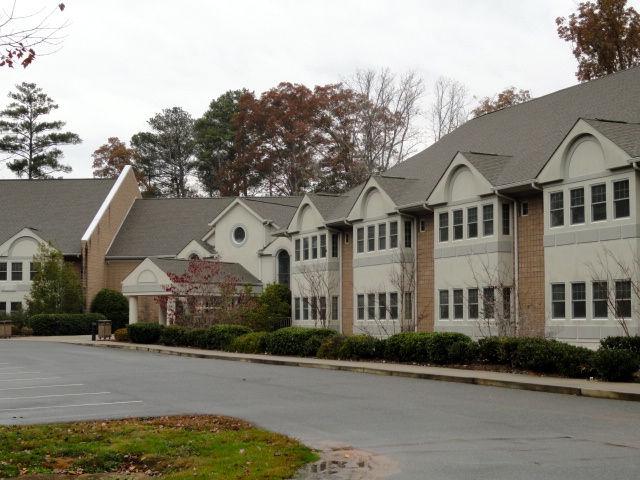

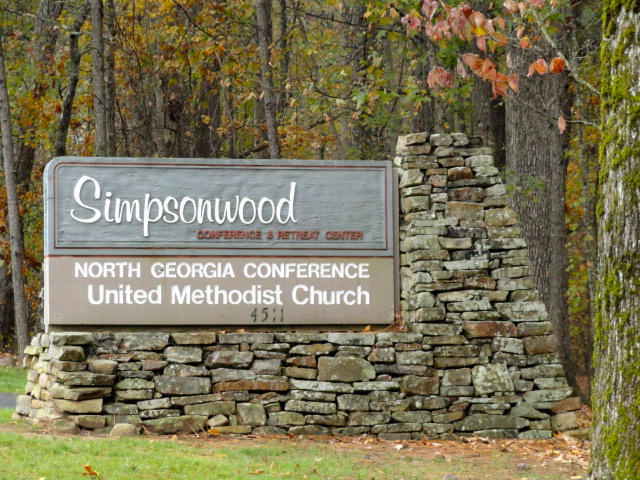

Editor's note: On August 14, 2013, Gwinnett Superior Court Judge Ronnie K. Batchelor ruled that the deed restrictions on the Simpsonwood Retreat and Conference Center property were no longer in force giving the owners of the 227-acre property, the Trustees of North Georgia Conference of the Methodist Church, the freedom to put the property up for sale.
The news was a shock for Peachtree Corners residents who had believed that Miss Ludie Simpson's gift, would remain as she intended, to be kept in tact. The pristine property, part of which borders the Chattahoochee River, has been used not only as a retreat by religious and business groups but as a site for weddings and other gatherings. It has also been enjoyed by the community, many who enjoy the walking trails, by the local YMCA as a summer camp, by local Girl Scout troops for over-night camping trips and neighbors who used the outdoor picnic pavilion.
With the judge's ruling, the property may now be marketed and sold. It is currently zoned for residential use (40,000 square foot lot restrictions) or agriculture use.
Find out what's happening in Peachtree Cornersfor free with the latest updates from Patch.
The question many residents are asking, how could this have happened. Why are Miss Ludie's wishes no longer valid.
Grace Lewis, an attorney and Peachtree Corners resident has researched the court filings which are presented below.
Find out what's happening in Peachtree Cornersfor free with the latest updates from Patch.
By Grace Evans Lewis
By resolution, the North Georgia Conference of the United Methodist Church “authorized and directed” the Conference Board of Trustees “to market the Simpsonwood property with a view to obtain the best possible offer to purchase the property.” On June 27, 1973, for a consideration of $1.00, Ms. Ludie Simpson conveyed the Simpsonwood property to the Trustees of North Georgia Conference of the Methodist Church, Inc. (the “North Georgia Conference”) pursuant to a deed. The 1973 Deed provides that the North Georgia Conference:
“shall hold the property conveyed herein in tact except [it] may deed property without cost to Wesley Homes, Inc. . . . .”
The 1973 Deed recites: “This deed is a deed of gift.”
Nineteen years later, on August 25, 1992, the North Georgia Conference conveyed the Simpsonwood property to the Simpsonwood United Methodist Conference and Retreat Center, Inc. (the “Simpsonwood Retreat Center”) “as a gift” pursuant to a deed. The 1992 Deed recites that “[t]his property is conveyed subject to the restrictions of record currently on the property” and:
“IN TRUST that said premises shall be kept, maintained and disposed of for the benefit of THE UNITED METHODIST CHURCH and subject to the usages and the Discipline of the UNITED METHODIST CHURCH.
Under the 1992 Deed, the North Georgia Conference “reserve[d] no right or interest in said premises.”
Since 1973, the covenant “to hold the property . . . in tact” was honored. But, on March 19, 2013, the North Georgia Conference and the Simpsonwood Retreat Center, as Plaintiffs, filed a lawsuit in the Superior Court of Gwinnett County requesting the Court to enter a declaratory judgment:
“that the Restrictive Covenants are no longer valid under Georgia law, that any and all restrictions upon Plaintiffs’ use and alienation of the Property have lapsed, . . . and that Plaintiffs may . . . freely use and/or convey the Property.”
The Plaintiffs claimed that the covenant that the property be held “in tact” is “no longer valid.”
Without a fight, the North Georgia Conference and the Simpsonwood Retreat Center succeeded in obtaining the requested judgment, arguing that “covenants with a duration of more than 20 years” “may be limited to the term of 20 years pursuant to an order of a court pursuant to OCGA § 44-5-60(b).” On August 14, 2013, Gwinnett Superior Court Judge Ronnie K. Batchelor ruled:
“[A]ny and all restrictions upon Plaintiffs’ use and alienation of the Property have lapsed and are of no further force and effect, and that Plaintiffs may freely use and/or convey the property free of the Restrictive Covenants.”
In his Order, the Court found:
“[W]hile covenants with a duration of more than 20 years are not void ab initio, they may be limited to the term of 20 years by order of a court pursuant to OCGA § 44-5-60(b).”
The Plaintiffs’ Motion for Judgment on the Pleadings (the “Motion”) was unopposed by the four defendants named in the lawsuit. In granting the Plaintiffs’ Motion, Judge Batchelor specifically found:
No Answer, Response to Plaintiffs’ Motion for Judgment on the Pleadings, or other responsive pleadings were filed which give any reason to deny Plaintiffs’ pending motion.
The Georgia Attorney General, Wesley Homes, Inc. and Wesley Woods Senior Living, Inc. all “consent[ed] to the relief requested by the Plaintiffs.” Michael T. Smith, as Adminstrator, CTA of the Estate of Ludie Simpson (the “Estate”), did not file an answer or other responsive pleading.
No argument was made that the Plaintiffs’ Motion should be denied on the theory that the deeds created a charitable trust. Georgia law provides:
“A charitable trust shall be valid even though under the trust provisions it is to continue for an indefinite or unlimited period.”
OCGA § 53-12-173 (emphasis added).
In addition, no argument was made that, as the Georgia Supreme Court noted in First Rebecca Baptist Church, Inc. v. Atlantic Cotton Mills, 262 Ga. 688 (1993), Georgia recognizes that “a donor may make a gift for charitable purposes perpetual in duration . . . and in order to effectuate his primary purpose, impose a condition that the gift property shall not be alienated, but shall continue in the hands of the donee in perpetuum.”
Under Georgia law, “a charitable trust is a trust in which the settlor provides that the trust property shall be used for charitable purposes.” OCGA § 53-12-170(a). By statute, “charitable purposes” include, among other things, “the advancement of ethics and religion,” and “the protection and preservation of the environment.” OCGA § 53-12-170(b)(3)and (6). Unlike private trusts, charitable trusts may be of unlimited duration.
The 1992 Deed recites that the Simpsonwood Retreat Center holds the Property “IN TRUST that said premises shall be kept, maintained and disposed of for the benefit of THE UNITED METHODIST CHURCH . . . .” The Georgia Supreme Court, in Huger v. Protestant Episcopal Church in Diocese of Georgia, 137 Ga. 205 (1911), held that a charitable trust was created by a deed to the Protestant Episcopal Church in the Diocese of Georgia containing the following language:
“To have and to hold . . . unto the said party of the second part, its successors and assigns, in trust, nevertheless, for the use and benefit of the religious congregation in the county and state first mentioned, called St. John’s Protestant Episcopal Church, its successors and assigns.”
(Emphasis added.)
As early as 1848, in Beall v. Fox’s Ex’rs, 4 Ga. 404 (1848), the Georgia Supreme Court held that bequests “to the Treasurer of the American Bible Society and the Treasurer of the Domestic Missionary Society for the sole use of said societies” created charitable trusts. The Treasurers of the respective societies constituted trustees.
Similarly, in Roughton v. Jones, 225 Ga. 774 (1969), the Georgia Supreme Court considered whether a charitable trust was created by a bequest to “the Methodist Church of Milan and the Baptist Church of Milan . . . to be used equally through the agencies of these two churches for Home and Foreign Missions.” The Supreme Court held that “the bequest in the instant case created a charitable trust.” The Court ruled:
“The Methodist and Baptist churches of Milan are merely trustees. * * * If they refuse to act as trustees, equity will replace them so that . . . the charitable purpose is fulfilled.”
In Chattowah Open Land Trust, Inc. v. Jones, 281 Ga. 97, certain Cobb County property was devised by Judith Felton “to the Chattowah Open Land Trust, Inc. for qualified conservation purposes.” Ms. Felton’s Will provided that it was her intent:
To bequeath [her] homeplace and the surrounding acreage to an organization which will maintain the property in perpetuity exclusively for conservation purposes . . . .”
The Georgia Supreme Court rejected Chattowah’s argument that it was entitled to sell the property, rather than holding it in perpetuity as a trustee. The Supreme Court held that the Will “created a charitable trust” even though “the will failed to use the terms ‘trust’ and ‘trustee’.”
Defendant, Michael T. Smith, as Administrator C.T.A. of the Estate of Ludie Simpson, filed certain correspondence that he received “from several heirs or beneficiaries of the estate,” which shed light on the circumstances surrounding Ms. Simpson’s conveyance of the Simpsonwood property. By letter, dated July 8, 2013, Mr. William R. Carroll wrote to Mr. Smith, saying that “Aunt Ludie left me her extensive file on Simpsonwood” and that his “Great-Aunt was assured by the Church that the property now known as Simpsonwood would be held intact if she would transfer Simpsonwood to the Church . . . .”
Mr. Carroll attached correspondence, dated June 21, 1973 (the “June 1973 letter”), which he represented was received by Ms. Simpson “from the Conference in which James A. Mackey, a lawyer and Lay Leader of the North Georgia Conference, and W. Candler Budd, Chairman of the Board of Trustees of Wesley Homes, Inc. affirmed [his] Great-Aunt’s understanding.” The letter recites that it was written following “a visit with [Ms. Simpson] in your home to discuss . . . the 237-acre farm you have considered giving to Wesley Homes, Inc.”
Writing “that I realize that you have not yet made your decision,” the 1973 letter expressed an “understand[ing] that your primary goal is to preserve this magnificent tract of land intact, and to erect a memorial to your mother . . . in the form of a chapel . . . .” Referring to a “common commitment to shared goals,” these “goals” were “reiterate[d”]in the June 1973 letter, among other things, as follows:
“First, we who have talked with you share a love for what your friend, Pearl Buck, called the good earth. To the extent compatible with intelligent human use, we must preserve the tract’s natural beauty.
Second, since you have it because of your mother’s love for it, the tract should be held intact and not chopped into smaller parcels or exploited or despoiled.”
Saying that “[t]his letter can serve as our memorandum of understanding if you decide to go forward with the North Georgia Conference and Wesley Homes, Inc,” it is signed by “James A. Mackay, Lay Leader, North Georgia Conference,” and “W. Candler Budd, Chairman Board of Trustees Wesley Homes, Inc.” On June 27, 1973, for a consideration of $1.00, Ms. Ludie Simpson conveyed the Simpsonwood property to the Trustees of the North Georgia Conference of the Methodist Church, Inc.
Editor's note: Grace Evans Lewis is an attorney practicing law at Carol Clark Law in Sandy Springs. She lives with her family in Peachtree Corners.
Get more local news delivered straight to your inbox. Sign up for free Patch newsletters and alerts.