Community Corner
Simpsonwood Retreat: A Walk into Native History
The trails of the Simpsonwood Retreat Center offers wooded strolls down history lane.
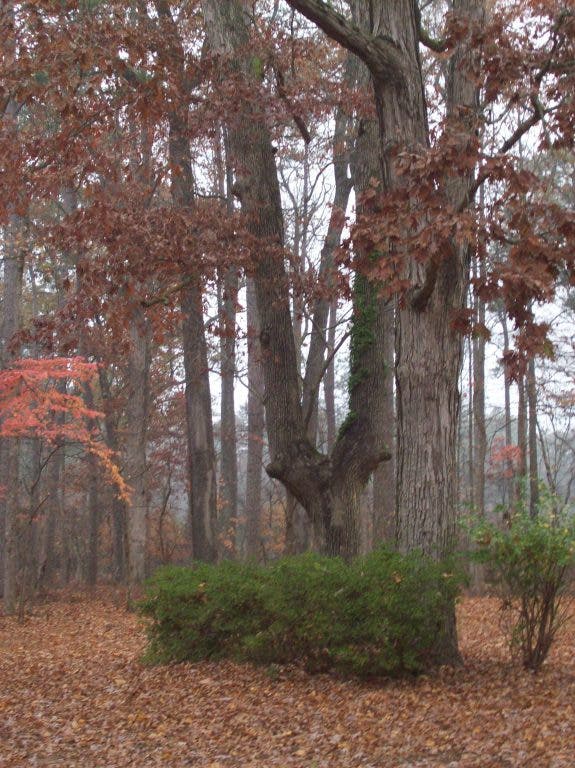


Step off the pavement and onto the wooded two-mile trail in the and you literally walk right into a land parcel that has seen some of the earliest history of North Georgia.
Thanks to the request of Miss Ludie Simpson, the most recent of the Simpson family to own the land, folks will forever enjoy nature in its preserved state. First an Indian trading post, the retreat has seen decades of change but, luckily, remains mostly untouched by developers.
Find out what's happening in Peachtree Cornersfor free with the latest updates from Patch.
Over the next weeks, in a series of articles, some of the secrets hidden deep in the woods will be revealed. Here’s hoping that a few tidbits of history will make your next walk along the paths at Simpsonwood all the more enjoyable.
For centuries, Cherokees and Creeks roamed this section of forest that borders the Chattahoochee River, carrying furs, animal skins, beaded head dresses adorned with feathers and even gold to trade with one another. By the early 1800s, the Natives were friendly traders with the first "white" settlers as well.
Find out what's happening in Peachtree Cornersfor free with the latest updates from Patch.
Near the entrance of today’s United Methodist Retreat Center, an informed eye may spot a tree shaped like the letter "Y" and an elbow-like bent hardwood near the creek that seems to point towards the mouth of the river. Both are suspiciously similar to bent "marker" trees that are being studied today by stewards wanting to prove or disprove their existence.
Some tree huggers and historians believe Natives tenderly bent saplings in various shapes to mark trails, likely around 1820, when the federal government took over massive land expanses. The markers are said to indicate the presence of water, guard buried gold and lead the tribes back to their God-given lands.
During the early years, before the removal of the 1840s, Natives may have cooked group meals on the embers smoldering in a large stone fire pit still standing next to the chapel on the property. Did they play an early form of La Crosse there on the open field? History notes the game, often played to the death, was used as a way to resolve territorial disputes or a chance for a brave to capture the heart (and the teepee) of a squaw.
Another point of interest to ponder over while walking the trail is the possibility of a fish trap which may still be in the waters of the river and visible today. A trap was a formation of rocks stacked one on top of another to form a "V" shape, leaving just a small opening and the point where the woman would use baskets to capture fish moving down stream. Carried one at a time to the formation by the women, the rocks, stacked high enough to avert nature’s natural flow, still appear to be in the notoriously Native shape.
After a hiker passes over the wooden bridge of the trail, they should look back northward, up stream, allowing their imagination to stir a vision of the leather clad ladies knee deep in the icy waters capturing an evening meal through this invention, a well-recorded form of fishing. Was a corn mush the preferred side dish of these early feasts? Could it be that tribes sat crossed-legged feasting on the pristine rainbow trout anglers still seek to snag today?
Settlers, like the Simpson family, began rolling into this part of Georgia to claim their land lots, won during the lottery of 1820. A stage coach stop along the route from Augusta westward, complete with a post office and an inn, was established on the current day retreat property. Stories of the Hunnicutt imply that a secret room deep within the two story hotel hid gold and perhaps Confederate soldiers who had become separated from their regiment during the Civil War.
Although the Native Americans cut single-file trails, running barefoot often 60 miles in a day, toady’s well-marked two mile route rounds through the retreat center allowing visitors an escape not only into nature but go back time.
What’s next on the Simpsonwood series? Here’s a hint in the form of a question: “Do moonshine stills still exists?”
About this column: Sally Toole is a local author and historian who runs History Walks of Norcross. She will tell a tale about our town each week--weaving in history and stories of people who once lived here. www.historywalksofnorcross.com