Health & Fitness
Engaging Citizens to Have Political Voice Across Differences
This blog was written after having conversations with several people about the upcoming Smyrna City elections.



I’ve often been called in as a mediator during conflicts and unrest. In most cases I’ve dealt with there were simply cultural communication differences. In 1996 I conducted focus groups and developed interventions on gender violence, sexism and racism at Virginia Tech. This was after a college co-ed called a football player a rapist, and defenders of the football player called her a racist. People chose sides, the issues became unclear; campus strife ensued. On another occasion I helped ministers convene community leaders after an African American man was beheaded and burned in Paducah, Kent. Seems he thought the guys he was partying with were his friends.
These extreme examples of conflict are brought to memory with the recent Wall Street protests. One position expects something of democratic government that the other seems unaware. Left ignored, unexamined, and unresolved, this dis-ease with capitalism will lead to more dangerous conflicts. As it stands now, protesters want a different democracy and a different type of commerce as the foundation of America and its future in global life.
Some argue, like reporters on Fox News, that the protesters don’t even know what they actually want, or how their ideas of democracy differs from what we have in a representative democracy cradled by capitalism. Some say they are just aimless people looking for a good party. They do have the “partying” in common with friends I have on Wall Street. To be fair, ask your average Wall Street trader to define democracy and you are likely to get the same blank stare you get when you ask the protesters what changes they’d make. These two groups have different sets of expectations from the same idea: Democracy.
Find out what's happening in Smyrna-Viningsfor free with the latest updates from Patch.
Stuck in the middle of it all is President Barack Obama. Like so many iconic leaders he represents many firsts. In this case he represents one of the few Presidents who received votes from leftist thinkers, and moral conservative alike. No wonder, one of the signs seen on Wall Street read, “The Obama We Elected Would be Out Here With Us.” That sign, eerily conjures an account by Reverend Martin Luther King in his book Strength to Love. During a protest to gain access to factory jobs for blacks, he was reported to have asked a white man who stood amongst working class whites who wanted to keep blacks out, how much he earned. When the man replied, Reverend King responded, “you should be on this side marching with us.”
No wonder, the Congressional Black Caucus became upset with President Obama for telling them in essence that they needed to “stop whining.” Like Reverend King, Obama represented the hopes and dreams of young social activists, and traditional religious leaders alike. Not many during King’s day would have wanted to share civil rights demands by blacks with workers rights for a white man. Yet both causes were embraced by Reverend King.
Find out what's happening in Smyrna-Viningsfor free with the latest updates from Patch.
President Obama never promised young liberal activists anything specific to Wall Street. Likewise, he never made commitments to employment agendas of special interest groups. Nor did he have an agenda for Black American traditional single family agendas and Church leaders who somehow expected him to act with greater moral authority. Remember how much time we spent evaluating if he was the “right kind” of Christian?
And now, in the ides of October, he sits in The White House, abandoned by both sides, but still with a degree of understanding about both sides that few people have been shaped to have. He is like Ralph Ellison’s invisible man in the 1940’s book titled Invisible Man. Obama’s childhood presented a myriad of choices on how to develop identity, and in doing so, makes him identifiable to no one. Raised on an island, he remains on an island.
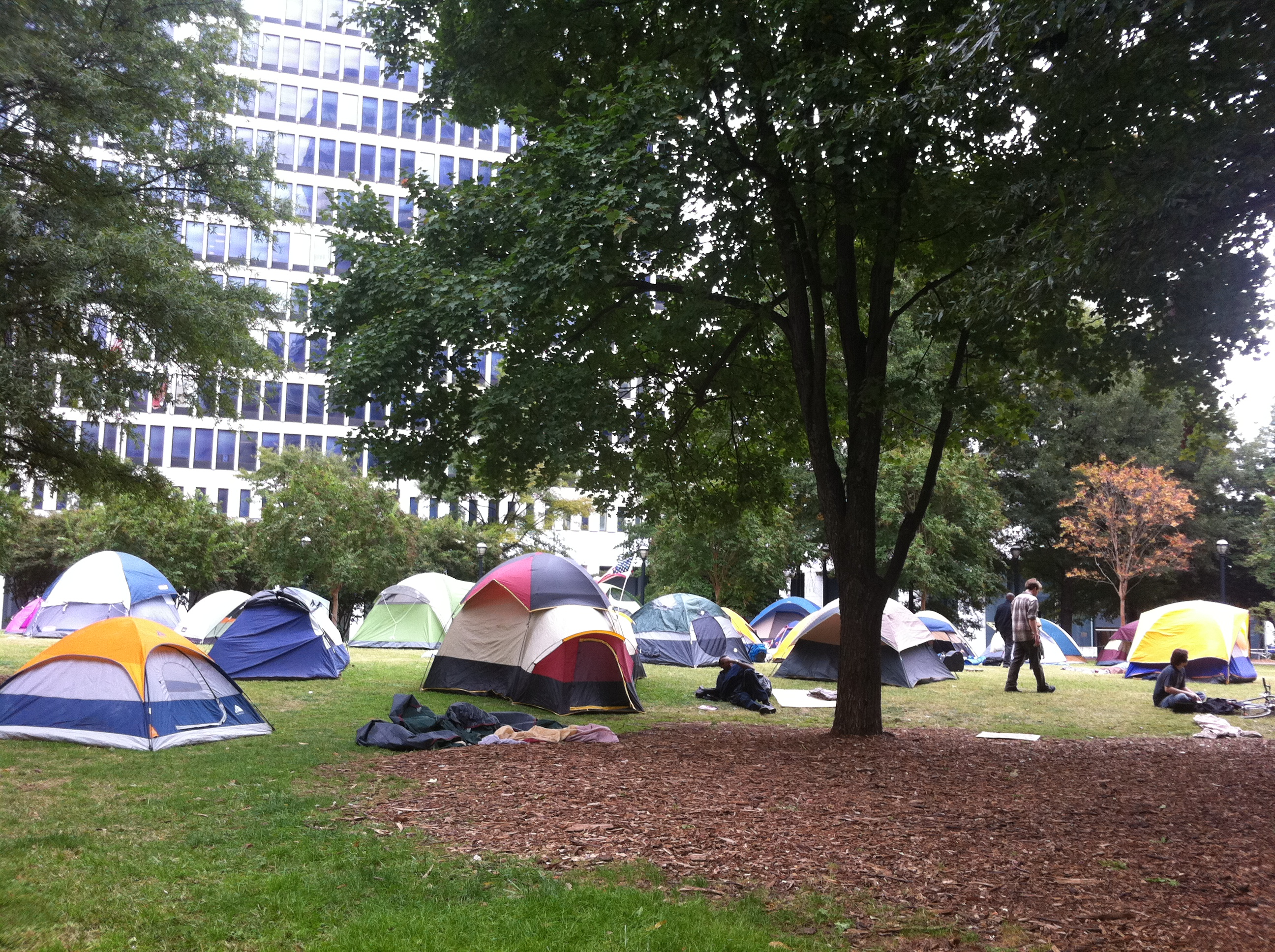
The conflict in New York seems light years away from lovely Smyrna, Ga. (though there is a very small group camping out and playing guitars at Atlanta’s Centennial Park). Smyrna City elections have uncovered a smattering of malcontents who desire “change.” Smyrna is progressing, developing, and ever changing as few things stay the same. Some even feel that incumbents on City Council should be changed “just because they’ve been there too long.” They cite desire for term limits but struggle to share examples of how they’d lead differently or whether their “change” will make a better Smyrna. I once complained to a city about lack of recreational opportunities for poor people. I was 14 years old. A few good leaders in my community scooped me up, got me a work permit, and told me to be the change I wanted. It worked. I became too busy opening up inner city swimming pools to find time to complain much any more. Yet others I grew up with continued to strike out at city officials and other authorities. For some of them, their quiet uprising ranged from civic dis-engagement to crime.
A colleague and I sat in his office on a conservative campus in Virginia, he shared his challenge of dealing with growing militancy amongst a group of black males on campus and their desire to express themselves through gangsta rap. He recited examples, from memory, of some explicit lyrics from one of the artists they wanted on campus. I asked him if he could remember the lyrics from the last performing artist the students had brought to campus. He couldn’t. And there-in lies the problem. We cannot simply ignore a silent minority. They become a disgruntled minority that can grow into an enraged majority. They’ll end up screaming at us if we don’t listen.
I’ve found that Smyrna City officials, at least in my Ward, Ward 1, have been quick to listen. Smyrna has a distinct culture that is worth preserving, yet some new residents and old residents now returning after being college educated may want that same culture examined. They may not agree with the smattering of citizens who seem contrary to every move the city makes, but they’ll side with them on the platform of change. Especially if they are not engaged in discussion about what our culture is and what change would mean. The city is therefore presented with a great opportunity to examine the value of its perceived and desired community culture.
A Leadership Smyrna program, tapping the energy of and open to the ideas of Smyrnians who would like to see City progress continue could be just what we need to preserve Smyrna’s distinctiveness. One young candidate running against an incumbent on a “change” platform recently posted on his Facebook Page, “The people I met on Drewsbury Ct. and Woodruff Dr. really made me feel very positive about Smyrna. They are making this campaign fun. Getting to watch Josephine and Ryan play was the highlight of my day.” And there lies the benefit of getting out to see and be with community rather than simply listening to the discontent of a few. For Josephine and Ryan, (who are my pre-school age neighbors in Vinings Pointe), Smyrna is a great place! Acknowledging what Smyrna is, is the first step to serving its citizens well.