Business & Tech
Update: Final TSPLOST Project List Passed
Proposed transportation projects still face summer vote for approval; self-described "transit person" business journalist says list falls short in promoting alternative forms of transportation.
UPDATE: Editor’s note: A $6.14 billion list of transportation projects was adopted by the Atlanta Regional Roundtable on Thursday and the final report has been posted at its website. The list, minus the much-discussed Cumberland-to-Midtown light rail, is now on next July’s ballot. If improved, a 1 percent sales tax would be used to fund the projects.
Among the projects included were interchange improvements at I‐75 North at Windy Hill Road; corridor improvements at South Cobb Drive from I‐285 to Church Road / Oakdale Road; enhanced premium transit service ‐ Acworth / Kennesaw / Town Center to MARTA Arts Center Station; new alignment for Windy Hill Road / Terrell Mill Connector; and grade separation at US 41 (Cobb Parkway) and Windy Hill Road .
Patch will look more at those projects on Friday, in the meantime here are the thoughts and words of business journalist Maria Saporta, who recently shared her opinions on Atlanta’s transportation woes. What are yours? Please share in the comment box below.
Find out what's happening in Smyrna-Viningsfor free with the latest updates from Patch.
For Maria Saporta, the journalist behind the Saporta Report and one of Georgia Trend’s 100 Most Influential Georgians, supporting transit for Metro Atlanta isn't just about relieving traffic congestion; it's about economic development.
Find out what's happening in Smyrna-Viningsfor free with the latest updates from Patch.
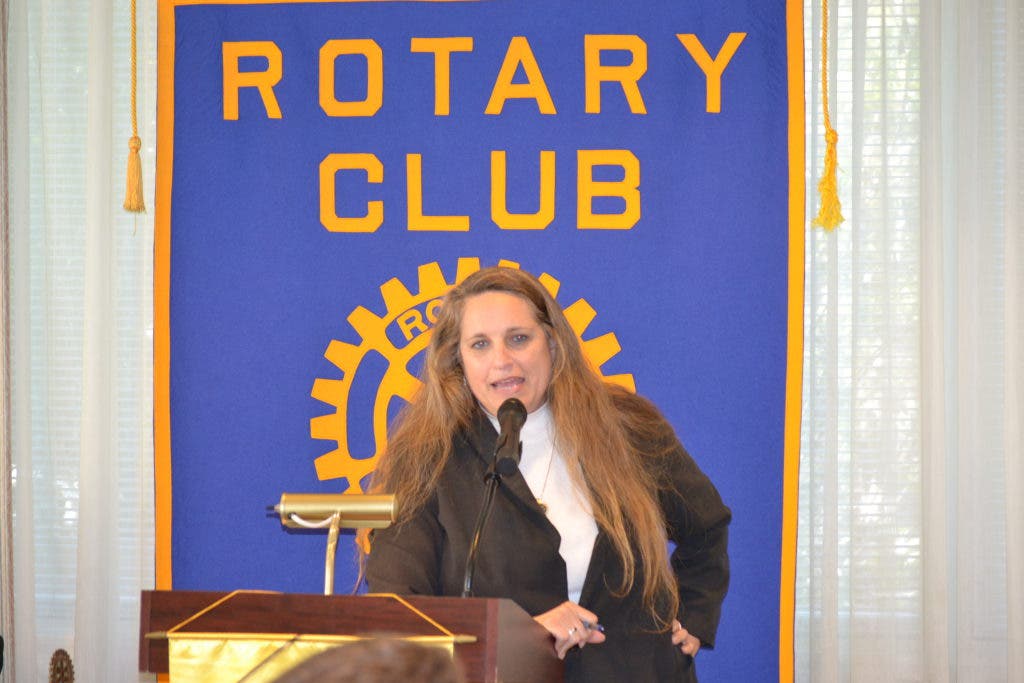
Saporta stopped by the Smyrna Rotary Club meeting last week to outline why she supports alternative transportation methods for the region. She argued that one hindrance to economic growth in Metro Atlanta today was laid in place 40 years ago when Cobb, Gwinnett and Clayton citizens voted not to extend MARTA into their counties. She noted that at the time, it was thought that extending MARTA into the suburbs would attract African-Americans into these predominately white communities.
"There was this concern that a lot of black people would move into the white suburban counties and they were concerned with that," she said. "By not voting for MARTA, they did not stop the diversification of population in Gwinnett or Cobb."
Saporta explained that Gov. Nathan Deal was recently told by the Southern Governors Association that high tech companies aren't attracted to Metro Atlanta because their creative-minded employees are drawn to communities where they can walk or bike to work and play. Deal then joked that Georgia Research Alliance shouldn’t laugh at him when he asked them to invest in bike paths.
“I thought that that was kind of a big step for the governor to admit that the traditional ways that we have used to get around our region being the single occupancy vehicle, the car, is no longer the solution that can take us into the future,” Saporta told the Rotarians. “If we want to continue growing as a region—we basically for the last 10 years we have been flat as a region—we are going to have to figure out how to have more people live in the same amount of space and continue to get around."
Saporta isn't the first person to discuss the Trasnportation Investment Act at Smyrna Rotary. spoke about his involvement with the Atlanta Regional Roundatble, the 21-member panel comprised of representatives from 10 Metro Atlanta counties that is has working on a list of projects that will be funded by the proposed TSPLOST. Georgians will vote on the tax during the 2012 primary elections.
Saporta, who calls herself “a transit person,” doesn’t feel the project list as it stands today goes far enough to promote alternative forms of transportation. In her opinion the list should only include transit and other forms of alternative transportation and not include improvements to roads and bridges.
“There is no other revenue source for transit, for bicycles, sidewalks and non-vehicle modes of transportation,” she said. “The motor fuel tax is limited to roads and bridges. There are several funding sources for roads and bridges and we have been investing in roads and bridges for the last 50, 60 years in our region. By comparison, transit has not had that kind of revenue source. This is the first form of revenue other than the MARTA sales tax that would allow money to be spent on transit.”
Saporta also lamented that the region has not invested in commuter rail. She said she is “intrigued” by the counter-proposal to implement commuter rail on the existing lines through Smyrna and Marietta instead of building a new light rail line along the I-75 corridor.
"I’ve found that commuter rail is one of the most cost-effective modes of providing transportation or transit to people because you’re not having to give right of way," she said. "You do have to negotiate with the railroads and that’s one of the big issues and one of the big problems why we in this region have not developed a rail system."
The Smyrna Rotary Club meets every Tuesday at 12:15 p.m. at the Smyrna Community Center. Also find the Smyrna Rotary Club on Facebook. Those interested in joining the club can contact Jay Treadwell at 770-355-0063.