Community Corner
Orlando Shooting: Tips to Avoid Donation Scams
The Better Business Bureau advises donors to avoid being taken advantage of by questionable solicitations or wasting their money.


In the wake of the nation's worst mass shooting in history, many people are asking how they can help the victims of the tragedy or the city of Orlando.
The Better Business Bureau's Wise Giving Alliance (BBB WGA) advises donors to avoid being taken advantage of by questionable solicitations or wasting their money on poorly managed relief efforts.
BBB WGA suggests that before you choose a charity to give to, remember to check out the charity on Give.org. BBB WGA has a list of nationally soliciting charities that have been accredited by BBB WGA (i.e., meet all 20 BBB Charity Standards).
Find out what's happening in Smyrna-Viningsfor free with the latest updates from Patch.
The mass shooting Sunday at the Pulse nightclub in Orlando left 50 people dead and fifty-three people hospitalized.
BBB Wise Giving Alliance offers donors these tips for relief giving:
Find out what's happening in Smyrna-Viningsfor free with the latest updates from Patch.
- Be cautious when giving online. Be cautious about spam messages and emails that claim to link to a relief organization. If you want to give to a charity involved in relief efforts, go directly to the charity’s website.
- Rely on expert opinion when it comes to evaluating a charity. Be cautious when relying on third-party recommendations such as bloggers or other websites, as they may not have fully researched the relief organizations they list. The public can go to www.give.org to research relief organizations and other charities to verify that they are accredited by the BBB which means they meet the 20 Standards for Charity Accountability.
- Be wary of claims that 100 percent of donations will assist relief victims. Despite what an organization might claim, charities have fund raising and administrative costs. Even a credit card donation will involve, at a minimum, a processing fee. If a charity claims 100 percent of collected funds will be assisting earthquake victims, the truth is that the organization is still probably incurring fund raising and administrative expenses. It may use some of its other funds to pay these costs, but the expenses will still be incurred.
- Find out if the charity has an on-the-ground presence in the impacted areas. Unless the charity already has staff in the affected areas, it may be difficult to bring in new aid workers to provide assistance quickly. See if the charity’s website clearly describes what the charity can do to address immediate needs.
- Find out if the charity is providing direct aid or raising money for other groups. Some charities may be raising money to pass along to relief organizations. If so, you may want to consider “avoiding the middleman” and giving directly to those that have a presence in the region. Or, at a minimum, check out the ultimate recipients of these donations to see whether they are equipped to provide aid effectively.
- Gifts of clothing, food or other in-kind donations. In-kind drives for food and clothing, while well intentioned, may not necessarily be the quickest way to help those in need – unless the organization has the staff and infrastructure to distribute such aid properly. Ask the charity about its transportation and distribution plans. Be wary of those who are not experienced in disaster relief assistance.
BBB WGA is a standards-based charity evaluator that seeks to verify the trustworthiness of nationally-soliciting charities by completing rigorous evaluations based on 20 holistic standards that address charity governance, results reporting, finances, fundraising, appeal accuracy and other issues. National charity reports are produced by the BBB WGA and local charity reports are produced by local Better Business Bureaus.
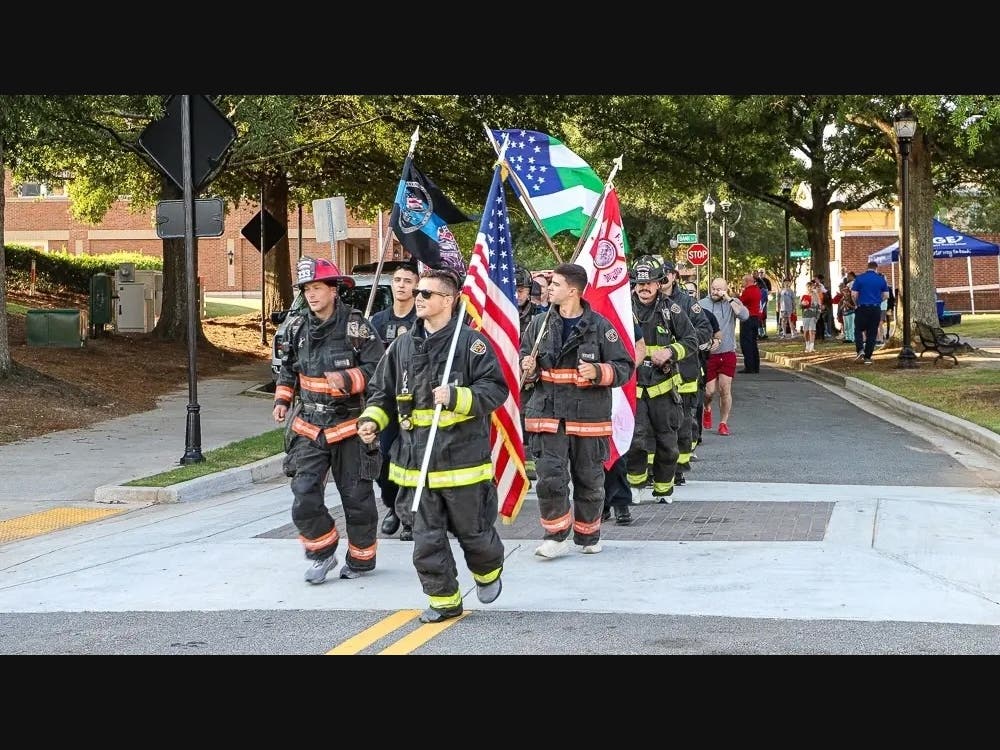
Photo courtesy of the Orlando Police Department
Get more local news delivered straight to your inbox. Sign up for free Patch newsletters and alerts.