Politics & Government
Sifen: Taxpayers would pay reasonable cost for traffic congestion relief
The Vinings writer reveals the answers of his own Cobb-focused TSPLOST survey where he says the real issues were defined.


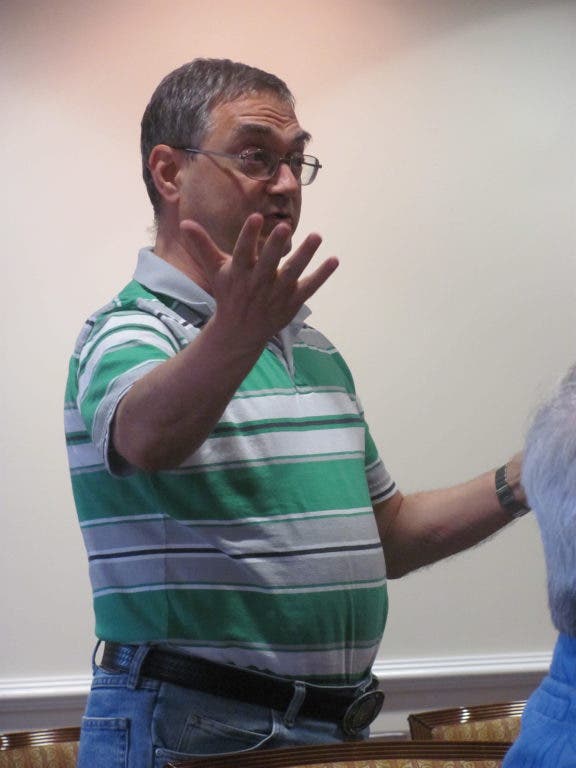
By Ron Sifen
Would you pay a penny to alleviate traffic congestion? Gotcha! You just got counted as supporting the TSPLOST tax. It will cost you thousands of dollars, not a penny. And most of the money will go to projects that will do little to alleviate traffic congestion.
Would you support light rail to alleviate traffic congestion? Gotcha! Would you have said yes if you were asked if you would support spending billions of dollars on light rail whose design will not help to alleviate traffic congestion, and it will probably make traffic congestion worse?
I put together my own survey to get to some real key issues. The first two questions just asked some basic, innocuous preference questions. The real issues were defined in questions 3 and 4. The responses were fascinating.
I sent the survey to my email list, and I received 153 responses. Four of the responses expressed various displeasures about the survey, and did not answer any questions.
Question 3 asked, “If the region is going to proceed with transit in suburban counties, my top one or two preferences are”
a. optimize opportunities for economic development, regardless of cost
b. maximize traffic congestion relief, regardless of cost
c. meet the needs of lower-income populations, regardless of cost
d. optimize opportunities for economic development, at a reasonable cost to taxpayers
e. maximize traffic congestion relief, at a reasonable cost to taxpayers
f. meet the needs of lower-income populations, at a reasonable cost to taxpayers
g. other.
Ten people included comments on their surveys, thanking me for asking this question in this way. People commented that cost is important, and they had never seen a survey question that allowed them to make the distinction that cost matters. In addition, at least five or six more people that I ran into at different places, who had received my survey, also made similar comments to me in person.
However, eight people were outraged at this question. They thought it was unfair to connect the issue of cost to the objective. (I think it is unfair to not include cost in the question. I think it is unfair to taxpayers to ignore or disassociate the important issue of cost. Disassociating the cost is what enables out of control government spending.)
For the record, responses were as follows (this is first choice only, since many only listed one choice, even though I had given the opportunity for their top two choices)
a. 5
b. 3
c. 14
d. 14
e. 81 (33 more for their second priority)
f. 24 (45 more for their second priority)
g. 8
(On an earlier question, 52 people answered that they oppose any new transit. I appreciate these people doing their best to answer question 3 anyway.)
Twenty-two people answered either a, b, or c as their top choice. That is, 15 percent of the 149 who answered the survey questions wanted to prioritize these objectives, without regard to cost.
A total of 118 out of 149 listed either b or e (alleviating traffic congestion) as their first or second choice. So, 79 percent put a high priority on alleviating traffic congestion.
Nineteen had economic development as their top priority, and a total of 27 had it in their top two priorities. That’s only 18 percent (of this survey) who think economic development is a high priority for how we should spend our “transportation” tax dollars.
Question 4 also elicited some passion. Question 4 asked, “Please answer yes or no: Do you want light rail on Cobb Parkway even if there are other kinds of transit that would cost less AND do a better job of alleviating traffic congestion?”
Eight people answered “yes” to question 4, and 13 people who answered other questions, refused to answer question 4. So, possibly as many as 14 percent of the people who took the survey want light rail on Cobb Parkway even if there are other options that cost less AND would do a better job of alleviating traffic congestion. Seven people let me know how unhappy they were that I had asked this question (this included some people who answered this question, and some people who refused to answer this question).
The other 86 percent opposed squandering billions of tax dollars on options that are unnecessarily expensive AND will do a worse job of alleviating traffic congestion than other less expensive options.
Were my survey questions biased? I would contend that my questions were less biased than survey questions that isolate one component of the issue, but disassociate the cost. Would you pay a penny to alleviate traffic congestion? It will cost you thousands of dollars, not a penny. And most of the money will go to projects that will not alleviate traffic congestion. And after it is built, light rail typically costs $2 million per mile per year to operate and maintain, and there is no source of funding without hitting taxpayers with even more tax increases.
Most taxpayers want traffic congestion relief. Most taxpayers are willing to pay a reasonable amount to get traffic congestion relief. That does not mean that taxpayers want their tax dollars squandered on ultra-expensive projects that will do a poor job of alleviating traffic congestion.
Ron Sifen is a Vinings resident and frequent contributor concerning regional transportation issues.
Get more local news delivered straight to your inbox. Sign up for free Patch newsletters and alerts.