Neighbor News
Decorating Tips: How to Mix Patterns
If you want to try your hand at decorating but are not sure where to begin, start with patterns.
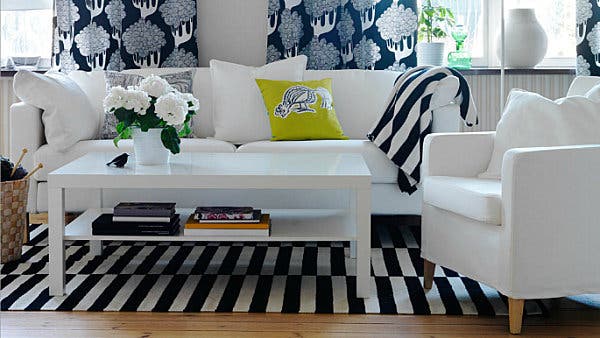
Have you ever looked at an exquisitely decorated room and thought, “Oh, I can do that…” before rapidly realizing that you would never have thought to put such beautifully contrasting items together?
Plain and simple, an eye for decorating is a gift and, much like an artist looking at a blank canvass, takes a lot of talent and a lot of work.
Still, you don’t necessarily have to drop big bucks on a decorator, especially when there are a few tricks that will help you learn to pair things on your own.
Find out what's happening in Suwaneefor free with the latest updates from Patch.
1.) START BASIC: For an easy tip, go with the 60/30/10 approach—meaning you should fill your room with 60% of a favorite pattern, 30% of your second favorite, and 10% of a third pattern that will serve as an accent. To get you started, try these three patterns: narrow stripes, a midsize geometric, and a bold floral—include solids in a background role on a sofa or the floor.
2.) REPEAT COLORS: While some of your patterns may seem a bit different, tie them together through the use of repeated colors between patterns. Don’t be afraid to repeat underplayed shared patterns by using them somewhere else in the room.
Find out what's happening in Suwaneefor free with the latest updates from Patch.
3.) LOOK FOR MORE THAN FABRICS: When we talk about matching, it’s important to remember that it’s more than fabric—it’s about the entire room, furniture included. Therefore, make a point to repeat motifs in things like rugs, table shape, lamps, etc.
4.) PATTERN SIZE VARIATION: When you’re selecting a pattern, start with the largest pattern first and use it as a starting-point for the rest of the room.
5.) DON’T IGNORE WALLPAPER: While many people tend to stay away from wallpaper, it can be a fun way to bring interest in a room. If you select something that has a pattern, make sure none of the other patterns in the room have the same scale.
6.) IT’S OKAY TO BE SIMPLE: Pattern doesn’t have to be a jumble of colors, but even if you’re hoping to attain a more subtle look, color should still be included. Opt for tone-on-tone patterns and low-contrast patterns to keep things a bit more subtle.
7.) DON’T FORGET YOUR SOLIDS: Yes, pattern is important; however, that doesn’t mean you should completely forget about solids. Patterns show best when they can be contrasted with a neutral wall or solid sofa, especially if your room has a bold color palette or otherwise strong features.
Susan Hill | All Around the House Fine Consignment | www.allaroundthehouse1.com | 770-781-8777
”