Home & Garden
When Hummingbirds Return To Illinois And What To Do To Attract Them
Illinoisans are starting to see hummingbirds pop up in their communities as they travel north from their winter breeding grounds.


Hummingbirds are making the journey north from their winter breeding grounds and are starting to pop up in areas of Illinois as the weather begins to warm up.
Hummingbird Central tracks the annual spring migration from Central America or Mexico in an interactive, user-submitted map. They began arriving in southern U.S. states in February and will be in northern states by early May.
Typically, the first hummingbirds to arrive in spring are males. Not all hummingbirds migrate, with populations remaining in areas such as California and the upper Pacific coast, the southern United States, and certain regions along the southern Atlantic Ocean.
Find out what's happening in Across Illinoisfor free with the latest updates from Patch.
So far this year, residents in southern Illinois have spotted Ruby-throated Hummingbirds, with most being seen below Springfield. Ruby-throated Hummingbirds are the only known species of hummingbird known to breed east of the Mississippi River, according to the U.S. Fish & Wildlife Service.
These birds are known for their "extraordinary" flight capabilities, with their wings beating rapidly at 53 times per second, producing their namesake humming sound. Male birds are adorned with a brilliant red throat patch that shimmers in the sunlight, while the females are less colorful.
Find out what's happening in Across Illinoisfor free with the latest updates from Patch.
They grow to be approximately 3.5 inches tall and weigh less than a quarter of an ounce.
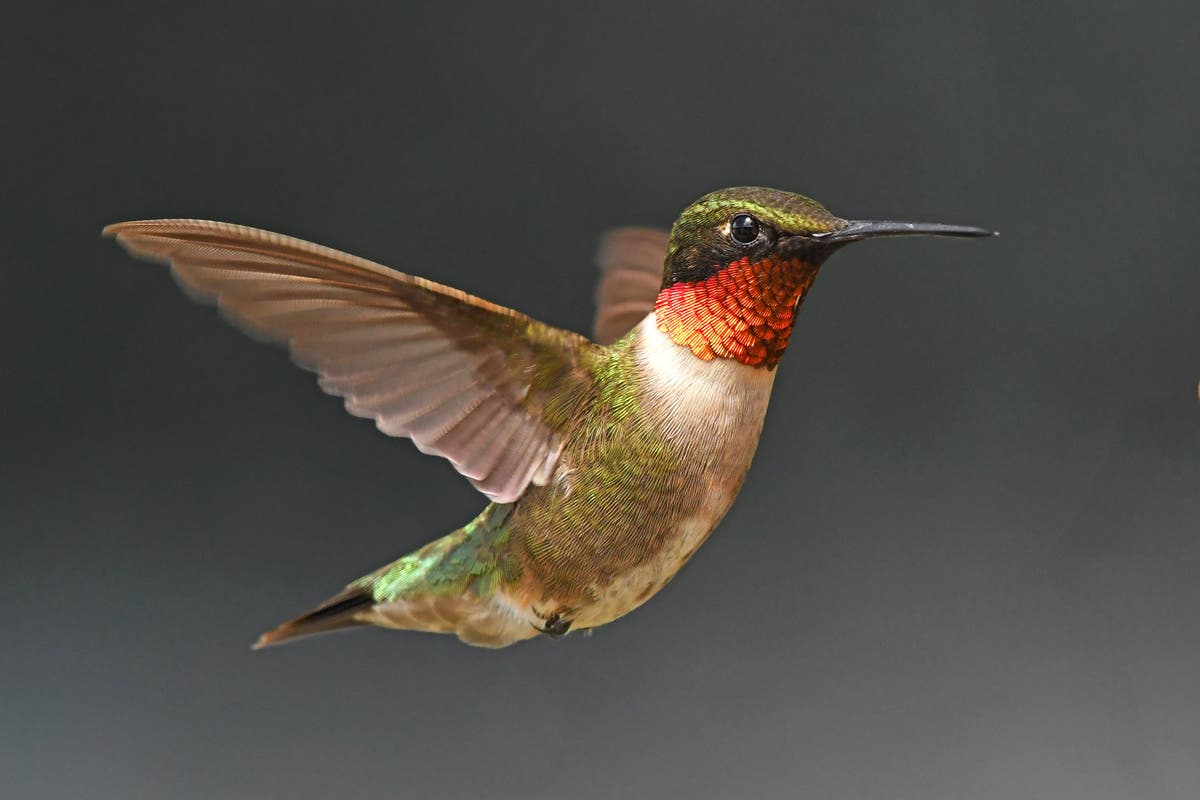
Jewel-toned, iridescent-colored hummingbirds — known for their unique ability to hover and fly in any direction, including backward — are a delight to watch. Tiny but fearless, hummingbirds can travel as far as 23 miles in one day; however, they may cover up to 500 miles at a time as they cross the Gulf, a trip that can take 18 to 20 hours, according to the U.S. Fish & Wildlife Service.
During migration, a hummingbird’s tiny heart beats up to 1,260 times a minute, and its wings flap anywhere from 15 to 80 times a second, according to Hummingbird Central.
Here are more things to know about hummingbirds:
Hummingbirds pack on the weight, doubling their body size with fat to fuel their nonstop flight across the Gulf. Once they reach dry land, they immediately begin refueling, flying by day to find nectar sources such as flowers.
They fly low so they can spot food supplies and are also experts at using tail winds to help reach their destination faster and by consuming less energy and body fat, according to Hummingbird Central.
Hummingbirds fly at speeds of 20 to 30 mile per hour but move three times as fast during courtship dives. During these rituals, the male rises high above a perched female and plunges toward her at a velocity of up to 89.6 feet per second. Copulation is quick, taking only a few seconds, after which the male throws out his wings and pulls suddenly up, a move that exposes him to nine times standard gravity. For context, this is a force strong enough to make human fighter pilots lose consciousness, according to Scientific American.
Males and females often mate with multiple partners per season. Females typically raise one or two broods a year, or up to four in some cases.
About 15 hummingbird species regularly appear in the United States, with the highest diversity in the Southwest, according to the Fish & Wildlife Service. The Ruby-throated Hummingbird is common in the East and Midwest, while Arizona, Texas, and California host numerous species, including Anna’s, Rufous, Black-chinned, and rare visitors like the Lucifer and Berylline hummingbirds.
Hummingbirds are strongly attracted to red and other bright, warm colors like orange and yellow, but never use food coloring in the sugar water, as dye can harm birds and other animals.
Research has shown that hummingbirds’ preference for red is learned rather than innate. It’s the quality of the nectar that matters, according to the National Audubon Society.
To attract hummingbirds, make a homemade nectar of sugar and water. Do not substitute honey for sugar, as it can promote fungal growth. The National Audubon Society offers this recipe:
- ¼ cup refined white sugar
- 1 cup boiling water
- Mix until the sugar is dissolved, cool and fill the feeder.
Also, plant native, tubular and brightly colored flowers such as bee balm, cardinal flower, salvia, honeysuckle, columbine and others to provide natural nectar sources.
Get more local news delivered straight to your inbox. Sign up for free Patch newsletters and alerts.