Arts & Entertainment
'American History Quilts' Become Beverly Woman's Passion
Dorothy Straughter was well into her 50s when she found her calling as a quilter. Her art has now been displayed throughout Chicago.


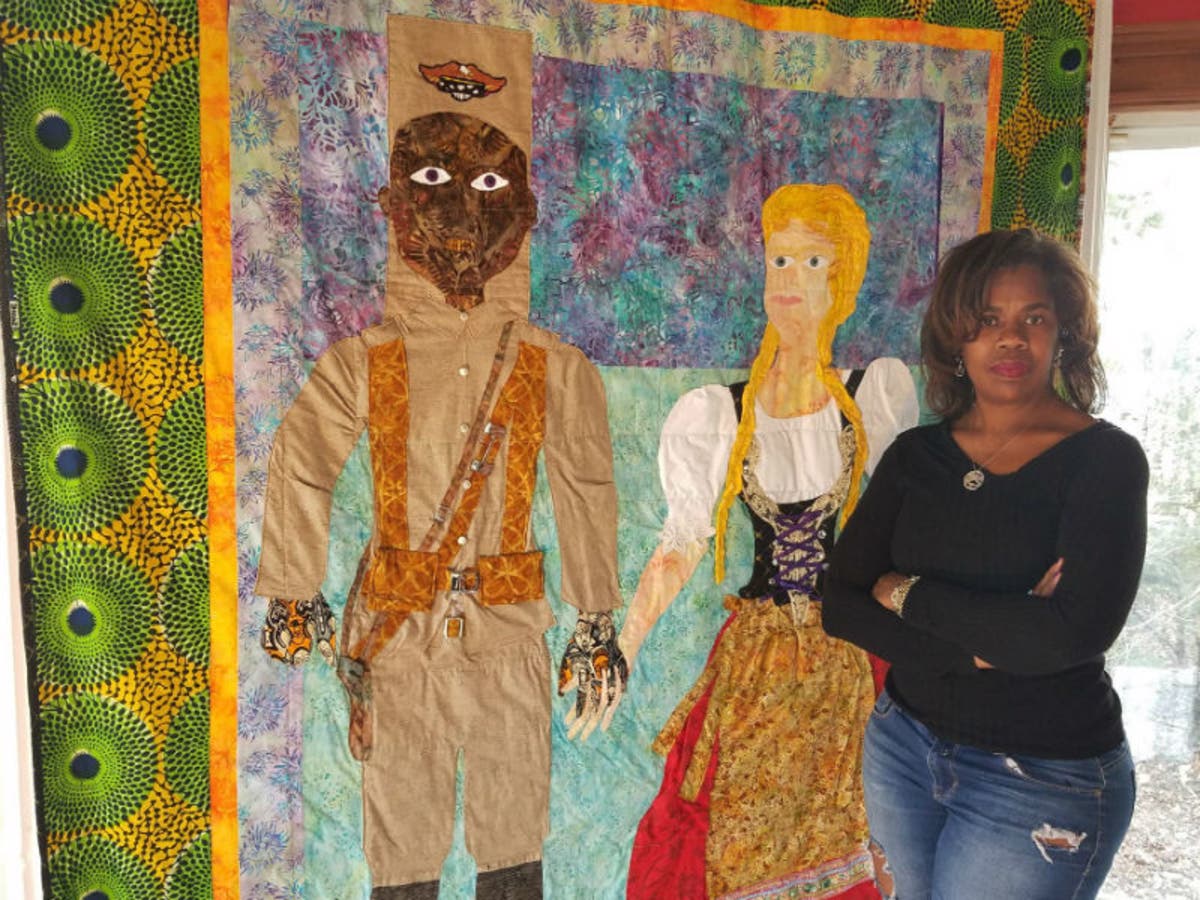
CHICAGO, IL - It's not like everyone finds their passion at a young age, but most know what they like most before they enter their mid 50's. But not for Dorothy Straughter, it turns out. The longtime Beverly resident picked up quilting just a little more than three years ago and has since been featured at numerous prominent art galleries throughout Chicagoland and has shared interesting bits from her historical research related to the quilts in several talks and discussions as well. All of Straughter's quilts, now more than 40 of them, are the result of historical research. She's touched on different topics, all of which having to deal with some part of history.
"Each quilt has its own body of history," said Straughter, who grew up on the South Side at 77th and Carpenter and has spent much of her professional career as an occupational therapist.
"There really isn't black history, or white history, or Hispanic history," she said. "It's all just history. Everything is intertwined."
Find out what's happening in Beverly-MtGreenwoodfor free with the latest updates from Patch.
"When we call something 'black history,' it will make some people not care because they think it's only for black people."
Instead, Straughter looks at how different racial groups have intertwined with each other. At first, she looked at the 1800s era and early 20th century.
Find out what's happening in Beverly-MtGreenwoodfor free with the latest updates from Patch.
"I thought my research would take me to the present, but it has actually taken me further back in time," she said. "We need to have a greater appreciation for our ancestry. If we don't know who our ancestors are, how can we appreciate who we are."
Before 2015, Straughter says she did not know the first thing about quilting and was never interested in studying history. Fast forward just a few years, and she's had exhibits featured locally at the Beverly Arts Center and in the Beverly Art Walk as well as other art centers in Chicago like the Hyde Park Art Center, the Beverly branch of the Chicago Public Library, the Dank Haus German American Cultural Center on the North Side and Stony Island Arts Bank, where she began her research.
She has already led one discussion at the Art Institute of Chicago and is scheduled to lead another this week.
It all started in late 2015 when a friend introduced the activity to her. Straughter's first quilt, titled "Underground Railroad," was put on display locally at the Quilter's Trunk on Western Avenue.
"They told me it got a few thousand views, then a few days later (then-DNAinfo reporter) Howard (Ludwig) called me and said he wanted to do an article on my quilt."
Ludwig's article, "Secrets of Underground Railroad Revealed in Unassuming Quilt in Beverly," was featured on the neighborhood news website in February, 2016. Shortly after, Straughter was featured in the Beverly Review, BAPA's The Villager and after producing a few more quilts was starting to get requests to have her art featured in exhibits at art galleries and museums throughout Chicagoland.
Straughter's quilts were the featured art in a 2017 Beverly Arts Center exhibit dubbed "A Constant Struggle." The exhibit proved popular and was extended from its original planned dates in the Jack Simmerling Gallery.
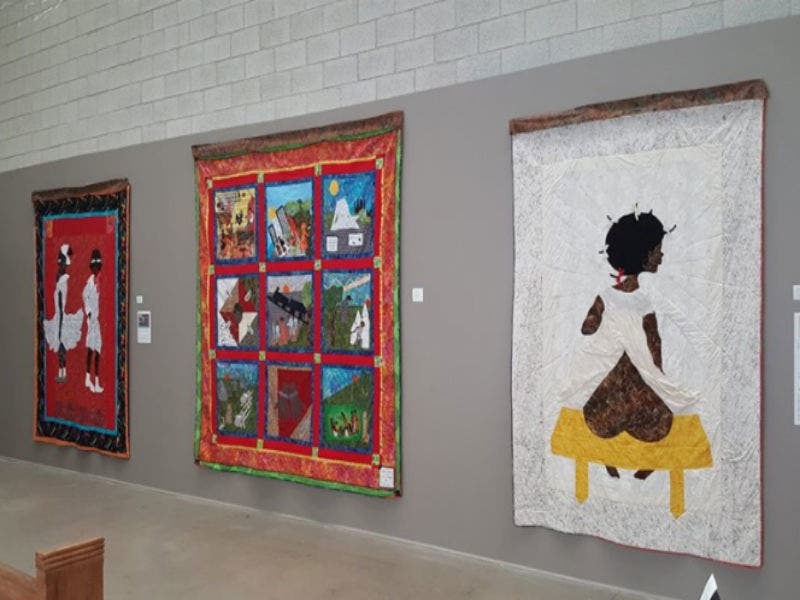
All Straughter's quilts are double sided. Many touch on institutional racism as a theme. Some could be considered controversial at first glance. But not once the greater meaning is understood.
"Each quilt has its own story, its own body of research... History has allowed me to have a greater understanding and appreciation of all people."
She says her quilts are used "to catch people off guard."
"Many times, people have no idea what they are getting into when it comes to the meaning... I'm putting out the true history and nuances of what creates a historical moment."
Straughter's message has spread to groups at the Art Institute of Chicago. Corinne Rose, the Art Institute's assistant director for school partnership and a friend of Straughter's helped connect her work to one of the world's most well-known art locales.
"She's talked about stories of black elders that are not often heard," said Rose, whose involved with the local art community as a board member for the Beverly Arts Alliance and member of the Southwest Chicago Diversity Collaborative.
Rose said that for Straughter's first discussion at the museum last summer she brought her mother, Betty Cross and another older African-American woman, Doris Anderson.
Anderson discussed how she escaped to the north on the back of a mail truck at 18. Cross told the group of attendees about how her father migrated from Brandon, Mississippi in transportation surmised to be the hobo trains.
"It was interesting and profound," Rose said of the discussion, noting the stories tied in perfectly to the quilts Straughter brought to the discussion.
It's not just message, Rose says the quilts themselves "are remarkable" pieces of artwork.
"As someone who works in the arts, we judge in part when it comes to meaning and then in part when it comes to the craft," she said. "Dorothy's craft is remarkable, especially considering she's only been doing this for a few years. It draws in stories that re rich, deep, powerful and at times the upsetting history we need to know."
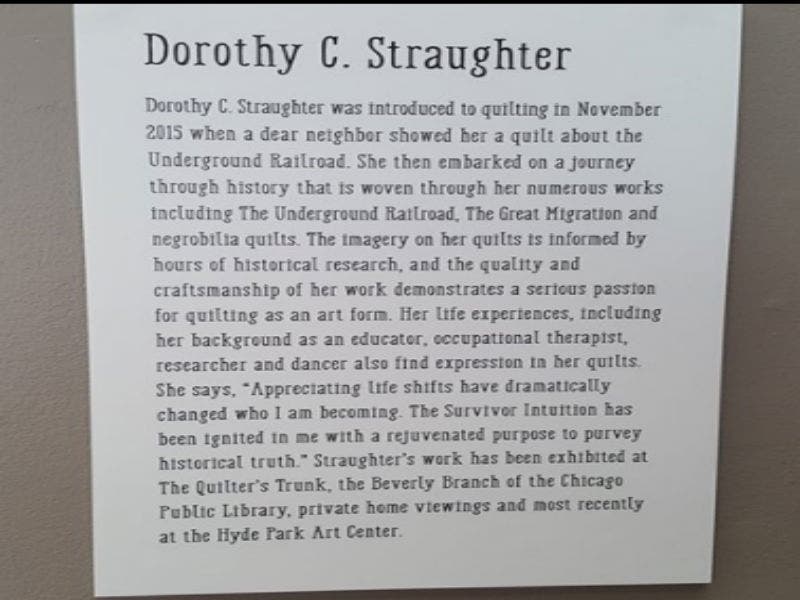
Straughter's historical journey (remember, still less than three years old) has now taken her to having produced more than 40 quilts. As a group, Straughter calls them "American History Quilts."
Her quilts aren't currently on display anywhere publicly, but she's in talks to have some of them displayed at a gallery on the Magnificent Mile. On Thursday, Straughter will lead another talk at the Art Institute.
Those who meet her then are sure to experience a thorough lesson in history.
"We cannot forget history," she said. "We should learn it and be tested on it."
Photo: Dorothy Straughter stands next to one of her quilts. Titled "AfroGerman," this quilt takes a look into the history of mixed marriages (which were illegal at the time) in Germany during the 1930s. Photo by Tim Moran / Patch
Get more local news delivered straight to your inbox. Sign up for free Patch newsletters and alerts.