Politics & Government
Penalties Sought Against Burr Ridge Mayor
Mayor used the courts for political purposes, attorney says.


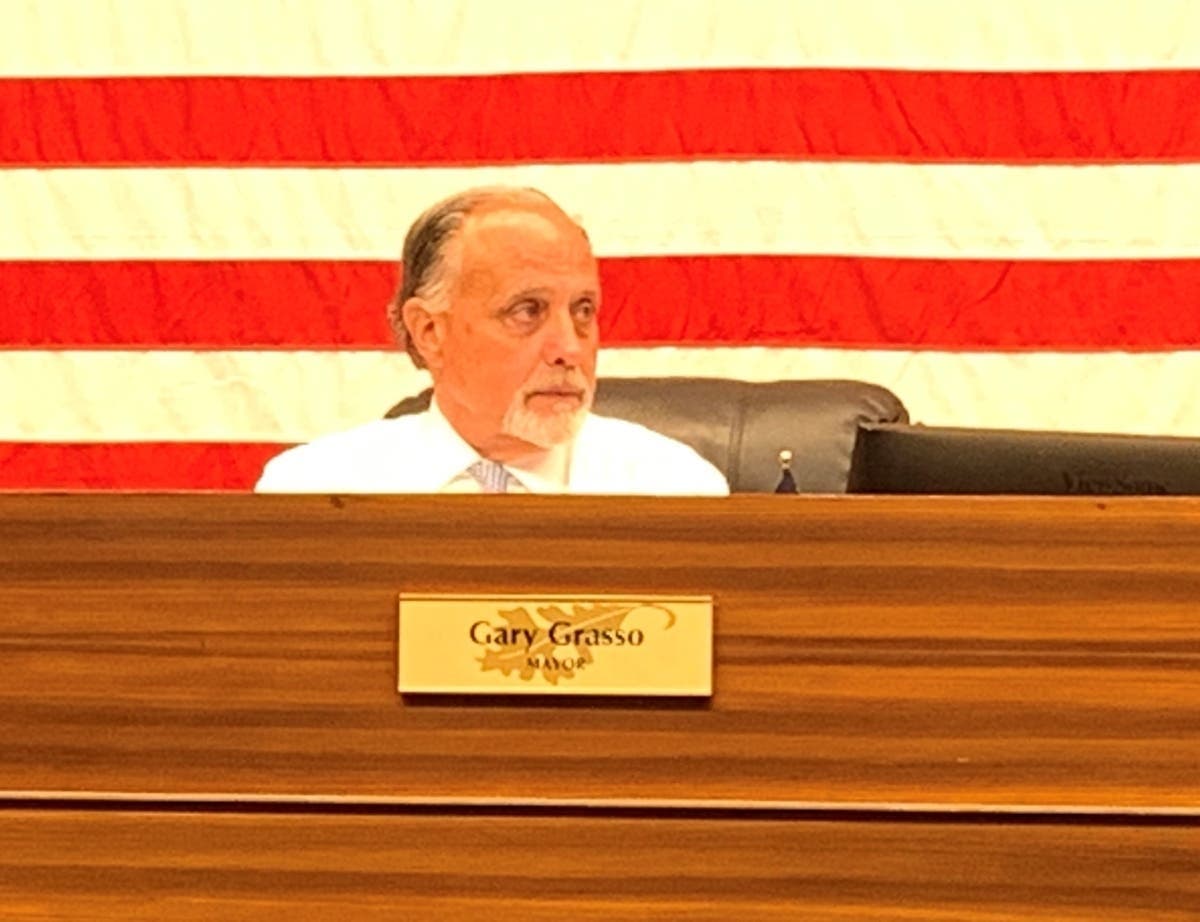
BURR RIDGE, IL — Burr Ridge Mayor Gary Grasso used the court system to "squeeze out" information from a resident for political purposes — and he should be sanctioned for it, an attorney says.
In court documents filed Thursday, attorney Neal Smith is asking DuPage County Court to require that Grasso, a lawyer, pay more than $10,000 in legal bills for resident Steven Mueller and issue a public apology. Smith is also requesting the court consider referring the matter to the state commission that disciplines lawyers.
The latest lawsuit follows a judge's decision last month to throw out Grasso's claims against Mueller.
Find out what's happening in Burr Ridgefor free with the latest updates from Patch.
Earlier this year, Grasso sued Steven Mueller, who filed an unsuccessful challenge to Grasso's re-election petition with the village's electoral board. The mayor based his lawsuit on an Illinois Supreme Court rule that is intended to counter frivolous litigation.
However, in his motion, Smith argues that Grasso is violating the very rule that he was invoking against Mueller. Smith said the electoral board matter never went to the courts and, in any case, no standalone lawsuit such as Grasso's can be filed under the Supreme Court rule.
Find out what's happening in Burr Ridgefor free with the latest updates from Patch.
Smith also cited Grasso's comments to Patch and in emails to Smith that he would drop the lawsuit if Mueller told him who was behind the petition challenge.
In March, Grasso told Patch that Mueller's "baseless" petition cost the village $6,000 in attorney fees and wasted two afternoons for three village officials.
"I can only assume someone asked Mueller to be a front and paid Mueller's fees just to cost the Village and me time and money," Grasso said in a text. "I've asked Mueller through his attorney to confirm that fact, so the real culprit can be pursued, but Mueller's attorney has yet to respond."
On June 14, Grasso sent an email titled "FOR RESOLUTION PURPOSES ONLY" to Smith.
"My informal discussions w(ith) others about Mr. Mueller ... led me to the conclusion that he would not spend the money for an election challenge — even a valid one," Grasso said. "I understand he is quite frugal. I also understand his acquaintances include the person or person(s) who convinced Mr. Mueller to file the challenge."
Grasso, who ran unopposed in the April village election, also said he was confident that someone else retained Smith on Mueller's behalf.
"That is generally permissible," Grasso said. "All I asked (Mueller's former attorney Robert) Windon — and now you — is to obtain permission from Mueller to tell me who asked him to do this — and pay his fees. I will not pursue the matter further with him or Mr. Windon."
Here's how Smith described Grasso's "power play": "(T)ell me who paid Mueller's fees and put Mueller up to challenging my nominating papers and I will dismiss my legally unsound case and thereby obviate the need for Mueller, a frugal person, to have to spend money to defend the case."
In last week's document, Smith, who is with the Chicago-based Robbins Schwartz law firm, cited emails in which he repeatedly told Grasso that he was in violation of the Supreme Court rule on frivolous lawsuits. But he said the mayor doubled down.
Smith said Grasso's lawsuit could not be dismissed as an "honest oversight" or confusion about the rule, "as if Grasso was a new and overzealous attorney just out of law school instead of a 43-year veteran attorney and former Attorney General candidate."
Smith also noted Grasso's statements that he would sue Mueller for "abuse of process" or "malicious prosecution" if the latest lawsuit failed. Smith contended such a lawsuit would be frivolous and sanctionable.
"He has not been shy about communicating this threat, stating as much in his pleadings, in open court and in emails among counsel," Smith said.
Smith said he continually advised Grasso about his violations of the Supreme Court rule.
On Aug. 9, a DuPage County judge dismissed Grasso's claim against Mueller. But Smith said the mayor had told him that he plans to file a motion for reconsideration. The deadline is Thursday.
On Tuesday, Grasso told Patch that Smith "fumbled" and waived Mueller's right to object to the court's jurisdiction.
"I do not believe sanctions will be awarded based on the record," Grasso said in a text. "I'll respond to Mr. Smith's request, and we'll all respect what the court says."
In January, the village's electoral board — made up of trustees Al Paveza and Guy Franzese and Clerk Sue Schaus — unanimously granted Grasso's request to dismiss Mueller's challenge, which was based on procedural issues.
Under Illinois law, candidates are required to follow an exacting process with their paperwork. Seemingly small errors can get them removed as candidates.
Mueller filed to run for Village Board two years ago, but the village's electoral board barred him from the ballot.
One of the problems with Grasso's petition, Mueller said, was that it was not validly notarized because the notarization was dated "December 3, 2021," nearly a year into the future at the time.
The village's electoral board unanimously rejected that argument.
Mueller also pointed to a law that says the "heading of each sheet shall be the same" in the petition. Grasso's petition alternated between "Village President" and "Mayor/Village President."
The electoral board said either title was acceptable.
Grasso filed his lawsuit as a citizen, not as mayor.
Get more local news delivered straight to your inbox. Sign up for free Patch newsletters and alerts.