Crime & Safety
Judge Issues Ruling In Samantha Harer Family Lawyer's Motion
Will County Judge John Anderson was asked to unseal documents submitted by Will County State's Attorney involving lawyer Jennifer Bonjean.


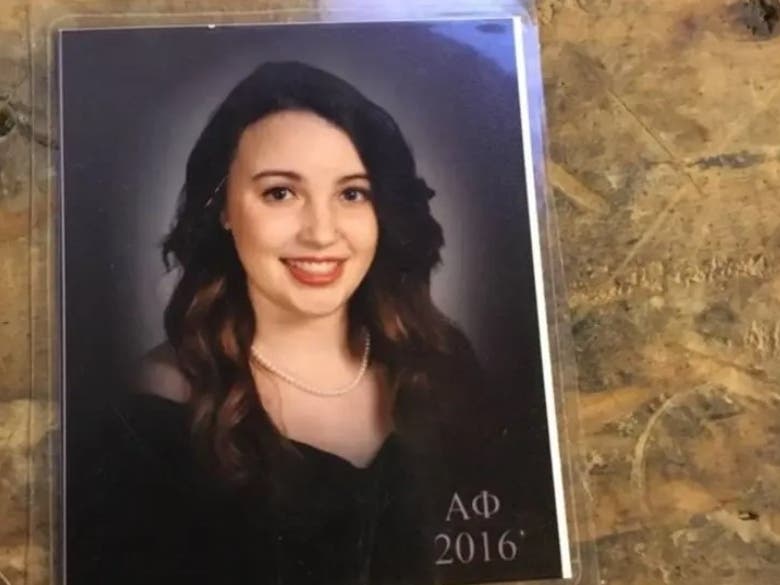
CHANNAHON, IL — Will County Judge John Anderson has denied a motion from attorney Jennifer Bonjean, who represents the family of Samantha Harer, in her quest to unseal several documents submitted by Jim Glasgow and members of the Will County State's Attorney's Office — documents believed to call her professional ethics into question.
In July, Anderson ruled in favor of Bonjean and issued a $15 million wrongful death default judgment against former Crest Hill Police Officer Felipe "Phil" Flores. The suit accused Flores of murdering Harer in her Channahon apartment and staging her death to look like a suicide.
Here are the key points Judge Anderson highlighted in Wednesday's ruling:
Find out what's happening in Channahon-Minookafor free with the latest updates from Patch.
- "First, again, the documents appear to consist largely of criminal investigative materials. No one from the State's Attorney's office or law enforcement has advised the Court that the investigation is or is not still pending, nor whether release of the Documents would interfere with a criminal investigation.
- "Second, some of the documents involve communication between and among lawyers. Those communications may or may not be privileged or otherwise protected, and those lawyers have not been given an opportunity weigh-in on the propriety of disclosure. The Court is not inclined to release the Documents without having a better understanding of their scope and purpose.
- "Third, plaintiffs have not expressed any persuasive basis as to why they need the documents relative to this case. This case has been decided; it is effectively over, but for enforcement of a judgment. The documents were not used in connection with plaintiffs proving up their case, the Court did not substantively review or rely on them (nor can it, under Rule 2.9(A)(5)), and it is unlikely that the documents would be relevant to enforcement of the judgment. In other words, no one gained an advantage in the case based on the submission of the documents and, considering the current procedural posture of this case, they are not relevant.
- "Fourth, in the Court's estimation, plaintiffs' counsel has already been advised of the substance of the documents by virtue of the cover letter she received, and by virtue of the Court's disclosure and description. The Court also suspects that plaintiffs counsel has all, or at least most, of the documents by virtue of the related federal case.
- "Fifth, it is clear that the State's Attorney's office and plaintiffs' counsel each have a spirited disagreement regarding the respective choices of the other, including whether Felipe Flores ought to be charged with a crime. As this Court has repeatedly stated, this is a civil case. It was decided on a 'preponderance of the evidence' civil standard, and not on a 'beyond a reasonable doubt' criminal standard. The Court has taken no position on whether Felipe Flores ought to be charged with a crime, and has offered no criticism toward the State's Attorney's office nor law enforcement.
- "Those offices might have legitimate and persuasive reasons for not charging Mr. Flores; the Court does not fully know what those are, because the State's Attorney's office and the Channahon police department are not parties to this civil case-and the Court sees no reason why they should be parties to this civil case. So, to the extent these ongoing disputes exist between plaintiffs and police/prosecutors regarding whether Mr. Flores should be charged, this case is not the correct forum to wage that battle. Likewise, to the extent there are disputes between plaintiffs and prosecutors regarding ethical violations, they need to take that up with the Attorney Registration and Disciplinary Commission.
"The 'Motion for an Order Permitting Disclosure and/or Access to Will County State's Attorney's Ex Parte Communications to this Court' is denied."

Find out what's happening in Channahon-Minookafor free with the latest updates from Patch.
Get more local news delivered straight to your inbox. Sign up for free Patch newsletters and alerts.