Schools
Teaching to Every Student
Minooka teacher keeps students working at different levels in math classes.
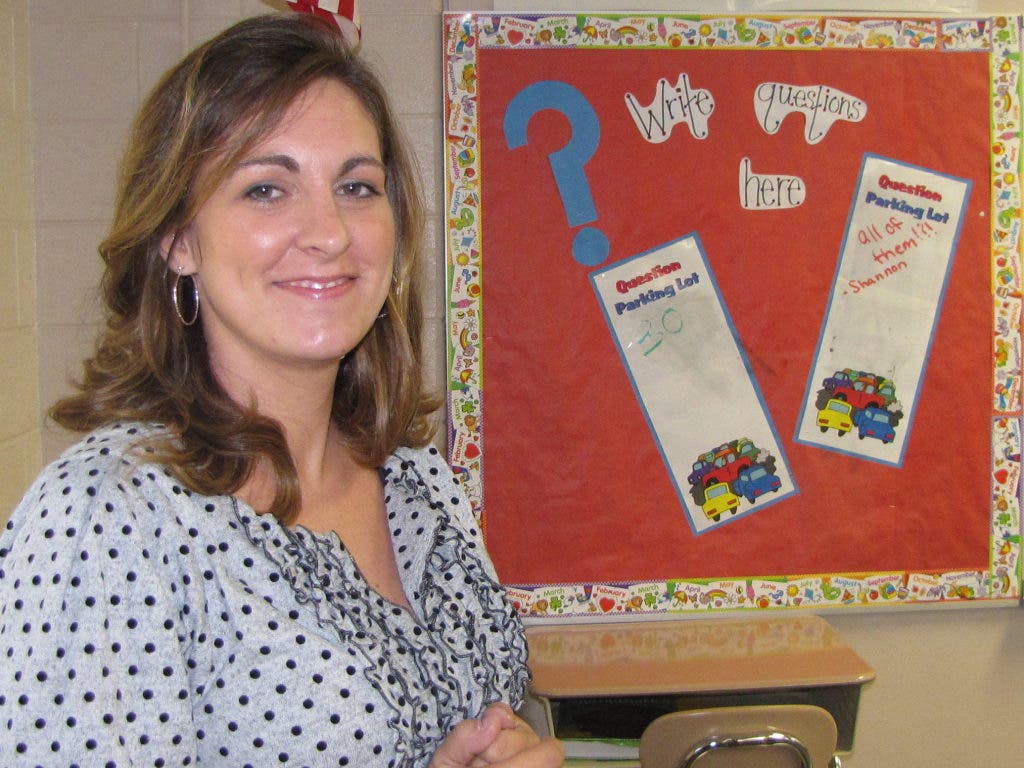
math teacher, Jennifer Kenney has a different take on math; it’s not all about every student working on the same lesson.
She may only teach three sections of math, but in each of those three sections, students perform at different levels. Anyone who has been to school knows that not everyone is on the level, even within the same class.
In her Algebra, Pre-Algebra, and Advanced Algebra classes, Kenny has gotten around the classic idea that all the students work on the same page of the same lesson at the same time. She uses a technique called differentiated instruction. In each math class, three different levels of teaching will go on, with students clustered at tables with students of similar math abilities. In other words, the main concept that students work on will be the same, but each group of students will solve problems and get homework according to how well they understand the concept, and those problems and that homework will vary from student to student. So, rather than having all the students “on the same page,” each student is appropriately challenged base on his/her skills.
Find out what's happening in Channahon-Minookafor free with the latest updates from Patch.
And it's not just about the students' individual levels, students do math work based on real-world experience, said Kenny. For example, students work calculating the safest distance that a Bungee Barbie doll needs to jump from a table. The math concept being worked on is ‘linear equations,’ but once the basic concept is learned, the students expand the lesson and compete to see whose Barbie can safely launch from a higher distance. Other math lessons come from the experiment.
Kenny's classroom is set up with students seated at tables. Rather than working in an atmosphere of silence and aloneness, Kenny said the students help each other.
Find out what's happening in Channahon-Minookafor free with the latest updates from Patch.
“Seating at the tables will sometimes help students who don’t really like math," she said. "The group talks about problems together.
"And students, who are struggling, get to hear their fellow students explain the idea."
Students are placed in the differing groups and tables depending on their score on a test given three times yearly, plus Kenney gives frequent short quizzes to determine who understands what is being taught. This gives her the opportunity to decide what level each individual student should be working at.
Students, too, can key her in as to whether they understand the assignment, completely, or in part. This helps her decide what level of homework to assign to each student.
Kenny admits the model for this kind of teaching demands more of her time to organize materials, because they are more levels of activity within each classroom. She figures it takes twice as much time to plan, as teaching math in a traditional method takes, but it has become easier over time.
Grants from Exxon Mobil allowed her to purchase tables for her classroom, as well as iPods and digital phones. She most recently was able to purchase digital devices where she can see each student's answer immediately from a computer station, again, to see that everyone is learning.