Crime & Safety
Chicago Saw More Killings Than Any City; Isn't 'Most Dangerous'
Baltimore, not Chicago, was named America's most dangerous city. But experts aren't putting much stock into such rankings.


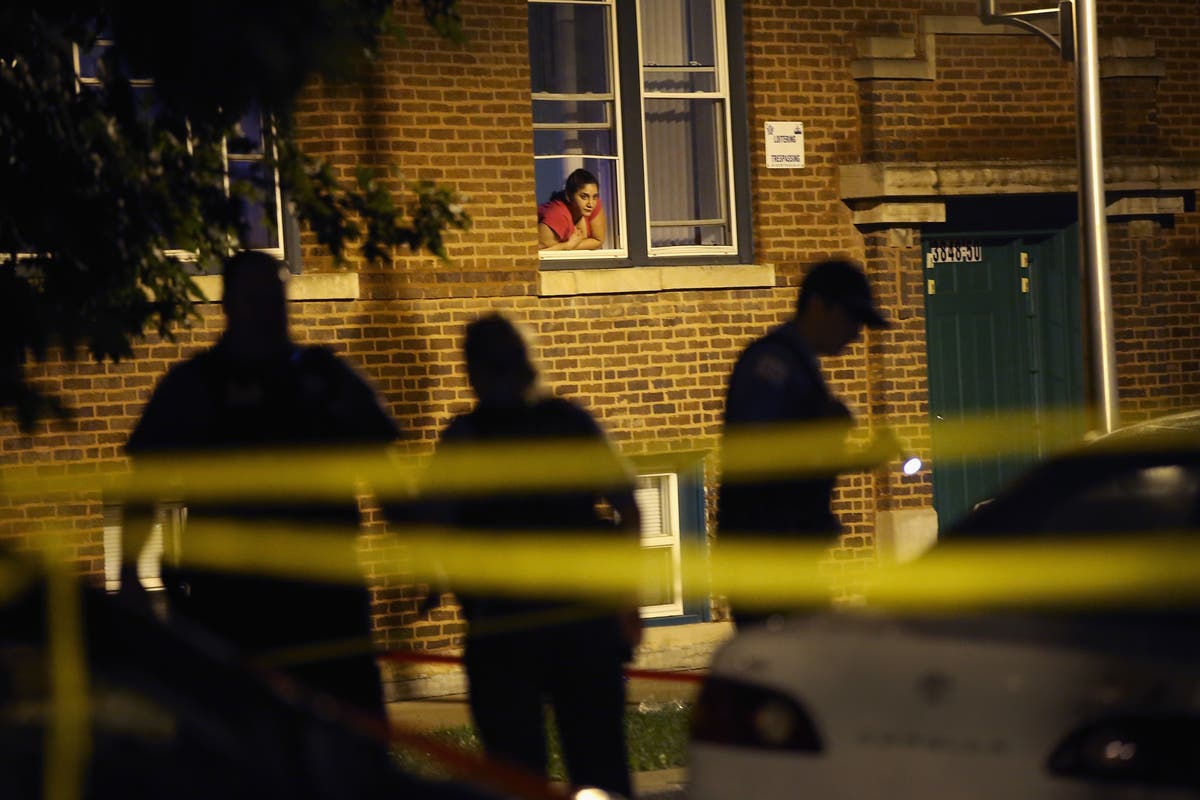
CHICAGO, IL — Chicago had more killings last year than any of America's 50 biggest cities, but the Windy City avoided being anointed "most dangerous city," according a new analysis of crime data. USA Today on Monday named Baltimore most dangerous, but said overall killings fell ever so slightly across the country.
Homicides fell in the country’s largest cities by 2.3 percent in 2017 compared to the previous year, with 5,738 slayings compared to 5,863 homicides the year before. The steepest drops were seen in Chicago, New York City and Houston, which each saw double-digit percentage drops, the analysis found.
In Chicago, there were 650 homicides last year — a rate of 24 per 100,000 residents, the analysis found. That’s 112 less killings than in 2016.
Find out what's happening in Chicagofor free with the latest updates from Patch.
But it was Baltimore, which had 343 killings, that tallied the highest killing rate with about 56 homicides per 100,000 people. Other cities that topped the per capita list include New Orleans, Detroit, Memphis and Kansas City. Each had killing rates of at least 30 per 100,000 residents.
Columbus, Ohio, saw the largest spike last year with 143 slayings — 37 more than 2016.
Find out what's happening in Chicagofor free with the latest updates from Patch.
For some good news, New York City’s yearly killing total dropped below 300 for the first time and the city saw its lowest per capita homicide rate in nearly seven decades. Peter Scharf, a criminologist at the LSU School of Public Health and Justice, told USA Today the success was attributable to focusing efforts on the correct neighborhoods, as well as spending on predictive analytics and technology.
The FBI hasn’t released its annual crime report and the analysis was based on an “early review” of police department crime data, the news outlet said.
Dr. Nicole Gonzalez Van Cleve, a criminology expert and professor at Temple University in Philadelphia, tells Patch that readers shouldn’t put too much stock into “dangerous city” rankings.
“We kind of throw around these rankings and it makes it sound like everyone is equally vulnerable to violence, when really, in most cities, especially a city like Chicago for instance, violence is mostly concentrated in areas that are most socially neglected," she says. "Areas with the highest rates of poverty. Failing schools.”
Major cities with high levels of segregation, poverty and inequality will often see high rates of violence, she says. But crime statistics and rankings don’t paint an accurate picture of where that violence actually happens. Violence is concentrated within communities, and individual blocks within neighborhoods often see vastly different levels of violence than others, she says.
“Literally, one side of the street will have less crime in the same neighborhood than the other side of the street,” she says.
Criminologists are looking into what’s behind such violence gaps and have found that it could be rooted in politics. Some streets receive social programs and rehabilitative services — such as violence prevention and job screening — but individuals on the opposite side of the street might be neglected.
“The rankings, while great for click-thrus, don’t really tell us the complex nature of how violence is impacted in some ways by social conditions, poverty, and other types of complex variables,” she says. “It’s never equally distributed throughout a city.”
Click here to read the full rankings from USA Today.
Get more local news delivered straight to your inbox. Sign up for free Patch newsletters and alerts.