Community Corner
Fifty Years Later: Remembering Chicago's Big Snow Of 1967
Looking back on the record-breaking 1967 blizzard that brought Chicago and the suburbs to a grinding halt.


CHICAGO, IL — Unless you were an adult abandoning your car on the Kennedy Expressway, for kids growing up in Chicago the Big Snow of 1967 was the greatest blizzard ever and still stands as Chicago’s heaviest snowfall on record.
Fifty years ago this week, the worst snowstorm ever endured sneaked out of nowhere and clobbered Chicago and surrounding suburbs right between the eyes. It started early in the morning of Jan. 26, 1967, and by the time the snow stopped the following day, 23 inches of snow had fallen.
Not since the Great Chicago Fire of 1871 did the city that works stop, as public officials and first responders figured out to how to dig out around the 50,000 cars and 1,100 CTA buses abandoned on the streets and expressways. Sixty people died, and businesses sustained damages of $150 million ($1.1 billion in today’s dollars).
Find out what's happening in Chicagofor free with the latest updates from Patch.

“This was the era of the pre-computer model,” Skilling said in an interview on the "Roe Conn Show." “We had really basic computer models, we didn’t have radar composites back then of Doppler radio. Satellite imagery operationally were still being worked on in the laboratory. Forecasters were working in an entirely different environment than we work with today.”
Just two days before the storm hit, on Jan. 24, 1967, Chicagoans were walking outside in their short sleeves in the middle of January, when temperatures reached a balmy 65 degrees. Thunderstorms blew through the Chicagoland area that evening, and funnel clouds were spotted over the southwest suburbs. Wind gusts reached 48 mph at Midway Airport. The wall of a building under construction at 87th Street and Stony Island collapsed, killing a worker and injuring four others, according to a storm history compiled by the National Weather Service.
Find out what's happening in Chicagofor free with the latest updates from Patch.
Historic radio broadcast from south suburban WCGO/WTAS on Jan. 27, 1967.
The following day a cold front blew through the region from the upper Midwest, bringing back more seasonal readings. When Chicagoans went to bed the evening of Jan. 25, the next day’s forecast called for rain or snow, with highs in the 30s. When people left for work and school in the morning, 6 inches of snow had amassed on the ground. By noon on Jan. 26, a foot of snow had fallen, shutting down O’Hare International Airport.
The storm was now in full blizzard mode, with 50 mph-plus wind gusts creating drifts as high as 15 feet. And the snow kept falling. Some businesses and schools released employees and students early, but the unlucky ones became lodged in blowing drifts on the region’s expressways, causing many commuters to abandon their cars. Neighborhood bars did a brisk business as the weary and stranded sought shelter and liquor, their abandoned vehicles becoming buried in snow. Most workers didn’t make it home, if at all, until the late evening.
By 10:10 a.m. the following day, Jan. 27 — a duration of 29 hours and eight minutes — Chicago and the suburbs were at a standstill. Both major airports were closed, and local transportation ground to a halt. Newspapers of the day reported drifts 10 feet high covering Midway Airport’s runways. Helicopters dropped critical medical supplies to hospitals. Grocery stores reported shortages of bread and milk. Expectant mothers were ferried to hospitals on sleds, snow plows and earth-moving equipment to give birth. At least 11 babies were born at home.
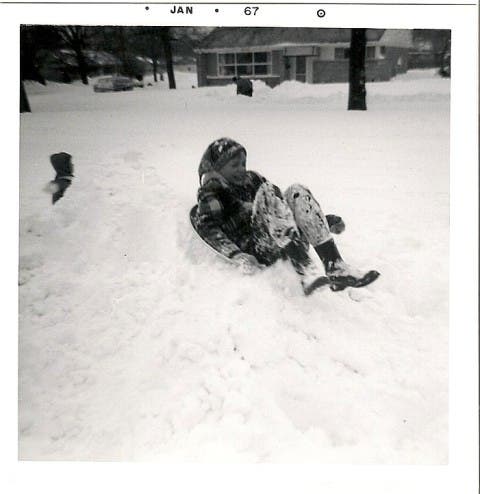
“I was an altar boy at St. Louis de Montfort Church and ended up serving mass for the rest of the week since I lived the closest,” recalled Michael Igoe of Oak Lawn. "The first day the church was empty, but as the roads opened up, a few people would show up. The priest would tell me to take the little cartons of milk home since there were no stores open yet. I would take all the chocolate milk and some white milk. It was hard, but we all managed.”
WCGO/WTAS, a community radio station broadcasting out of Chicago Heights, reported 200 people holed up in Dolton Bowl, with police bringing food and blankets. Over in Riverdale, 150 people were sheltering at the village hall.
Park Forest roads were impassable, and Calumet City’s four plows were stuck in the snow. Drifts 10 feet high were piled in front of stores and businesses in Oak Lawn. A 52-year-old Evergreen Park man suffered a heart attack and was pronounced dead at Little Company of Mary Hospital. Illinois Bell asked people to not use the telephone except for emergencies.
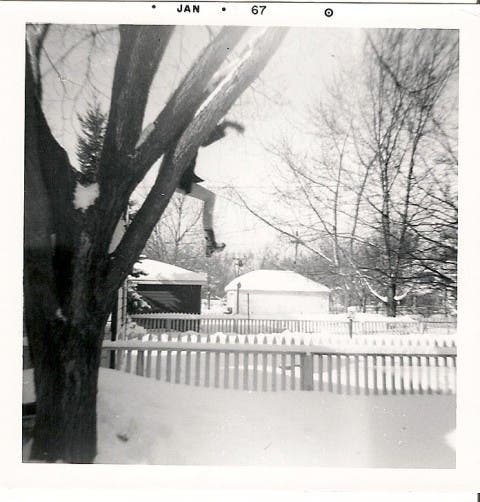
"They are all enjoying themselves," Superintendent J. Lewis Weingarner told the Chicago Tribune. "This is a night that will go down in many memory books."
By the weekend, Chicago and the surrounding suburbs began digging out, although snow removal efforts remained hampered by abandoned cars and buses. The city got rid of some of the snow by dumping it into the Chicago River. Most schools and businesses reopened the next Tuesday. The region’s airports did the same.
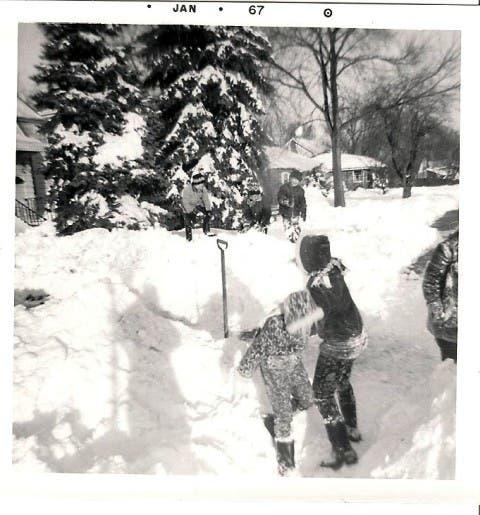
“We made a sled run out of the drift that went from the top of the garage into the back yard and into our neighbors’ back yard,” recalled John Tracy Allen, who grew up in Arlington Heights. “Our snow forts where like the Maginot Line, deep and secure with tunnels from one to the next.”
Cover Photo: National Weather Service
Get more local news delivered straight to your inbox. Sign up for free Patch newsletters and alerts.