Politics & Government
First Pot Shop Lottery Picks 55 Winners Of Dispensary Licenses
The results are subject to change as a result of court order. Two more lotteries are planned next month with a smaller number of entrants.


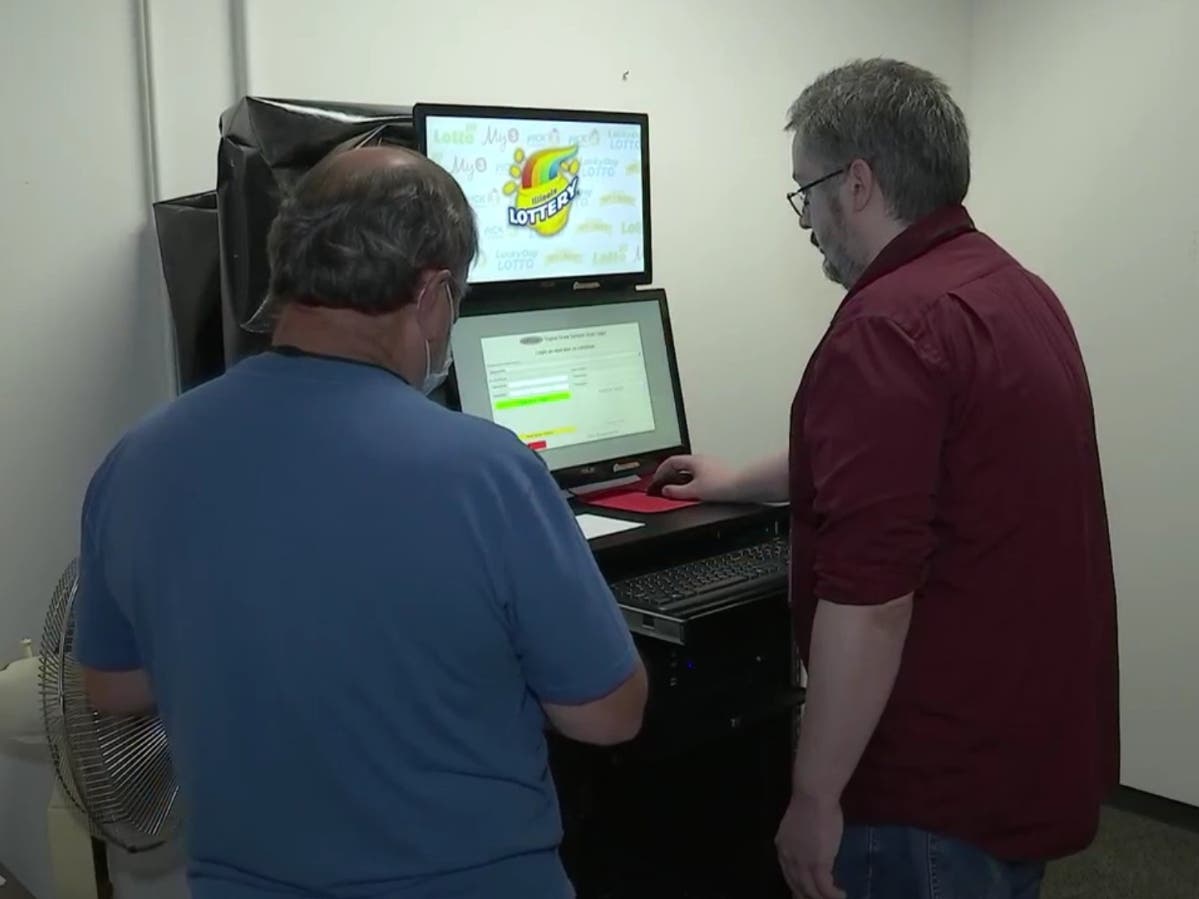
CHICAGO — The first of three scheduled lotteries to allocate 185 new licenses to operate recreational marijuana retail stores in Illinois was held Thursday.
Through a series of drawings conducted by the Illinois Lottery, one for each of the state's 17 U.S. Bureau of Labor Statistics regions, a random number generator picked 55 applicants who will likely have the opportunity to receive a license.
But it's not a guarantee. Qualifying applicants must meet legal tax compliance and other ownership requirements. Plus, a day before the lottery, a Cook County judge ordered state officials not to actually award any licenses to allow more time for the review of a legal challenge to the fairness of the licensing scheme.
Find out what's happening in Chicagofor free with the latest updates from Patch.
"The lottery results may change as a result of court orders or administrative review," according to a court-ordered caveat in Thursday's announcement from the Illinois Department of Financial and Professional Regulation, which administers the retail cannabis licenses.
The first lottery — dubbed the "qualifying applicant" or "cut-score" lottery — was open to all applicants who scored at least 85 percent of the maximum score on last year's application. There were 622 participating applicants, with none of them eligible for more than two.
Find out what's happening in Chicagofor free with the latest updates from Patch.
The second lottery is set to award up to 55 more licenses to a slightly smaller pool of eligible applicants. Scheduled for Aug. 5, the Social Equity Justice Involved lottery eliminates about 164 applications from consideration who had qualified as social equity applicants through employees rather than ownership in a process critics dubbed the "slave master clause."
One of those applicants — the Michigan-based company Sozo — filed but then withdrew a federal constitutional challenge to the lottery process, which it described as a "corruption" of the licensing process that will continue to benefit well-connected political insiders. The company spent more than $350,000 on applicants and hired qualified as a social equity applicant by hiring eight people who lived in places deemed "disproportionately impacted" by the war on drugs and two people who had either themselves been arrested for low-level cannabis offenses or had relatives who were.
"While claiming to promote social equity, diversity and representation for systematically discriminated people in the cannabis industry, in reality the revised bill creates a deeply flawed and unconstitutional process for distributing cannabis dispensary licenses in which rules of qualifying applicants were changed after applications were scored," company representatives said in a statement explaining why they withdrew the suit.
The third lottery, a "tied applicant" lottery scheduled for Aug. 19, will award 75 more licenses to the much smaller group of applicants who received 100 percent of available points on their scores. Those applications were also all eligible for the first two lotteries and will be subject to limitations on how many licenses a single entity can own.
Pending a court order, the process will award the first new dispensary licenses since the legalization of the possession and sale of cannabis in 2019.
That law called for up to 75 new licenses to be issued by May 2020, but coronavirus-related executive orders from Gov. J.B. Pritzker and ongoing legal challenging to the application and scoring process have prevented any new entrants into the industry.
The initial scoring process resulted in only 21 eligible applicants, all with perfect scores, and complaints about how points were calculated. Only veteran-owned organization were eligible for perfect scores under the law.
With the process stalled, an amendment to the legislation calling for the trio of lotteries passed the Illinois General Assembly in May. Sponsored by State Rep. LaShawn Ford (D-Chicago), House Bill 1443 was signed into law by Pritzker earlier this month.
Mario Treto Jr., the department's acting secretary, said he was pleased to announce the results on what he described as a "monumental day" for the state's cannabis industry.
“We look forward to ensuring an inclusive and equitable cannabis program whose makeup accurately reflects the diversity of our great state of Illinois," Treto said.
Winners of the pot shop licenses lotteries who receive conditional licenses will have 180 days to find a storefront location. After that, they need to request a deadline extension, or permission to move to another BLS region, or they face losing the license.
On the eve of Thursday's lottery, Cook County Circuit Judge Moshe Jacobius issued an order calling on IDFPR to wait to award licenses to any winners until after an Aug. 9 hearing in the case of Wah Group LLC and Haavy LLC vs IDFPR and its agents.
That challenge, like another filed by a group of about two dozen applicants in Sangamon County Circuit Court, was initially filed after the state announced plans to restrict the lottery to applications that received perfect scores.
Since then, in addition to the new state law authorizing lotteries for a larger swath of applicants, state regulators have allowed applicants to correct errors in their applications.
Irina Dashevsky, who represents the plaintiffs in the Sangamon County case, said she believes that court challenges are unlikely to prevent the winners of Thursday's lottery from receiving licenses, barring the emergence of new information that the process is somehow corrupted. Her clients' suit against the state, Hazehouse LLC et al vs. IDFPR, which argues the licensing process' preferential treatment to veterans violates the state constitution, has been stayed since last November.
"What started out as you have to get perfect or you get nothing, has turned into you get another shot to up your score and then you also get in if you get 85 percent or better," Dashevsky said. "Frankly, you've gotten to both correct your thing and they've changed the bar to entry to a really, really low bar, in my opinion."
Thursday's lottery provided for 36 licenses in the Chicago-Naperville-Elgin metropolitan area, three in St. Louis, two in Rockford and one in every other BLS region of the state.
Those awarded conditional licenses are forbidden from selling, transferring or assigning them to others before they become adult use dispensing organization licenses, according to IDFPR, which posted the list of winners of Thursday's lottery on its website.
Get more local news delivered straight to your inbox. Sign up for free Patch newsletters and alerts.