Crime & Safety
Police Accountability Task Force Report Disturbing, Painful to Read
"A painful but necessary reckoning is upon us. That is what these times demand," report says.


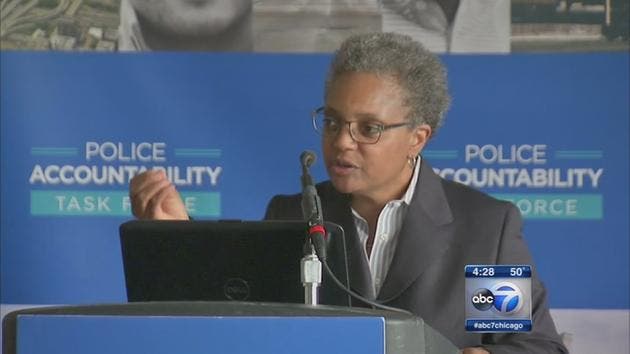
CHICAGO, IL -- A highly critical report released Wednesday by Mayor Rahm Emanuel’s appointed Police Accountability Task Force points to racism and a systematic breakdown of police accountability as the main causes of the breakdown of trust between the Chicago Police Department and community members, particularly communities of color.
The report’s release comes after another fatal shooting of a black teen by Chicago police officers after a brief foot chase on earlier this week. It also cites the shooting of 17-year-old Laquan McDonald in 2014 by a white Chicago police officer now charged with murder, as the flashpoint of decades of complaints by African-Americans of mistreatment at the hands of Chicago police officers.
Reciting a litany of historic Chicago cases of police misconduct and brutality, from the shooting of Fred Hampton, discriminatory hiring, Jon Burge and his notorious midnight crew, as well as widespread use of investigatory stops and frisks, the report states, “If you are not severely and wholeheartedly dealing with racism, you are not going to get to the bottom of this issue.”
“The Task Force heard over and over again from a range of voices, particularly from African-Americans, that some CPD officers are racist, have no respect for the lives and experiences of people of color and approach every encounter with people of color as if the person, regardless of age, gender or circumstance, is a criminal.”
The report’s statistical findings of the number of people of color who were shot, tasered, stopped or died after encounters with Chicago police are difficult and painful to read:
- Of the 404 police involved shootings between 2008-2015, 74 percent or 299 African Americans were hit or killed by police officers; 14 percent or 55 Hispanics; 8 percent or 33 whites; and 0.25 percent of Asians were hit or killed by police officers.
- Of the 1,886 taser discharges by CPD between 2012 and 2015, African Americans were more frequently targeted at 76 percent or 1,435, compared to 13 percent or 254 Hispanics; 8 percent or 144 whites; and 0.21 percent or 4 Asians.
- In 2013, of the 100,676 traffic stops, 46 percent involved African Americans; 22 percent involved Hispanics, and 27 percent involved whites.
- CPD also stopped more than 250,000 people during the summer 2014—93.6 for every 10,000 city residents—in encounters not leading to arrests.
The report also addresses the “institutionalization of the code of silence” and an “end justifies the means” mentality among the CPD, stating that 40 percent of complaints received between 2011 and 2015 were not investigated by Independent Police Review Authority or CPD's Bureau of Internal Affairs.
“The public has lost faith in the oversight system. Every stage of investigations and discipline is plagued by serious structural and procedural flaws that make real accountability nearly impossible. The collective bargaining agreements provide an unfair advantage to officers, and the investigating agencies—IPRA and CPD’s Bureau of Internal Affairs—are under-resourced, lack true independence and are not held accountable for their work.”
The task force suggested a number of re-hauls to “empower the people,” especially in neighborhoods where violence and poverty are prevalent. Recommended changes include creating a “Community Oversight Board” that would allow community members to play a more significant role in the police oversight system and beat-based policing.
The report also suggests replacing CAPS with localized Community Empowerment and Engagement Districts (CEED) for each of the city’s 22 police districts. Such a reform would enable police and community leaders to work with neighbors in creating policing strategies and partnerships appropriate for their specific communities.
Finally, the task force wants the city to implement a “reconciliation process beginning with the Superintendent publicly acknowledging CPD’s history of racial disparity and discrimination, and making a public commitment to cultural change."
“The police need to know who they work for – the community. The authority that they have belongs to the people,” report concluded.
Read the full report.
Get more local news delivered straight to your inbox. Sign up for free Patch newsletters and alerts.