Neighbor News
The Mormon Church and Bloom High School
Bloom students impacted changes in the Morman Church



The Bloom Alumni Athletic Association has a mission of preserving our history, and in our preservation efforts we have discovered that our history has had an impact on local, regional, and even world history. Our recent preservation collections and research has uncovered more than we could have imagined. Our recent stories of Homer Thurman, Walt Tiberi, the sculptures of the statutes that adorn our Bloom front entrance, and LeRoy Jackson, etc affirms the proud experiences and accomplishments of the Trojan Nation.
The most recent find by our Bloom Alumni Association staff uncovered a role played by a Bloom alum in helping change the religious doctrines of the Mormon Church!
As we all know the 60s was a turbulent time in America. Social, religious and cultural norms were being challenged. One of the more serious challenges to religious norms was the Church of Latter Day Saints (LSD) stance on Blacks being accepted into the priesthoods of the LDS. Schools that were Mormon based were seen as racist institutions. No other LDS school of prominence was greater than Brigham Young University (BYU).
Find out what's happening in Chicago Heightsfor free with the latest updates from Patch.
The Civil Rights Movement had many causes to fight, housing segregation, equal education and employment opportunities just to name a few. At the University of Wyoming, African-American athletes decided to protest against LDS Church policies by boycotting several sporting events with Brigham Young University. In 1968, after the assassination of Martin Luther King, black members of the (University of Texas-El Paso) UTEP track team approached their coach and expressed their desire not to compete against BYU in an upcoming meet. When the coach disregarded the athletes' complaint, the athletes boycotted the meet. Stanford University President Kenneth Pitzer suspended athletic relations with BYU, because of BYU’s firm stance of Black priesthood.
In 1969, 14 members of the University of Wyoming football team scholarships were stripped and they were “fired” from the team for planning to protest the policies of the LDS church. In November 1969 the uproar and social unrest caused by the removal of the football team struck a national nerve with young and old people around America and especially in the state of Wyoming and the leadership of the LDS church.
Find out what's happening in Chicago Heightsfor free with the latest updates from Patch.
The U of Wyoming community was split on supporting the LDS’s stance and the U of W coach Eaton’s decision to fire the , (named the “Wyoming 14“) Black football players because of their desires to protest. The 51-year-old Eaton, a native of Belle Fourche, S.D. was at the peak of his career. On Oct. 11, 1969, the Madison, Capital Times reported that Wisconsin Athletic Director Elroy Hirsch was considering Eaton as a candidate for the Big Ten team's next coach.
The consequences to the U of Wyoming, the state’s economy and negative national perception proved to be too much for the LDS leadership and state officials. In 1978, the First Presidency and the Twelve, led by Spencer W. Kimball, declared they had received a ‘revelation’ instructing them to reverse the racial restriction policy.
Today, because of the protests, advocacy, and sacrifices of those athletes and others. The LDS policies went through a radical shift in the position of Blacks in the LSD church.
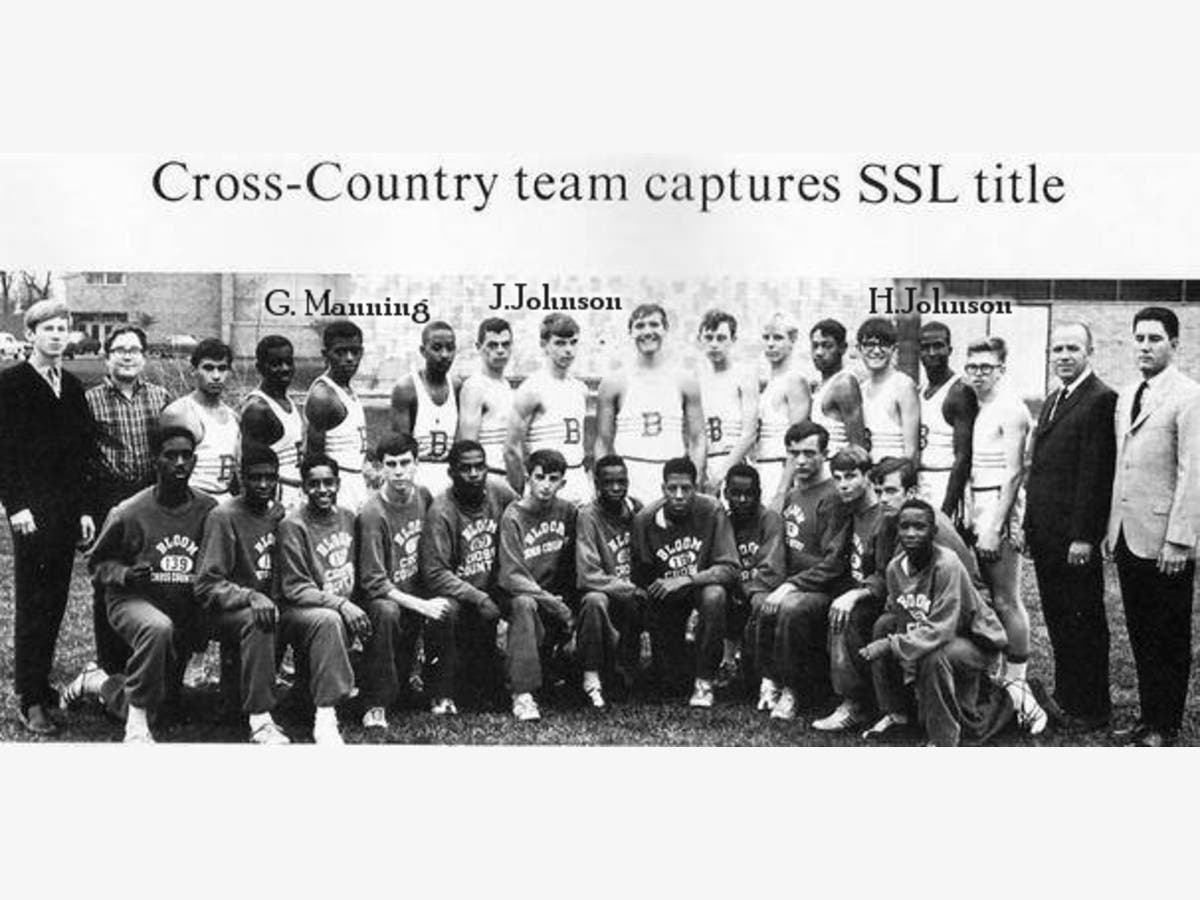
But, how does this relate to Bloom? Well, one of the defining protest were staged by not only the football team, a number of track stars from the university joined the boycott by quitting the university’s track team. Two of them were conference champions and noted athletic stars. These track stars even after the protest had concluded and compromises had been made, left the university in perpetual protest and became symbols of that monumental movement of social and religious change. They were Grady Manning and Huey Johnson both from the Chicago Heights Bloom
Huey was Bloom’s state champion and teammate and great friend of Olympian Jan Johnson. After leaving Bloom they had many conversations about life after Bloom. Jan experiences at his chosen university of Kansas had similar social controversies and life altering consequences. Jan also had difficulties adjusting from the life in the Chicago Heights area and Bloom. So much that he too left the track team his first year at Kansas.
… “It was so socially different, so conservative and laced with a type of racism I was not accustomed to. I had to leave” … I later heard stories of my good friend Huey, and felt bad for his plight in the light of what I was even going through…”, says Jan
… “We spoke with a limited understanding and without the light and knowledge that now has come into the world.... We get our truth and our light line upon line and precept upon precept. We have now had added a new flood of intelligence and light on this particular subject, and it erases all the darkness and all the views and all the thoughts of the past. They don't matter anymore .... It doesn't make a particle of difference what anybody ever said about the Negro matter before the first day of June of this year”
Church of the Latter Day of Saints
These Trojan alums epitomized our upbringings born at a Chicago Heights school, called Bloom. Even at great sacrifice, Trojan alums have demonstrated a consistent theme of impacting world events.
And when we think that we couldn't get any prouder…
Bloom Alumni Association & Archives