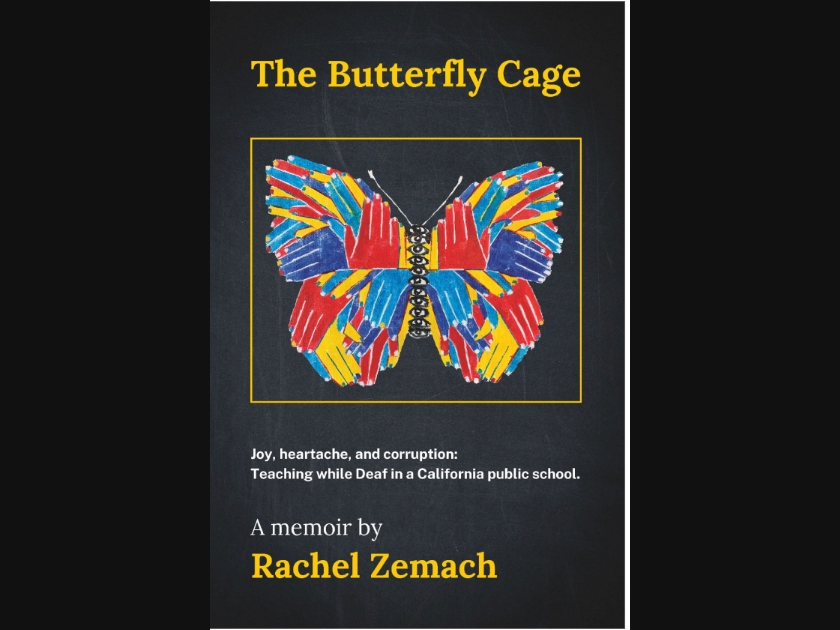
Rachel Zemach, Deaf educator, writer, and passionate activist on behalf of Deaf and hard of hearing children and adults, is sharing her experience and expertise in her newly released memoir, "THE BUTTERFLY CAGE.” She shares captivating first-hand accounts from her life as a Deaf person and explores the differences in thinking between two major, and often conflicting, viewpoints on how to educate Deaf children, and how she saw the two different approaches impacting students.“In the US, there are 48.3 million Deaf and hard of hearing people. Out of those, about 5-10% have a strong, positive, and proud Deaf identity. Among the others, they either pretend they are hearing when they aren’t, they self-isolate, or they struggle with loneliness, embarrassment and difficulties, since they do not know the solutions available to them. The ones who DO know the solutions are the small percent that are organized, as a community, and very positive about being Deaf. They find and share information and resources and solutions with each other, in what is sometimes called DCCW (Deaf cultural community wealth.)
For children, if they are taught their Deafness is fine, and even cool, given the coolness of ASL and the Deaf community, they will be strong and resilient when they encounter problems. If they are taught to hide it and deny it, they will not seek out access and help when they need it, and their loneliness and problems will deepen instead,” says Rachel Zemach, Deaf educator and author.
To combat this loneliness, we (including all hearing people) need to be promoting ASL like it’s nobody’s business! Zemach goes on to say that, “In my experience, ASL is a pure joy, an incredible language, and the Deaf community is supportive, passionate and full of wicked humor and resourcefulness. If Deaf children are taught their Deafness is fine, and even cool, they will be strong and resilient when they encounter problems. If they are taught to hide it and deny it, they will not seek out access or help when they need it, and this will lead to dysfunction, problems and isolation. I saw an example of this when a fifth-grade, very hard of hearing student was in an UN-deaf-friendly environment and decided to say she was hearing. She left her hearing aids at home, which meant she was actually deafer than ever, and started getting in trouble in class and missing out on instruction, in her determination to deny her deafness. Being proud of who you are, being strong and having the support of a positive culture and successful role models is always a positive thing. Being ashamed is always a negative one. Hearing people, in their mistaken assumption that fitting in to the hearing world should be the goal, actually do tremendous harm to Deaf children, and rob them of some joy they (hearing people) simply don't understand.”
Find out what's happening in Downers Grovefor free with the latest updates from Patch.
In her book she shares captivating first-hand accounts and explores the differences in thinking between the two major, and often conflicting, viewpoints on how to educate Deaf children. These close-up, poignant stories of charming, individual students and classroom scenes will surprise you as Rachel’s personal encounters intertwine with them as she navigates her own changing Deaf identity. All the while being surrounded by hearing people; both at home and at work. She leads readers through intense educational meetings, bringing out both humor and the dismay they invoke, in her first job. After ten years there, she leaves that position and begins teaching at a large, renowned all-Deaf school. Readers have the unusual experience of accompanying her into that stunningly different world, where attitudes are flipped, linguistic fluency and Deaf culture thrive, and within months, students flourish.