Community Corner
Children's Monarch Fest Focuses on Conservation
Elmhurst Garden Club and Elmhurst Cool Cities Coalition host Children's Monarch Fest, Sun., July 9, 10 a.m.–4 p.m. in Wilder Park.

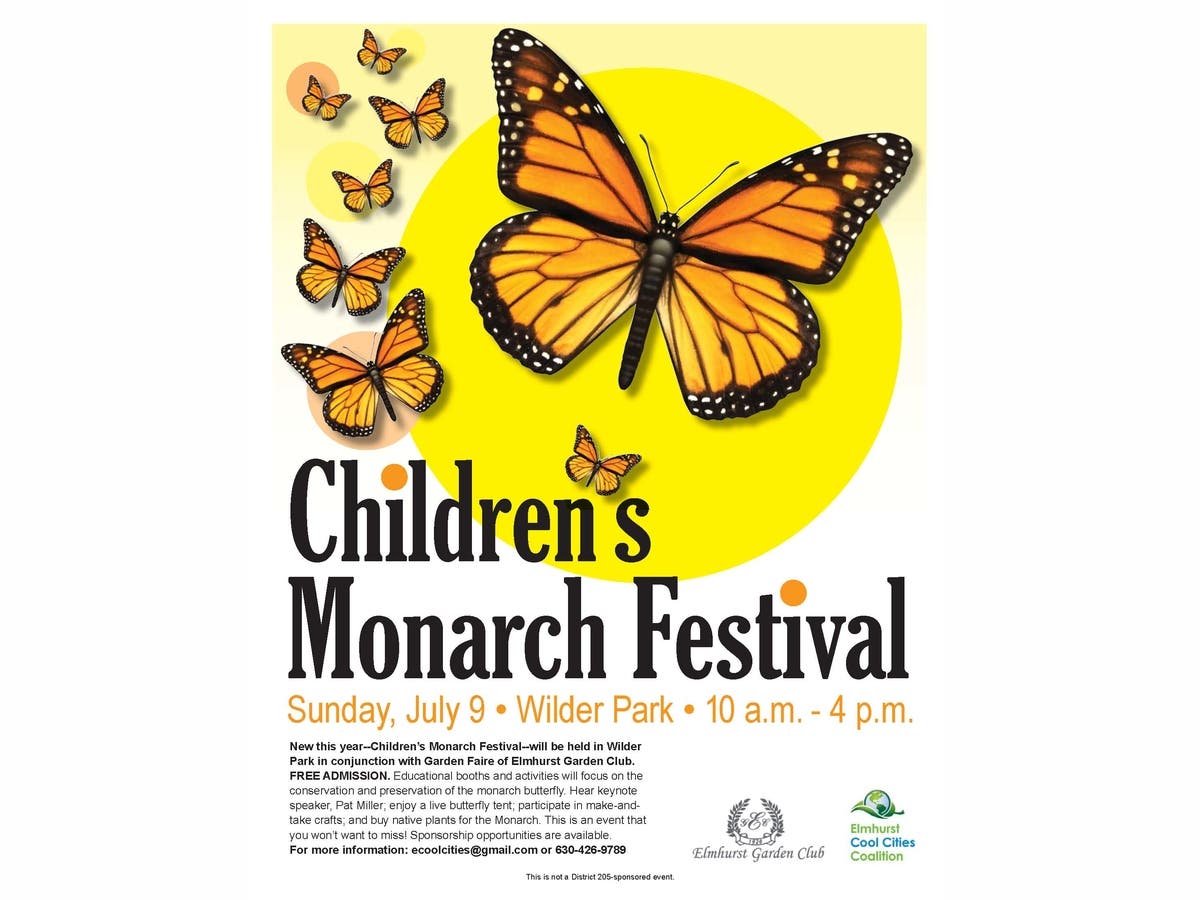
The Elmhurst Garden Club and Elmhurst Cool Cities Coalition invite families to attend the Children’s Monarch Fest, Sun., July 9, 10 a.m. – 4 p.m. in Wilder Park.
The Fest is held in conjunction with the Elmhurst Garden Club’s Garden Walk & Faire. Activities include: keynote speaker Pat Miller presenting “Monarch Magic: Discover the Magic of the Monarch”; a live butterfly tent; free milkweed seed giveaway (while supplies last); native plant sale; monarch make-and-take craft; Be-A-Monarch photo-op; face painting; and more.
Exhibits and activities will focus on the conservation and preservation of the monarch butterfly, natives and prairie plants. Exhibitors include: DuPage Monarch Project; Elmhurst Cool Cities Coalition; Elmhurst Public Library; Forest Preserve District of DuPage County; Midwest Pesticide Action Center; Natural Communities Native Plants; and University of Illinois Master Gardeners.
Find out what's happening in Elmhurstfor free with the latest updates from Patch.
Miller will present “Monarch Magic” at 11 a.m. and 12:30 p.m. in Wilder Mansion. Park Art Center will be face painting from 1-3 p.m. Elmhurst Public Library staff will read to children while they wait in line for the live butterfly tent. And Exiner Art Studio is sponsoring the Be-A-Monarch the photo-op.
Additional Fest sponsors include Explore Elmhurst, Elmhurst Park District, People for Elmhurst Parks Foundation, West Suburban Stationery and Betsy Grimm.
Find out what's happening in Elmhurstfor free with the latest updates from Patch.
In early 2016, at the request of the Elmhurst Garden Club, Elmhurst Mayor Steven Morley signed the Mayors’ Monarch Pledge of the National Wildlife Foundation. He issued a proclamation designed to raise awareness about the decline of the monarch butterfly and the species’ need for habitat.
Several national organizations are working to help restore the declining population of monarch butterflies and pollinators. Among them are monarchwatch.org, WildOnes, and the North American Pollinator Protection Campaign. This collaboration involves more than 140 government, collegiate and private organizations working for the protection of pollinators across Mexico, Canada and the United States.
The Elmhurst Garden Club declared 2017 the Year of the Monarch. Additionally, Garden Clubs of Illinois has a state-wide monarch initiative. Locally, the DuPage Monarch Project is asking municipalities to sign a resolution committing them to increase the number of native milkweed plants on city owned land where appropriate, reducing the use of pesticides which threaten butterflies and pollinators, and educating residents about milkweed, including local sources for use in residential landscaping.
To help protect monarchs and their migration:
Plant milkweed. Monarch caterpillars need milkweeds to grow and develop. To learn which milkweed species are native to Illinois and how to plant them, visit www.monarchwatch.org.
Plant native butterfly nectar plants. Nectar is crucial to the monarch population, providing energy for breeding, for their migratory journey, and to build reserves for the long winter. For information on Illinois natives, visit dnr.illinois.gov.
Avoid using pesticides. Insecticide and herbicide used to control insects and weeds have unintended consequences on pollinators and wildlife, including bees, birds, butterflies, and aquatic organisms.
Encourage public land managers to create a monarch habitat. Roadsides and parks of all sizes offer great opportunities to create habitat for monarchs and other pollinators.
For more information, or to sponsor or exhibit at the Fest, contact Barbara Lonergan at 630/426-9789.