Politics & Government
Alderman Reject Lease Of Harley Clarke Mansion To Nonprofit Group
The City Council decided against granting Evanston Lakehouse & Gardens a 40-year lease of the city-owned lakefront property.


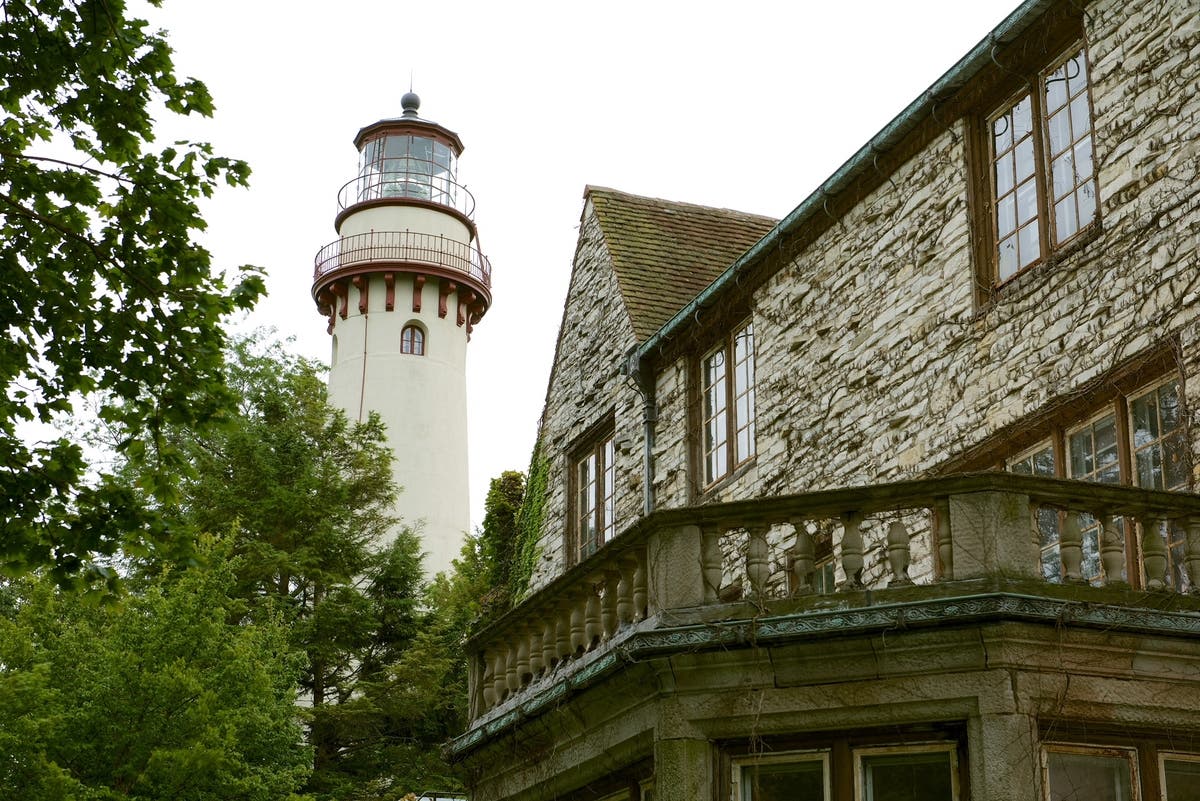
EVANSTON, IL — A Evanston City Council rejected a proposed 40-year lease of the city-owned Harley Clarke mansion to Evanston Lakehouse & Gardens, a nonprofit group that wants to save the local landmark from demolition by turning it into an environmental education center. Aldermen expressed concerns that the latest version of the lease agreement presented a significant financial risk to the city and did not require the group raise enough money to make its plans feasible.
A pair of votes taken on the topic Monday may mark the end of an multi-year process described as exhausting by several people who took part in it. The future of the site is now as uncertain as ever, as formerly foreclosed options, like razing the 90-year-old structure or leasing it to a commercial operation, can be put back on the table.
The initial vote – to delay a final decision until changes were made to the lease – failed by a vote of 5-4.
Find out what's happening in Evanstonfor free with the latest updates from Patch.
Supporting further discussion and edits to the lease were Ald. Melissa Wynne, 3rd Ward, Ald. Don Wilson, 4th Ward, Ald. Tom Suffredin, 6th Ward, and Ald. Eleanor Revelle, who represents the north Evanston 7th Ward in which the mansion is location.
It was opposed by Ald. Judy Fiske, 1st Ward, Ald. Peter Braithwaite, 2nd Ward, Ald. Robin Rue Simmons, 5th Ward, and Ald. Ann Rainey, 8th Ward.
Find out what's happening in Evanstonfor free with the latest updates from Patch.
That set up a final vote on the lease as drafted, which was rejected 7-2, with only Suffredin and Revelle in support.
Afterwards, the president of the Evanston Lakehouse & Gardens board, Tom Hodgman, said he was optimistic heading into the vote. He thought the group would get an opportunity to incorporate suggestions from aldermen to address any problems with the terms of the lease.
"If the terms that staff had agreed to weren't right, I think we made it very clear that we were happy to work with the council to fix them," Hodgman said. "We were surprised that we didn't have another opportunity to address those concerns – even after we'd asked some of the alderman before the council meeting and made it very clear in the meeting – if what we had agreed to with staff was not appropriate. And we didn't get a chance to fix it."
He suggested a clause in the lease allowing the city to cancel it if his group failed to meet donation goals protected the city against funding shortfalls.
"The fundraising benchmarks provide ample protection on the question of, 'Can the money be raised?' So there's plenty of protection there."
Hodgman said the casualty terms had been agreed with the city, and pointed to similar provisions in other leases of Evanston-owned property. He said the nonprofit remained open to altering it according to any suggestions from the council.
"I do not think they were being exposed to too much risk," he said.
'No' Votes Explained
Before voting it down, several aldermen portrayed the proposal as too potentially hazardous for taxpayers.
Wilson said he has been involved in the process for years but could not support the lease as it was written.
"The lease, I do think, has a couple of very serious problems," he said. "The risk of loss provisions I find to be not acceptable."
That clause would have put taxpayers on the hook for the repair costs of up to 85 percent of the building's market value, which could wind up being millions of dollars, he said.
Wilson also pointed out that the Lakehouse group had previously proposed raising $4.8 million in the first two years, compared to the "wildly different" figure of a binding $500,000 fundraising target over the first two years in the amended lease.
"It's really not the same proposal any more, it's a counter proposal," he said. "We voted on something and approved it, but this is not the thing that we approved back in November."
Fleming said she worried about possible cost overruns, noting they are common in construction projects, as well as a clause inserted into the latest version allowing the Lakehouse group to pull out of the lease in case of environmental problems that would cost more than $150,000 to fix.
"My role is to make decisions that I feel like are good government, and part of good government is making decisions that keep the taxpayer protected and that also move the city forward and not just continuing things," Fleming said, noting that can lead to frustrations for citizens and the council. "But we have to make firm decisions based on what's in front of us, not based on what could be."
Wynne said she had been on the council throughout the process and would like to see the project succeed. A 10-year time frame to raise the money was too long and needed to be condensed, she said.
"The issues about insurance coverage, potential risk to the city, liability problems," she said. "Those have to be addressed in a way the city is protected. As much as I want this project to succeed, my first duty is protect the citizens of Evanston from potential risks that we could avoid."
Rue Simmons said she had previously been excited about the proposal but was disappointed that the lease was not stronger. All informed opinions, she said, indicated it would leave taxpayers financially exposed. She also worried about the whether the Lakehouse group's venture might contribute to "donor fatigue" and come at a cost to projects that support communities in need.
"I'm concerned that we are using equity and inclusion sometimes to push for our projects and agendas, and we're not really doing what we can to work on equity and inclusion for families that need us most," Rue Simmons said, noting the relative lack of support for preserving the historically and architecturally significant Family Focus building in her ward.
She suggested donors consider where their contributions go, "because we have some families that are in crisis, and those are some opportunities that I believe are being overlooked in the community."
Braithwaite said he was residents who had not previously been engaged in civic matters were getting involved.
"If you're concerned about equity, as it was articulated tonight, and if you're really concerned about the preservation and also the teaching that can come, I think that that can still take place outside of the physical structure of the building," Braithwaite told the proposal's disappointed supporters.
"Every single week we vote on things that we don't get, and I don't think people really understand that. And this is just one of those moments that we're just going to have to deal with going forward," he said. He did not respond to a request to clarify his remarks.
In a prepared statement, Fiske said the site presents a rare opportunity for the lakefront, but she was unable to support it:
As their proposal has taken shape, I've watched carefully to make sure it will be financially viable and have limited impact on the city budget. Accordingly, city representatives raised the fundraising goals in an effort to ensure that the project can be successful and sustainable and not require a city bailout. At present, however, it is clear to me, despite the project's leadership's best efforts, the fundraising targets, including establishing a permanent endowment, cannot be met successfully.
Fiske criticized the Lakehouse group for not publicly disclosing all of the names of its donors. She said she had heard firsthand from "many potentially large donors who have declined the opportunity to support the project because of questions about its financial feasibility."
Fiske said accepting the lease would put the city at risk financially, and even potentially put the "treasured lakefront in peril."
If the group ran out of money to support its operations, she predicted, the most logical option would be to increase the number of "revenue-generating functions" held there. That would, in turn, "open the door, quite literally, to becoming a de facto commercial events center...That is a risk that would endanger the community's most valuable natural resource and a risk I would not be willing to take."
Rainey, who voted against the plan, did not make any comments about the proposal. She is the lone alderman remaining on the council who supported the proposed sale of the site to retired Col. Jennifer Pritzker's Tawani Enterprises, which was rejected by a vote of 6-3 in July 2013.
What's Next?
In order for the proposal to be reconsidered, one of the seven aldermen voting against its adoption would need to bring it forward at the council's April 26 meeting. It would then need five votes to be reconsidered. Passage would still require six votes, and supporters of the proposal appear unlikely to want to bring it forward without the votes in hand.
The result of the meeting surprised and disappointed Revelle, who said she had expected the council would hold the matter over to revise the proposal to address concerns with it. She said issues over the cost of potential environmental mitigation or costly repairs due to natural disasters could have been resolved "if we had had a chance to sit down and really talk it through."
Both sides, Revelle said, wanted protection from unforeseen events, but the concerns raised at the meeting were not raised during the lease negotiations, which took place between last November and April.
"We never really talked about those two things," Revelle said after the vote. "It's unfortunate that we didn't have those conversations earlier on because I think we could have avoided this confusion."
Suffredin, the only other vote in favor of the proposal, said the future of the site was up in the air.
"I wish it would have just passed. We could have just been talking about how they're going to raise the money and they could succeed or fail," Suffredin said. "Now, the way that this is, they never got their shot, and so whatever we come up with is going to be a problem."
Suffredin said it was unfortunate that so many people expended so much time and effort in the project, but it was apparent the proposal did not have the six votes it would need.
"If there's gonna be another process, I would just hope that it would be very clearly laid out and relatively condensed time frame," he said. "Because I don't want to spend the next three years talking about what we should do with it."
Assistant City Manager Erika Storlih said city staff will have to wait for the council's direction before determining the next step. And until aldermen decide out what they want to do with the site, she said, it's not possible to figure out how much money it will take to bring up to code.
"It is not code compliant, and until a use is defined, a zoning analysis can't be completed to determine what amount of upgrades need to be done," she said.
Mayor Steve Hagerty has not responded to a request for an interview, nor have several of the aldermen who voted "no" on the lease. Hagerty previously suggested demolishing the building if there are no acceptable bids.
The mayor, who bought a $2.4 million lakefront home nearby the mansion in 2010, previously served as the chair of the Harley Clarke Citizens Committee tasked with proposing solutions after the Evanston Arts Center departed the space in 2015.
He described several competing values at play in the decision-making process as he presented the committee's report nearly three years ago.
"What values or set of values is most important, relative to the mansion and city at large. Is it keeping this facility public or is it generating tax revenue? Is it restoring a landmark building? Is it creating more green space?" reported Pioneer Press at the time. "There are a lot of different values [of] which you are going to have to collectively decide which value or set of values is most important."
The Evanston Lakehouse & Gardens group reconvened Thursday night to consider its next steps.
"The team remains very energized. We don’t believe council's decision reflects the will of the community. ELHG looks forward to fighting on behalf of our community-first vision," Hodgman, the board president, said after the meeting via email. "ELHG plans to continue to mobilize support and partners to advance our mission. Evanston is a Great Lakes City where everyone owns a house on the lake, let's keep it that way."
More: Revised lease sets higher fundraising goals, 2023 opening date for Harley Clarke
Evanston City Council discusses the proposed Evanston Lakehouse & Gardens lease of the Harley Clarke mansion April 9, 2018:
Get more local news delivered straight to your inbox. Sign up for free Patch newsletters and alerts.