Politics & Government
Committee Rejects Alderman's Bike Lane Removal Request
No other council member supported Ald. Ann Rainey's proposal to eliminate protected bike lanes on Dodge Avenue north of Howard Street.


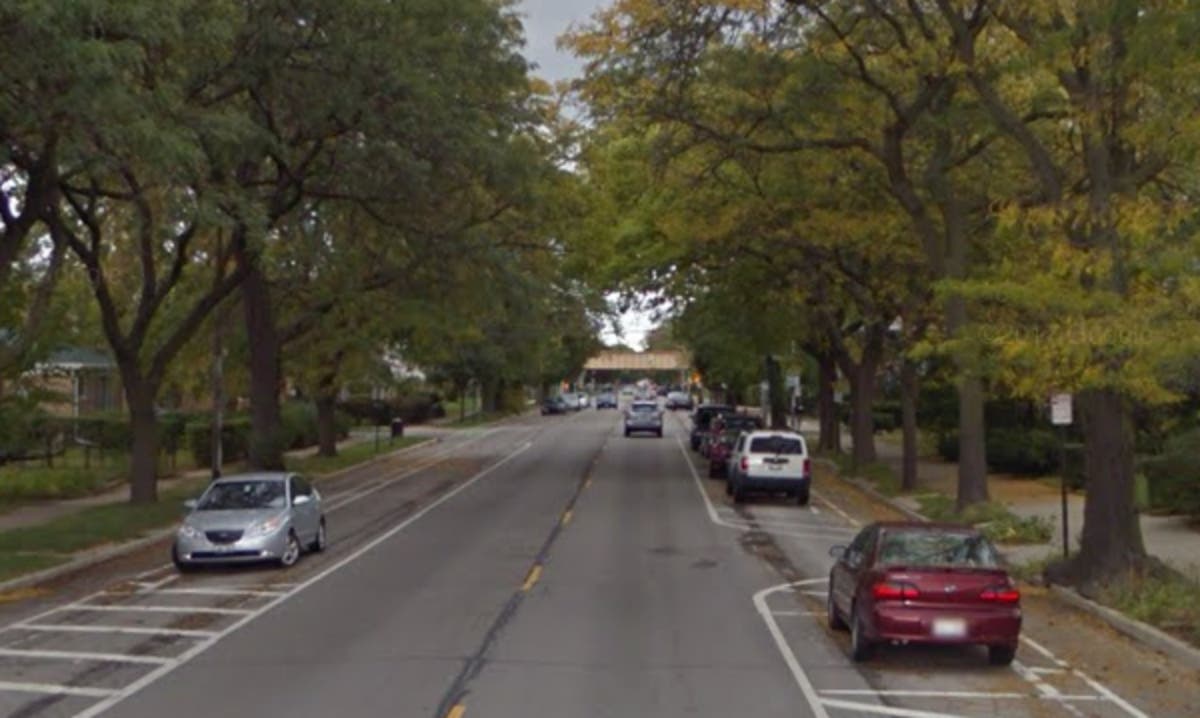
EVANSTON, IL — An alderman's attempt to authorize the removal of protected bicycle lanes from a stretch of Dodge Avenue in south Evanston went nowhere at Monday's meeting of the Evanston City Council's administration and public works committee. The proposal from Ald. Ann Rainey, 8th Ward, to eliminate a few blocks of the protect lanes to assuage concerns from her nearby constituents received no support from other committee members.
According to a memo from Public Works Agency Director Dave Stoneback and City Engineer Laura Biggs, the protected lanes were installed in the summer of 2015 as part of of the Dodge Avenue Bike Lane improvements. In response to feedback from the public, city staff modified parking patterns at cross-streets and allowed more room at bus stops, while reducing the speed limit to 25 mph and keeping the protected bike lanes intact.
City staff estimated removing the bike lanes would cost about $150,000. Plus, the city anticipated having to return some of a nearly $300,000 grad that was used to put the protected lanes in place.
Find out what's happening in Evanstonfor free with the latest updates from Patch.
"Returning the grant may also have the unintended consequence of jeopardizing future grant awards" from the federal Congestion Mitigation and Air Quality program, which covered 80 percent of the cost of the lanes, staff wrote.
Rainey requested that the council "review the necessity for bike lanes on Dodge Avenue between Howard Street and Oakton Street," according to the memo. She disputed that characterization, saying Monday she never questioned the necessity of the bike lanes but wanted to review a few blocks where the lanes are protected and separated from traffic by parked cars.
Find out what's happening in Evanstonfor free with the latest updates from Patch.
“I am accusing the staff member who wrote that of throwing me under the bus," Rainey said, adding that said losing a few blocks of protected bike lanes would not be the end of the world. "I am asking my colleagues to respect the neighbors who live against these bike lanes."
Rainey said the benefit to bicyclists should be balanced against the inconvenience and danger to elderly residents. In the stretch of Dodge in question, she said there are 28 people between the ages of 70 and 94, not counting the Dobson Plaza Nursing Home at 120 Dodge Ave.
"These are people who pay taxes just like the cyclists do. It's very important that cyclists are protected, I understand that, you need to be safe – It's three friggin' blocks," she told residents in attendance before many of them went on to speak favor of maintaining the lanes. "The homeowners need to be safe, the pedestrians need to be safe."
Under the current system, motorists are forced to be dangerously close to passing vehicles, and traffic in the area has become a "disaster" and a "circus" at peak times, according to Rainey, who opposed the original installation of the lanes in her ward.
Several nearby residents supported Rainey's proposal, but the bulk of Evanstonians who showed up to speak on the subject at the April 23 City Council meeting spoke in favor of keeping the lanes. Many were coordinated with the local transportation advocacy group group Go Evanston.
Vickie Jacobsen, a representative of the group, said she understood concerns of residents and believes it's important to continue to work to improve the lanes and prevent similar future disputes with by working together with people who live on impacted blocks. She said protected lanes were especially important to provide a welcoming introduction to less experienced riders, who feel much safer riding with a buffer of parked cars separating them from vehicular traffic.
"We're on the verge of developing a comprehensive bicycle network in Evanston. It is not there yet," Jacobsen said. "It takes years to build constant ridership on a complete network and we are not there yet, the bike lanes, as of today, could be underused but as we make more connections to them they will become more used."
Leo Sherman, who lives on the portion of Dodge with the protected lanes, said there were unique conditions that made the lanes too narrow. He questioned the validity of traffic crash information provided by city staff that indicated a reduction in car accidents after the lanes were installed.
"It's very important that the staff go back and find the details. Provide a scatter plot of where these accidents are happening," Sherman said. "We need to find out the detail as to what's causing the remaining bike accidents."
Dodge Avenue resident Nancy Berté said the lanes currently allow riders to stay in delineated bike lanes all the way to Chicago, and it would be a dangerous jolt to make cyclists ride alongside traffic for just the three blocks in question.
"As far as people getting out into traffic at rush hour, rush hour stinks no matter where you are," she said. "Just don't open your door until there's a pause in traffic. It's as simple as that."
Get more local news delivered straight to your inbox. Sign up for free Patch newsletters and alerts.