Politics & Government
Evanston Admits Harley Clarke Demolition Records Were Incomplete
Officials now say there was sufficient funding for last year's effort to collect private donations to cover the cost of razing the landmark.


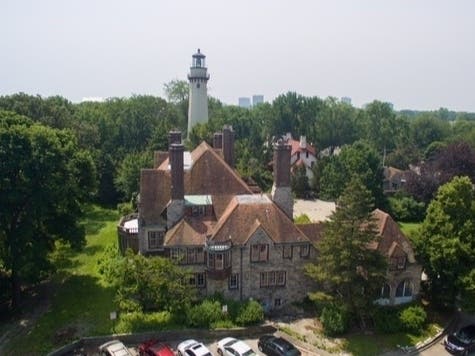
EVANSTON, IL — City officials say they provided incomplete records to Patch after the attorney general's office found the city improperly denied public records requests seeking the details of donations collected on behalf of the Evanston Lighthouse Dunes citizens group last year.
The Lighthouse Dunes group entered into an agreement with the city last summer to provide at least $400,000 in funding toward the demolition of the Harley Clarke mansion and coach house, a city-owned lakefront landmark that has sat vacant for more than four years.
Meanwhile, city attorneys declined several requests under the Illinois Freedom of Information Act for the amount that donors had provided. Evanston Patch and Evanston resident Nancy Sreenan appealed the decision with the public access counselor of the Illinois Attorney General's Office.
Find out what's happening in Evanstonfor free with the latest updates from Patch.
In December 2018, following a citizen-initiated advisory referendum the previous month where 80 percent of voters opposed demolition, the City Council voted unanimously not to appeal the Historical Preservation Commission's decision not to grant permission to demolish the structure. Nearly nine months later, the attorney general's office released an opinion finding in favor of Sreenan and Patch.
Records provided by the city in August, nearly two weeks after the attorney general's office issued its opinion that disclosing the sizes of donations to the demolition effort was not an invasion of privacy, indicated that less than $397,000 had been raised. The records also showed that about 88 percent of the funding came from the top seven donors and more than half of it came from a single donor.
Find out what's happening in Evanstonfor free with the latest updates from Patch.
After Evanston Patch published a list of donations above $1,000, attorneys for the city explained they had provided incomplete information. The spreadsheet listing donations and the scanned copies of checks did not include a wire transfer from an account controlled by Liz and Jeff Coney or a small cash donation that, when included, would bring the total amount to $401,390.
"The FOIA request that was the basis for the reporting specified only donations made via check," Patrick Deignan, communications manager for Evanston, asserted incorrectly, "so the $5,000 electronic fund transfer was not included."
When Deignan was presented with a copy of the public records request in question — which does not specify checks — he declined an opportunity to retract his claim. Instead, in response to a series of written questions, he said the city would have "no further comment."
That means it remains to be seen if the city had any records as of Oct. 27, 2018, the due date for the demolition funding, showing that $400,000 or more was in "a City of Evanston agency account," as required under its memorandum of understanding with the Dunes group. It is also unclear whether city staff conducted a search of any kind for the responsive records following the attorney general's opinion — until after the publications of Patch's Aug. 29 report.
On Sept. 5, Assistant City Attorney Alexandra Ruggie provided an updated spreadsheet from the finance department. It was not clear when the document was created and Deignan, the city's spokesperson, declined to comment when asked.
Ruggie said she provided Patch the incomplete records in August because she was unaware that the second spreadsheet existed at the time of the attorney general's decision. The updated spreadsheet is included below.
Read more:
- 88% Of Harley Clarke Demolition Funding Came From Top 7 Donors
- City Violated FOIA By Withholding Harley Clarke Demo Donations
- City Council Decides To Drop Harley Clarke Demolition Appeal
Get more local news delivered straight to your inbox. Sign up for free Patch newsletters and alerts.


