Politics & Government
Electoral Board Hears Challenge To Voter Initiative Referendum
A former alderman is among those objecting to a proposal to allow for the Evanston City Council to consider citizen-initiated legislation.


EVANSTON, IL — An effort to force the City Council to vote on ordinances approved by a majority of voters faces a challenge from a group of residents who describe it as illegal and confusing. Evanston's three-member electoral board Thursday began hearing objection Thursday to a referendum question filed for inclusion on the March 17 ballot.
The Evanston Voter Initiative petition would ask voters to decide whether they want to create a initiative process for adopting ordinances introduced by citizens. Backers of the proposal submitted 3,871 signatures on Dec. 16 to put the question on the ballot in the upcoming primary election.
According to the proposed ballot question, the citizen-initiated legislative process could be triggered by a request by 25 residents to the city clerk, who would then be responsible for drafting an ordinance and summary. Petitions containing the summary must be filed with the signatures of more than 2,760 voters — 8 percent of those who cast ballots for governor in the most recent gubernatorial election.
Find out what's happening in Evanstonfor free with the latest updates from Patch.
If the city clerk determines the petition is valid, the clerk passes the proposed ordinance to the full City Council, which has 70 days to vote on it. If the ordinance is not passed within that time period, the proposal heads to voters at the next regularly scheduled election. If approved by a majority of those voting on it, the ordinance will become law — unless a majority of aldermen vote against it within 30 days of the election.
On Dec. 23, three Evanston residents filed an objection to the proposed initiative with the electoral board —Jane Grover, former 7th Ward alderman, Betty Hayford, co-president of the Evanston League of Women Voters, and Kent Swanson, vice president of a real estate investment company and a mayoral appointee to the city's Inclusionary Housing Ordinance Subcommittee.
Find out what's happening in Evanstonfor free with the latest updates from Patch.
According to their objection, the Evanston Voter Initiative petition violates state law by including a binding referendum question and "will confuse voters."
The referendum question (full text below) claims that it will "take effect immediately" if approved by voters, suggesting it is binding. But, the objection points out, the section of the Illinois Election Code dealing with referendums says "questions of public policy ... shall be advisory public questions, and no legal effects shall result from the adoption or rejection of such propositions." Binding questions about how local laws are enacted are not permitted by state law, and that should be enough to block the initiative question from the ballot.
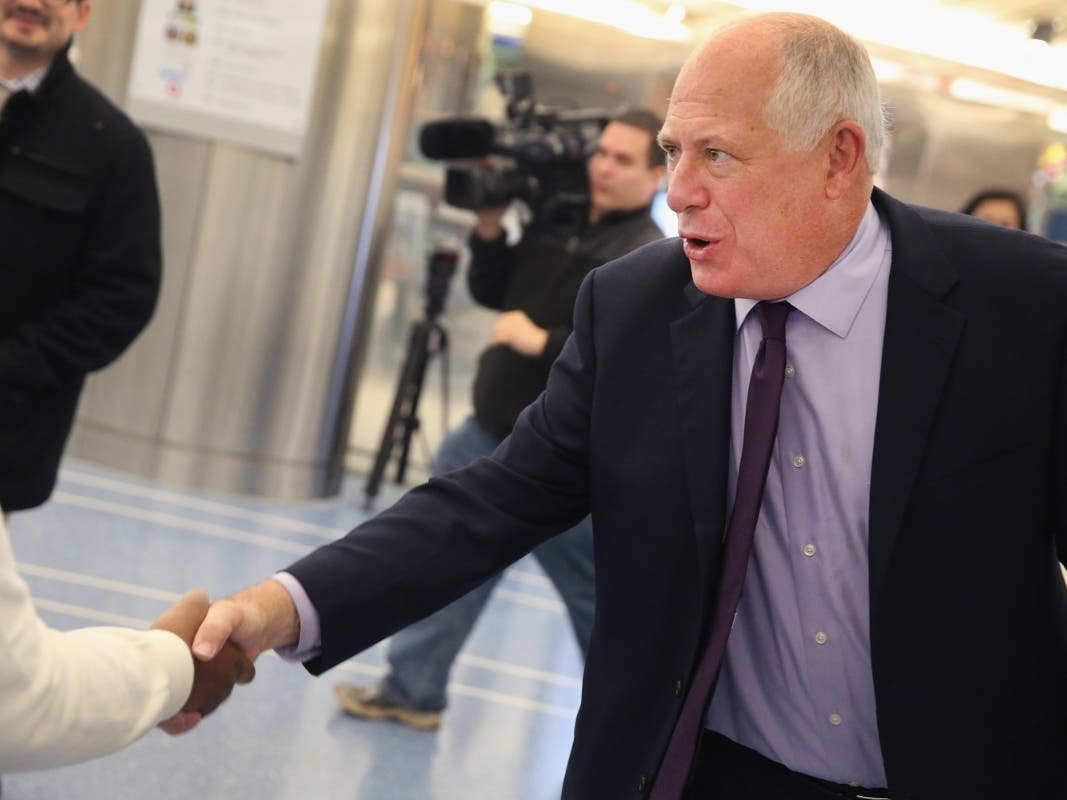
Former Gov. Pat Quinn, a longtime advocate of an expanded referendum process, is representing lead Evanston Voter Initiative petitioner Allie Harned in the electoral board challenge. Quinn has been pushing for Illinois initiatives for more than 40 years. He collected enough signatures to place a proposed constitutional amendment on the ballot in 1980 to allow citizen-initiated binding referendums, but the proposal was blocked by the Illinois Supreme Court.
Quinn said the initiative process gives residents a chance to get their elected representatives to consider a specific issue and give the voters a chance to share their view on it.
"This is a good way to get affordable housing, clean water, ethics in government, making sure everyday people have a voice in their government," Quinn said, as he collected signatures on petitions to get the initiative on the ballot. "Evanston is a great community. It has great, great people, and one of the best ways to help the people is to give them more democracy. That's really what that is."
Quinn filed a motion to dismiss the objection at the first day of the hearing. It alleged the petitioners had failed to state any interest on the matter as required by law.
"Indeed, the three objectors to not state any interest at all," Quinn said, arguing the objection had to be thrown out on that basis. He said the Illinois Constitution expressly allows for local governments to enact structural changes through referendums, pointing to a 2016 Supreme Court decision that upheld a initiative that implemented term limits in west suburban Broadview.
Evanston would become the second community in the state to adopt a formula for citizen-initiated legislation. The Arlington Heights Village Board voted to implement a voter initiative process in 1981, according to an EvanstonNow report. It followed an ordinance allowing residents to recall elected officials, which was introduced in response to the controversial approval of a high-rise project. Unlike under the Evanston proposal, a declaration from the Arlington Heights village attorney that a proposed ordinance conflicts with existing law or is unconstitutional stop it from going to voters, according to village code.
Voters in Evanston are also due to consider a binding referendum on the March primary ballot that will determine whether the city should continue holding nonpartisan elections. After questions about filing deadlines emerged during the 2017 municipal elections, city staff learned there was no record that the city ever conducted the constitutionally required referendum to establish a nonpartisan election process.
Evanston's Municipal Officers Electoral Board is composed of Mayor Steve Hagerty, the board's chair, City Clerk Devon Reid and 8th Ward Ald. Ann Rainey, the City Council's senior member. At the first part of the hearing, the electoral board appointed the city's law department as its counsel and adopted rules of procedure.
The electoral board hearing on the objection to the Evanston Voter Initiative referendum was continued until 6 p.m. Wednesday at the Civic Center. The objectors have until Saturday to reply to the motion to dismiss the petition, and Quinn's response to their reply is due by Monday.
Full text of proposed referendum question:
Shall the people of the City of Evanston provide for a voter petition and referendum process for the consideration and passage of city ordinances as follows:
The people of Evanston provide that the offices of City Clerk, Mayor and aldermen of the City Council have the power and duty to determine the necessary and proper procedural rules regarding the passage of city ordinances and the express duty to assist the people of Evanston in exercising their right to petition and make known their opinions regarding the consideration and passage of city ordinances. At the request of at least 25 Evanston electors, the City Clerk shall promptly cause a proposal to be drafted into ordinance form, including an official summary of the proposed ordinance. The official summary of the proposed ordinance may be introduced by a petition filed with the City Clerk and signed by a number of electors equal to at least eight percent of the total votes cast in Evanston for candidates for Governor in the preceding gubernatorial election. The procedure for filing the petition and determining its validity and sufficiency shall be established by the City Clerk, who shall make the determination of validity and sufficiency within 21 days of a petition filing.
Upon the determination of a valid and sufficient petition, the City Clerk shall within one business day submit the ordinance proposed by the official petition summary on the agenda of the next City Council meeting for its consideration. The City Council shall take a record roll call vote on the proposed ordinance within 70 days of submission by the City Clerk. If the City Council does not pass the proposed ordinance within the 70 day period, the official summary of the proposed ordinance shall be submitted by the City Clerk to the electors for their approval by referendum at the next regularly scheduled election held in all precincts of the city and held at least 70 days after referendum submission by the City Clerk. If the official summary is approved by a majority of those voting on the question, the proposed ordinance shall have the force and effect of passage by the corporate authorities of the City of Evanston unless it is disapproved by a resolution of the City Council not more than 30 days after the election?
UPDATE: Electoral Board Hearing To Voter Initiative Challenge Continues
Get more local news delivered straight to your inbox. Sign up for free Patch newsletters and alerts.