Politics & Government
Evanston Mayoral Election 2017: Q/A With Brian Miller
Evanston mayoral candidate Brian Miller gives his take on a handful of issues facing the city.


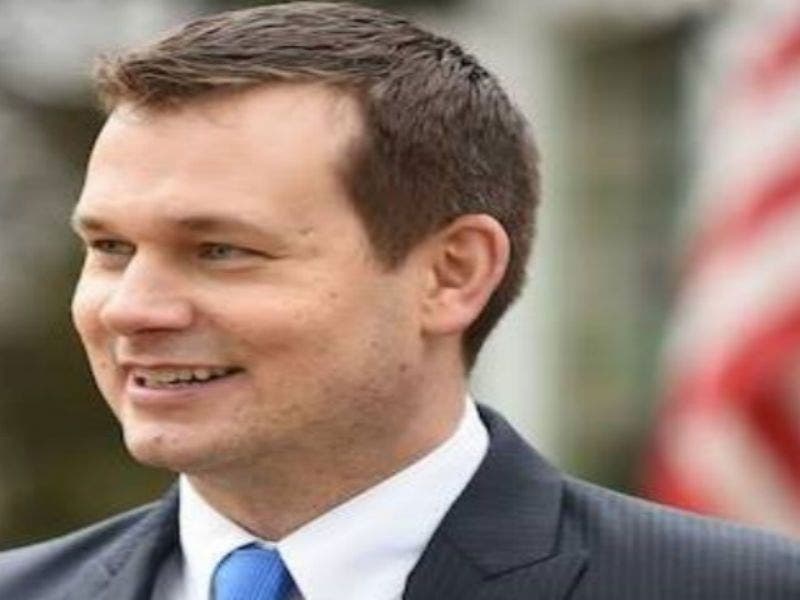
EVANSTON, IL - With five candidates seeking to replace the retiring Elizabeth Tisdahl as mayor of the city of Evanston, a primary election will be held on Feb. 28. If one candidate receives more than 50 percent of the vote, the April 4 general election will be deemed unnecessary. If a majority is not reached, the top two vote getters will pair in a runoff.
Seeking the highest governmental office in Evanston in 2017 are five candidates: Brian Miller, Steve Hagerty, Gary Gaspard, Jeffrey Smith and Mark Tendam. With men making up all of the contenders, the city is guaranteed to elect its first male mayor since Jay Lytle in 1981.
The roots of the mayoral race in Evanston this year include a number of challenges in which multiple candidates have filed objections to the candidacy of others. A full rundown of the "drama" in the race and its timeline is detailed in this North by Northwestern piece that was released in January. The end result was that all five candidates seeking the mayoralty were allowed to run.
Find out what's happening in Evanstonfor free with the latest updates from Patch.
Evanston Patch asked all of the candidates the same set of 12 questions in early February, with responses coming through email. Here are the responses from candidate Brian Miller, who is currently the 9th Ward Alderman for the city.
- What is the most pressing issue facing the city in 2017?
Gun violence is the most pressing issue facing our City. Research has shown that targeted deterrence coupled with mental health counseling reduces violence (see here). Targeted deterrence involves conducting outreach with at-risk individuals, building relationships and then connecting them with services. The City of Evanston currently has outreach workers in its Community Services Division conducting targeted deterrence, but we need more. We also need to ensure that at-risk individuals are receiving the mental health counseling they need to deal with the root causes of violence. As alderman, I have twice called to increase the number of outreach workers and to provide mental health counseling to at-risk youth.
Find out what's happening in Evanstonfor free with the latest updates from Patch.
- As mayor, what is something you’d like to change immediately?
Our City would greatly benefit by adjusting our government processes to ensure public input is heard on the front end of decision-making. For example, the sale of the Evanston Public Library’s parking lot gave the public the appearance that the library lot was sold before the public had even weighed in on whether they wanted the lot sold. As a result, both the public and the developer were unhappy, since both felt that their concerns weren’t being heard.
Instead, before pursuing a course that will likely lead to strong opposition, the City Council should explore the possibility of taking an action in a public hearing that would allow interested parties to voice their opinion.
- What would like to see done with the Harley Clarke Mansion?
I believe that Harley Clarke should remain a public mixed-use facility. The City should rent the space to interested non-profit organizations and/or run recreational programs out of the space. Those efforts will provide income to fund the operations of the building and offset any costs to Evanston taxpayers. Programming could include, but not be limited to, educational, artistic, environmental, sports or aquatic activities.
- What are your thoughts on the Dodge Avenue bike lane and how the city has catered to bicyclists in recent years?
While bike lanes are a wonderful resource, we need to consider the impact of the lanes on the surrounding area. The Dodge Avenue bike lane was poorly designed, causing significant traffic backups due to public buses being unable to pull off the street to drop off passengers. Furthermore, traffic backups cause delays to emergency responders. Instead of having two bike lanes on the same street, the City should have only placed one bike lane on one side of the street, going in one direction. The bike lane for the opposite direction should have been placed on an alternate street. This would have reduced congestion and provided better sightlines for traffic.
- How would you address the crime problem facing some neighborhoods in Evanston?
While we need to take a multifaceted approach to crime prevention, I believe the lack of community trust in the Evanston Police Department is the first step in reducing crime. Lack of trust is preventing officers from effectively solving crimes. In sections of our town that have crime problems, the distrust in our police prevents those with information about crimes from working with the police. As a result, police officers do not have valuable crime fighting tools at their disposal, making it more difficult to solve crimes. If we rebuilt the trust through community policing and changes to police procedure, the public would be more comfortable working with the police and provide the necessary information to help arrest suspected criminals.
- There’s been a perceived disconnect between the Evanston Police Department and the city’s African-American community. How much of a problem is this and what solution would you offer?
I think there is a profound disconnect between the Evanston Police Department and our African-American community. As recent events have demonstrated, there needs to be an examination of how our police department is treating our residents. I support creating an independent civilian review of all Evanston Police Department functions to ascertain the best policy and procedure changes. Our police officers also need to work to deescalate minor violations. To hold officers accountable, we need to create an independent police review board, and provide comprehensive data reporting to the council of all arrest statistics including uses of force.
- We’ve seen a few businesses open and close in a short time frame downtown. What is the key to not only attracting businesses to Evanston but keeping them here as well?
The key to attracting and retaining businesses in Evanston is to decrease the burdensome regulations that our businesses face. New businesses have significant costs and time restraints in setting up their business. The City places numerous regulations and creates an elongated process that increases the costs and time for new businesses to open. Furthermore, if the regulatory environment is too difficult for established businesses, then there is a greater potential for them to go out of business. As Mayor, I will conduct a comprehensive review of our policies and hold a public hearing to discuss how we can make our relations more business friendly.
- Evanston is known as a progressive leader and a city ahead of the curve in many areas. Are you proud of this trait?
I am extremely proud of Evanston being a progressive leader. I feel that our community desires to lead the region and nation in progressive policymaking. We should be working to implement the most innovative progressive policies on a local level through the use of our home rule authority. For example, on gun control, we could require owners to have trigger locks, insurance or other restrictions upon gun ownership. We would then aggressively defend any challenges to those policies in court. This process could also be used for the environment, immigrant rights and other issues. In doing so, Evanston could set the national agenda and debate and ensure that there is a progressive example for policy makers to examine.
- How would you describe the city’s partnership with Northwestern University? Has this partnership been effective and would you like to see it continue?
The City’s relationship with Northwestern is improving, but it still needs work. The University needs to contribute more to Evanston in return for the services it receives.
There has been discussion of create a Payment in Lieu of Taxes (PILOT) by the University, but we could work together on more initiatives. One example of a partnership would be working with the Northwestern Traffic Institute to help solve some of Evanston’s traffic issues. Another possibility would be to use students training to be therapists at Northwestern’s Family Institute to provide counseling to at-risk youth. Through a variety of collaborations, we could utilize the expertise of the University and greatly benefit the City.
- Are there enough social programs in Evanston and are the ones here effective?
There are enough social programs in Evanston, however the City’s funding structure for nonprofits is not effective. The current process of having an open application process does not allow for the focusing of resources towards creatively solving problems, instead maintaining the status quo. For example, if the City wanted to support affordable housing efforts, we could specifically call for proposals to build/rehab affordable units using Community Development Block Grants and Affordable Housing Trust Funds. Instead, we invite all applications for all issues, leading to a scattershot approach and a lack of focused effort and resources.
- As mayor, how would you address the community’s call for free beach access during the summer months?
I am open to exploring the idea of providing free beach access. My understanding of the basic revenue and expenses of operating the beaches is that the City brings in significantly more revenue in beach admissions than it costs to run the beach. In order for us to provide free beach access, we’ll need to determine a way to offset this loss of revenue. However, I believe that having free beach access would create a more vibrant and inclusive community and is worth exploring.
- Also, add your political background, experience and any other unique qualifications that make you the best candidate for mayor of Evanston.
I am the current 9th Ward Alderman and Chief of Staff to Cook County Commissioner Larry Suffredin. I was born and raised in Evanston, giving me vast exposure to progressive values.
With those values instilled in me, I participated in public service programs though Americorps after graduating from ETHS. Following college, I became a community organizer in Evansville, Indiana where I led successful campaigns to improve code enforcement, literacy and dental care. Upon graduating from Law School at Northwestern, I worked for a law firm and later became the Director of a nonprofit that provides free lawyers for those in Chicago Police custody. These experiences have given me a unique insight into our community and the skills necessary to tackle our problems.
Photo via Brian Miller for Mayor of Evanston
Get more local news delivered straight to your inbox. Sign up for free Patch newsletters and alerts.


