Politics & Government
Evanston's Budget Deficit Projection Rises To $7.5 Million
City staff held an outreach session Thursday to explain how they plan to address the budget shortfall without raising property taxes.


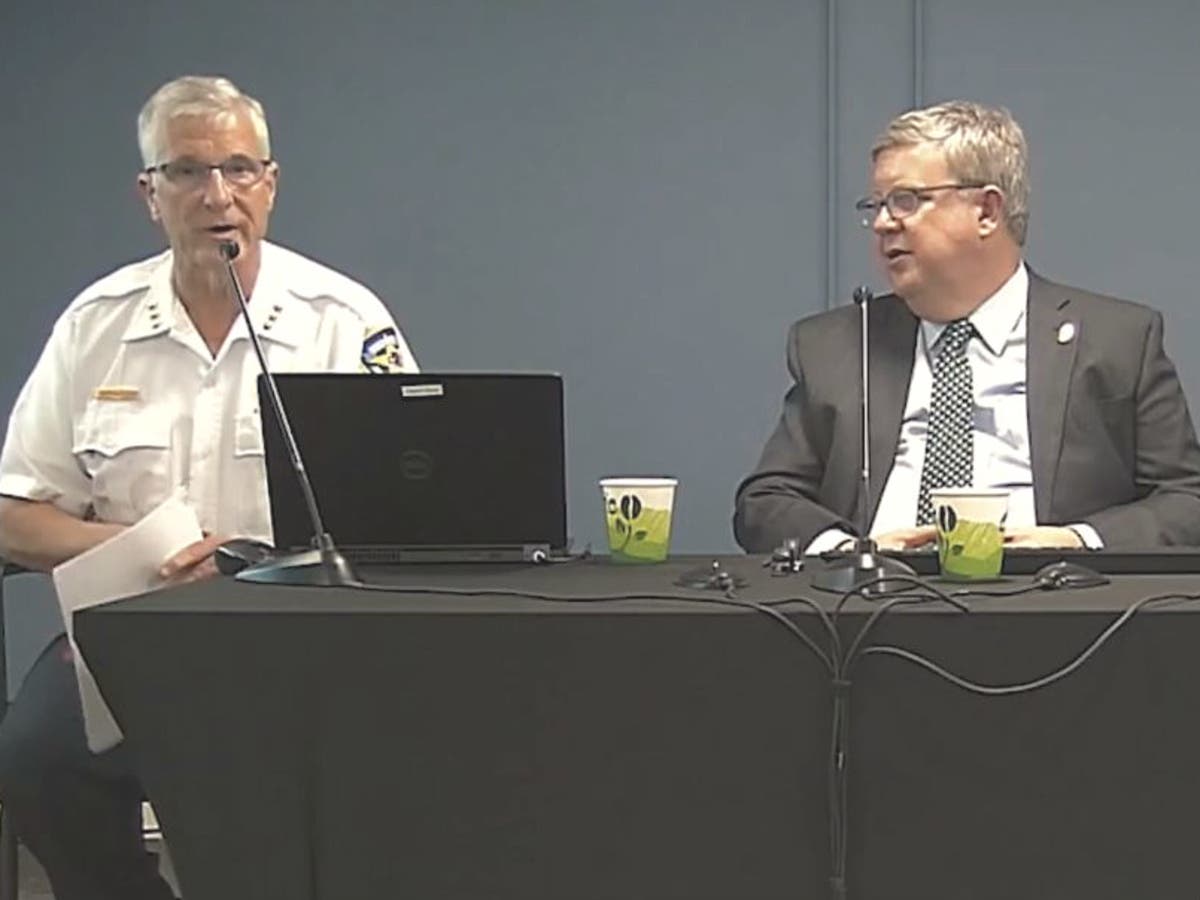
EVANSTON, IL — The city is confronting a gap of almost $7.5 million between its revenue and spending for next year, City Manager Wally Bobkiewicz said at a budget outreach meeting Thursday. Evanston's deficit is a combination of a general fund shortfall of nearly $5 million, an extra $1 million for needed for debt service on money borrowed to build the new Robert Crown Center and efforts to add about $1.5 million to replenish reserve funds that have been depleted in recent years, Bobkiewicz said.
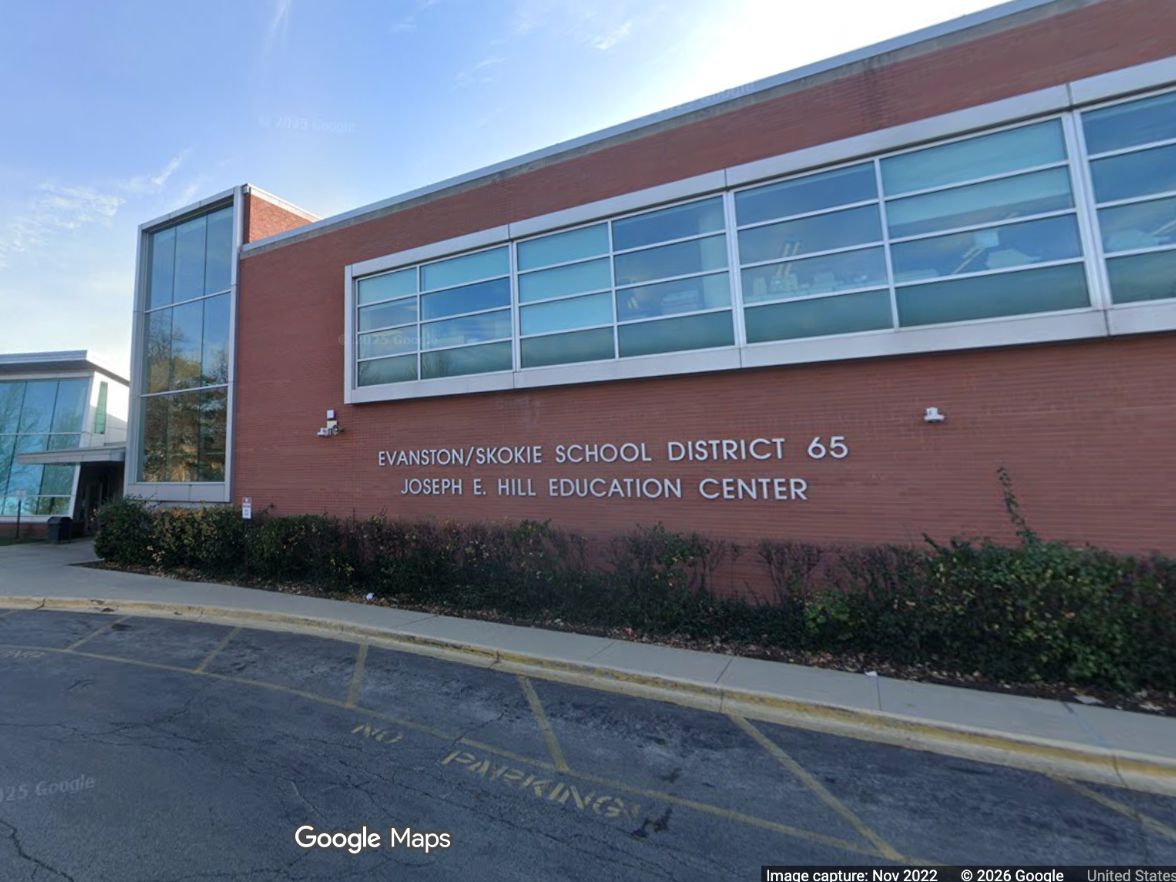
Bobkiewicz was joined by Chief Financial Officer Hitesh Desai, Assistant City Manager Erika Storlie and Chief of Police Richard Eddington at an event simulcast to audiences across the city, including the Chandler-Newberger Center, the Main Library, the St. Francis Hospital auditorium and the District 65 headquarters that featured questions from remote audiences.
A property tax increase is not on the table, Storlie explained. Part of the reason is the significant increase in the property tax bills of Evanstonians as a result of last year's $14.5 million District 65 funding referendum, which supporters described as a "once-in-a-generation ask." Storlie said the effect of the referendum was felt earlier this year in conjunction with the triennial reassessment of property values in Cook County. (The average composite tax rate in Evanston is just over 9 percent, according to the Cook County Clerk)
Find out what's happening in Evanstonfor free with the latest updates from Patch.
"People are feeling very pinched with that increase, and that money went to the District 65 schools and they have a plan for how they're going to spend that over the course of the next few years. But that left a very small amount of bandwidth for any property tax increase to support city services," Storlie said, noting aldermen have been hearing about the increase from concerned constituents and have no appetite for higher property taxes. "People are feeling that there is longer any room to increase the property tax and we need to look at other sources of revenue, like expense reductions and other fees that are charged for services to sort of fill that gap that we have with the deficit."
In November, voters will be asked to consider an increase to the real estate transfer tax for sellers of properties worth more than $1.5 million. If approved, it would make Evanston the first municipality in the state to adopt a progressive real estate transfer tax scheme. It is projected to bring in $800,000-$900,000 in additional revenue.
Find out what's happening in Evanstonfor free with the latest updates from Patch.
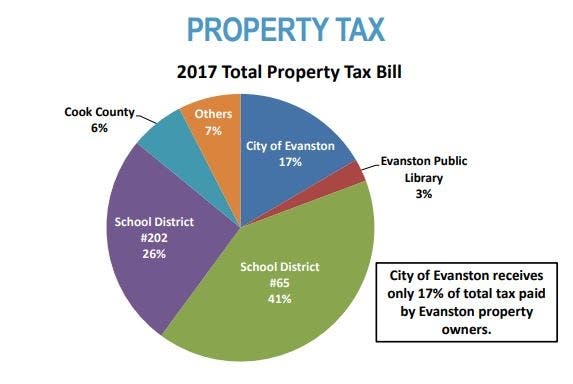
That 17 percent of the total real estate tax bill for Evanston property owners mostly goes to paying off debts and pensions:
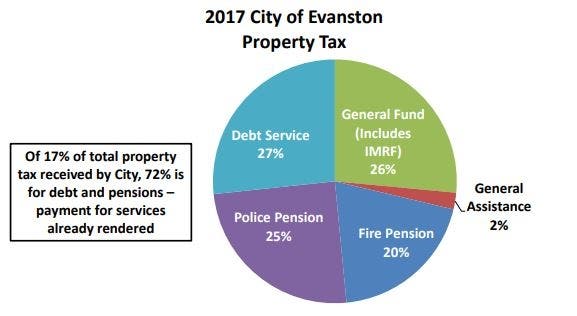
Bobkiewicz pointed out the city's property tax levy has gone down more than 8 percent since 2014, as has the amount levied for debt service. However, the library levy is up by 8.6 percent, the levies for police pensions are up by 21 percent and fire pension payments by more than 33 percent.
Evanston cut 26 positions in 2018 without any substantial cuts to programs of services. This year the city is looking at reductions to the police and fire departments, which take up about half of the city budget. Bobkiewicz asked the Evanston police chief to lay out some of the internal staffing reviews the department is undergoing.
"This is going to be your last budget process, likely," Bobkiewicz said, pointing out Eddington has announced his retirement at the end of the year. "So congratulations on that."
Eddington said his department's goal was to prevent people from becoming victims of crimes. He said the reduction in crimes in the community is a good indicator that Evanston taxpayers are getting a good return on their investment in police resources.
"The Evanston Police Department is committed to intelligence-led policing in understanding the need to police this community, especially, in a constitutional manner. We invest considerable resources in our deployment process, that gathering and disseminating of intelligence down to the operational units is key," Eddington said. He noted the "extremely significant" decrease in series crimes reported to the FBI, which have fallen from over 3,100 when he began with the department to 1,900 last year. "If you compare and contrast that to the jurisdiction south of us I think that becomes even more harshly apparent."
Evanston police have been target specific people believed to be involved in armed conflict rather than telling officers, "go find some guys with guns," Eddington said. He said the department has increased the number of firearm seizures and decreased the number of complaints against its officers.
Earlier this year Evanston surveyed residents on their budget priorities, presenting more than 50 programs and asking citizens to name the 10 most important for the city to provide. Nearly 3,300 people participated, and four programs received overwhelming support from respondents. Grants from a mental health board (63 percent), youth and young adult services (60 percent), food programs for students and seniors (57 percent) and victim advocacy services in cases of sexual assault and domestic violence (57 percent) were the only programs to be picked among the top 10 by a majority of those surveyed. (Full results and additional information.)
"Priority based budgeting really was to try to give us a greater sense of things that were most important and things that are just important," Bobkiewicz said. "And we found out that Evanston residents largely think that everything is important."
Staff are set to present the City Council with updates to the proposed Fiscal Year 2019 budget at the Sept. 17 meeting, including an overview of possible changes to the city's parking system. Bobkiewicz is expected to release a proposed budget Oct. 5, when the city plans to release an interactive tool for residents to explore potential changes to the budget through Oct. 25. A special city council meeting and public hearing on the budget is scheduled for Oct. 27 and aldermen are expected to adopt a balanced budget at the end of November.
Watch: Fiscal Year 2019 Budget Outreach Event (Presentation slides)
Earlier: Evanston Seeks Public Input While Closing Budget Deficit
Get more local news delivered straight to your inbox. Sign up for free Patch newsletters and alerts.