Schools
Northwestern Cancels Trips, Event Over Coronavirus Concerns
Spring break trips are cancelled, and school travel to China, Iran, Italy or South Korea is prohibited due to the growing COVID-19 outbreak.


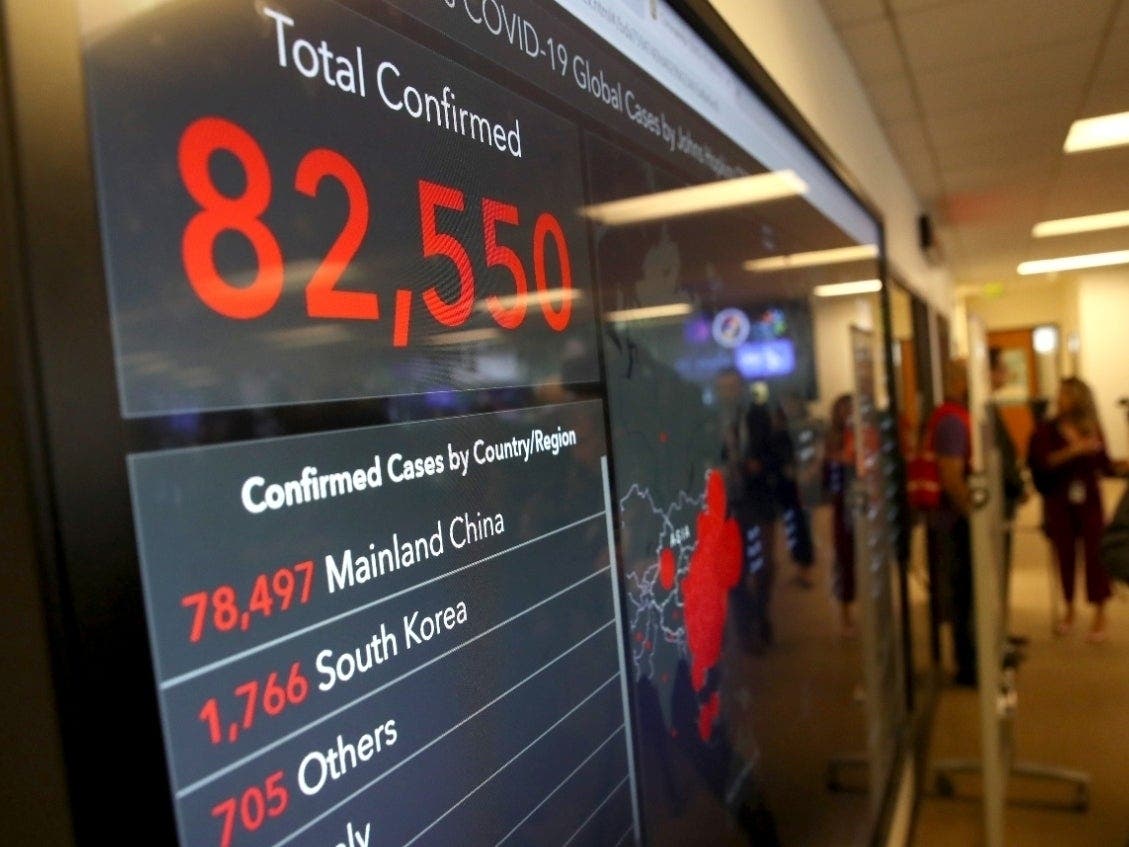
EVANSTON, IL — As the new coronavirus continues to spread in parts of Asia, Europe and the West Coast, Northwestern University has banned any university-related travel to four countries where the outbreak is most severe, eliminated all school-sponsored international travel during spring break, and canceled the Northwestern University Dance Marathon.
University officials said they are evaluating whether to hold future large on-campus events on a case-by-case basis. Meanwhile, Northwestern faculty and staff are "discouraged" from any unnecessary travel abroad, according to a statement issued Wednesday on behalf of the university.
"For faculty and staff, at this time we would prefer employees defer any nonessential international travel," it said. "Please seek approval from your vice president, dean or immediate supervisor if global travel is deemed essential."
Find out what's happening in Evanstonfor free with the latest updates from Patch.
Spring break is scheduled to run from March 21 to March 30. All international trips arranged through academic or extracurricular groups involving undergraduate and graduate students were canceled "due to a number of factors associated with the spread of COVID-19 here and abroad," university officials said in a statement.
"This was a difficult decision made in consultation with numerous campus stakeholders," it said. "A number of schools and units are already enacting the travel recommendations, which may include developing local alternatives."
Find out what's happening in Evanstonfor free with the latest updates from Patch.
46th Annual Dance Marathon Cancelled
University officials also announced the cancellation of the this year's Northwestern University Dance Marathon, or NUDM, a school tradition since 1975 culminating in a 30-hour dance session.
"Our hearts are broken over the sudden news of Northwestern's decision to cancel NUDM," the group's executive board said in a statement to the community. "While we understand it would have been a health risk to hold NUDM this weekend given the spread of coronavirus, it doesn't make knowing that our year-long fundraising and service efforts won't culminate in the love, community, and home of the 30 hour experience. And for that we are so incredibly sorry."
The student group describes itself as one of the the nation's largest independent student-run philanthropic groups. Last year it raised more than $1 million for its designated beneficiary. This year's beneficiary is Children's Home and Aid.
"Children's Home & Aid and our Rice Child & Family Center has already benefited immeasurably from NUDM this year," Lucy Clements, a liaison to the student group from the nonprofit, said in a statement. "The relations that have been formed with the dancers have given the children at Rice a sense of value and worth that will never leave them."

According to university spokesperson Jon Yates, the marathon is the first on-campus event in Evanston to be canceled due to coronavirus concerns.
"This is the first major event impacted and the decision was made due to the specific factors associated with dance marathon," Yates said. "Northwestern is not broadly canceling events at this time, but considers the unique aspects in making these decisions."
University leaders made the decision after consultation with Northwestern's COVID-19 policy group and health professionals, according to a statement from President Mort Schapiro, Senior Vice President for Business and Finance Craig Johnson and Interim Vice President for Student Affairs Julie Payne-Kirchmeier. The determination was the result of much discussion and careful consideration, according to the statement, which acknowledged the importance of the event to its 500 organizers.
"Given the prolonged duration of Dance Marathon, the close proximity of dancers and the strain it puts on participants, health experts thought those in attendance could have been at greater risk for illness had the event continued as planned," university leaders said.
Their statement said university officials were committed to making sure the fundraising beneficiaries — Children's Home and Aid and the Evanston Community Foundation — would receive the benefits of the communities efforts on their behalf. The university leaders promised further information in the coming weeks about the next steps for the dance marathon.
"We will continue to fundraise for two amazing beneficiaries, Children's Home & Aid and the Evanston Community Foundation," the student organizers said. "We can still give our all to ensure that our hard work this year culminates in the greatest impact possible. We will continue to spread love, compassion and community, and most importantly, continue working towards helping as many people as possible find home."
The fundraiser was the first significant event in Evanston to be disrupted as a result of the COVID-19 outbreak. Patrick Deignan, communications manager in the city manager's office, said the city has not yet canceled or adjusted any of its official events. There have been no confirmed cases in Evanston, according to the city's health department.
Related:
Fourth Illinois Coronavirus Case: School Staff, 2 Kids Possibly Exposed
McCormick Place Show Cancelled Amid Coronavirus Fears
Coronavirus Outbreak: Tips To Prepare At Home
Containing the Spread
Dr. Robert Murphy, executive director of the Institute for Global Health at Northwestern University Feinberg School of Medicine, said this week's cancellation of international travel and large public events could be just the beginning. Hospitals are unlikely to be overwhelmed, but the public health system is going to be challenged, he said.
"It's very easy to not get this thing," Murphy said. "But if I tell you you can't go out of your house for 14 days and you do that and everything is fine after that, then that's great. But are you willing to do that?"
Murphy, who also directs Northwestern's Center for Global Communicable Diseases, said it was likely
"It's not going to be a long time, but it's going to be tough for many people and there's going to be a lot of events, schools, entertainment venues [and] travel going to be canceled," Murphy said.
"Those are minor things that can be done. Major things can be, 'You can't leave your neighborhood,' 'You can’t leave your town,' — like they did in Italy. The military surrounded those 10 towns. You can't go in or out without very special permission. They have plenty of food, they have their utilities, they have everything they need, but they're basically trapped there until the disease slows down," he said. "That could happen here."
In Italy, 79 people have died from the virus, and there were 2,200 active cases as of Wednesday, when an additional 466 cases were reported, according to U.S. military officials. Italian authorities have cancelled public events and announced the closure of all schools and universities in an effort to stem the virus' spread.
In Illinois, four people have so far tested positive for COVID-19, which stands for "coronavirus disease 2019." State health officials are awaiting confirmation of two of those cases from the U.S. Centers for Disease Control and Prevention, according to the Illinois Department of Public Health. Another 124 people under investigation have tested negative, and results remain pending for 27 others as of Thursday.
Public health officials are working to find and monitor people who have had contact with any of the patients presumed positive for the virus to reduce the risk of further spread, according to an IDPH release.
Gov. JB Pritzker has asked hospitals across Illinois to implement additional testing for COVID-19, and two state labs in central and southern Illinois will be able to test specimens this week it said. IDPH Communications Manager Melaney Arnold did not immediately respond to questions about the state's testing protocol.
Nationwide, 11 people had died as of March 4. There have been no deaths in Illinois.
Coronaviruses are a family of viruses that include the common cold as well as much more serious diseases. The strain that emerged in China in late 2019 is named SARS-CoV-2. It is related to others that have led to outbreaks in recent years, such as severe acute respiratory syndrome, or SARS, and Middle East respiratory syndrome, MERS.
The disease apparently originated in animals and has been transferring from person to person in the United States, although its transmission mechanism is not yet fully understood. Symptoms include fever, coughing and shortness of breath. Many patients develop pneumonia. There is no vaccine against COVID-19 and no antiviral treatment yet available.
Dr. Murphy, at Northwestern's medical school, said scientists believe the novel coronavirus has a far higher mortality rate than seasonal influenza, in part because people have fewer related antibodies and no one can be vaccinated against it.
"We don't know how much higher, it could be 20 times higher," he said. "We don't know. We know it's much higher."
The health risks are highly dependent on age and whether those infected have pre-existing health conditions or weakened immune system, Murphy noted. Less than 1 percent of those who contract the disease without having pre-existing conditions die, compared to about 6 to 10 percent of those with health problems.
The virus gets increasingly deadly for old patients, according to data cited by Murphy. For those ages 50 and above who contract COVID-19, 1.3 percent will die. For those over age 60, it is fatal for 3.6 percent of patients, 8 percent of those over age 70 and 14.8 percent of those over 80 have died.
According to the CDC, the best way to avoid contracting the virus is to avoid close contact with people who are sick, touching your eyes, nose, and mouth with unwashed hands, and washing your hands often with soap and water for at least 20 seconds. If soap and water are not available, a hand sanitizer that contains at least 60 percent alcohol is recommended.
To avoid spreading any respiratory illness, the CDC also recommends staying at home when you are sick, covering your cough or sneeze with a tissue and throwing the tissue in the trash, cleaning and disinfecting frequently touched objects and surfaces.
Public health officials in the U.S. have the advantage of watching the disease evolve in China and Italy and learning from the response, Murphy said.
"We're going to evolve more like the Italians and the South Koreans than like the Chinese, who, when the disease was first uncovered in December, imprisoned the two doctors that identified it. You can't believe anything coming out of China. They put these people in jail, they finally let them out when they found out they were right, and one of them — a 34-year-old — died from the disease," he said. "They don't have good health care there. The health care is very mediocre, very basic, and they fell way behind of this thing at the beginning. That is just not going to happen here."
Among the possible positive outcomes of the outbreak identified by the infectious disease specialist: it could encourage the development of stronger public health policies with more adequate resources and authorities.
More information is available from IDPH by calling the state's COVID-19 hotline at 800-899-3931 or by emailing DPH.SICK@Illinois.gov or visiting the agency's website. The Cook County Department of Public Health can be reached at 708-633-4000 or via its website. The Evanston Health Department can be reached by calling 847-448-4311.
Get more local news delivered straight to your inbox. Sign up for free Patch newsletters and alerts.