Community Corner
Architects Support District 113 Referendum
The many needs this renovation plan addresses far outweigh the disagreements about them.
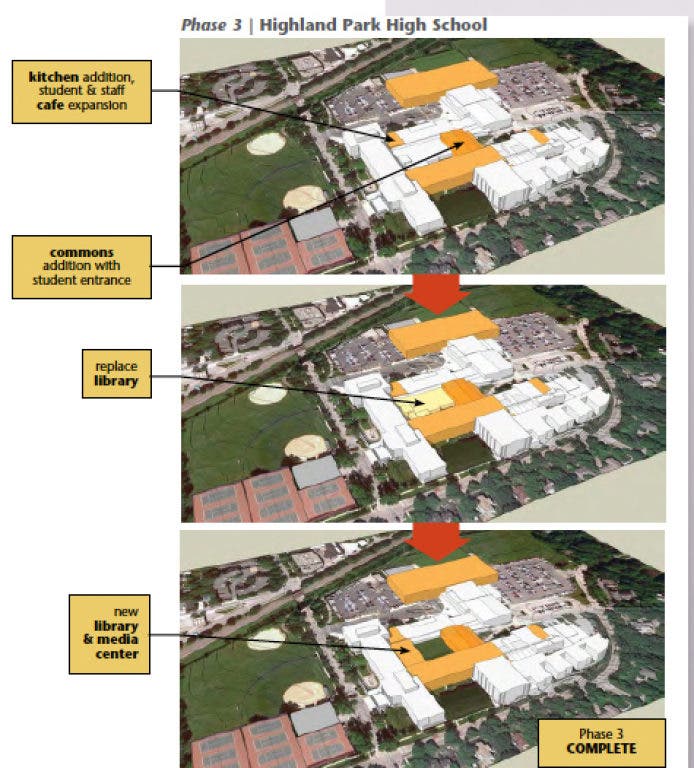


When two professionals look at a problem, they sometimes come to different conclusions. Such is the case with an authored by , regarding the . While I agree with a number of points raised by Mr. Becker, we reach a different conclusion. Mine clearly points to the need to vote yes and pass the $133 million renovation plan for the district's two high schools.
As an architect who has served as a national vice president of the American Institute of Architects (AIA), and as president of both the local and state AIA organizations, I am keenly aware of the effect that the design of a classroom can have on student performance. During my tenure, which ended in December, I was fortunate enough to hold the Knowledge portfolio, one of the four areas of focus that vice presidents have at AIA. Because of that opportunity, I became interested in evidence-based design, which uses research to back outcome-driven design decisions.
In this case, there is a significant body of evidence that ties the educational results experienced by students to the environments they learn in. In other words, the design of a school often influences how students learn. This impact has been measured.
Find out what's happening in Highland Parkfor free with the latest updates from Patch.
Architects know, as I am sure Mr. Becker and my colleagues do, that there is no perfect plan. These plans are at their earliest schematic level. There are a number of steps left to the design process to determine what will finally be constructed and where. This is a process that has been followed throughout time, as evidenced in the 1997 District 112 referendum. I know, firsthand, that plans were changed based on the input of building committees to the architects.
Mr. Becker admits, in his article, that the classrooms at Highland Park are outdated and hinder the ability of students to learn. The question he poses is whether it makes more sense to completely gut and reconfigure the 1914 building or demolish the structure and rebuild the classrooms. That is a valid question. In fact, I have requested that the design team present a cost/benefit analysis of that alternative.
Find out what's happening in Highland Parkfor free with the latest updates from Patch.
Regardless, delaying the approval of the referendum will likely result in additional costs for construction and financing. A recent article in Crain's New York noted that construction prices are beginning to creep up. In New York, a rise of between one and three percent in the first quarter is predicted, due primarily to the cost of raw materials. While the U.S. construction market is not growing, those in developing economies such as India and China are, which affects global costs.
So, why act now, when so many questions are unanswered? Because now is the time. When District 112 passed a referendum 15 years ago for work to be performed on their schools, their plans were no further along. The architects and the school board wisely engaged the community in further developing the plans as design progressed. I served on two of the building committees and I believe we arrived at better solutions than the initial plans shown by the architects. I trust the District 113 School Board to implement a similar procedure for this, a condition its members have already agreed to.
In the end, I believe that the bottom line issue is trust. Do we trust District 113's board members to do what they said they would do by creating an independent Citizen’s Oversight Committee? Do we trust them to appoint people who have expressed opposing opinions? Do we trust them to return unused money to the taxpayers? We elect these people to be our voice. If we can’t trust them, then we need to hold them accountable, both at their meetings and through elections. However, we should not deny our children the facilities that will allow them to reach their potential because we are unwilling to trust those whom we elect.
The differences between the are actually quite small. All agree that the classrooms at Highland Park need updating. Most agree that the athletic facilities at Deerfield need help to function properly. Some even agree on the need for new pools and other aspects of the plan.
You need to weigh the whole as opposed to the sum of the parts. In doing so, I hope you will agree that the many needs this plan addresses far outweigh our disagreements, and that waiting is not in your best interest.
Walter Hainsfurther, FAIA
Joined by Sara E.F. Gensburg, AIA and Cal Tobin, FAIA