Schools
Concerns Raised of Potential District 112 Referendum
Traffic issues and feasibility of "Middle School Campus" addressed by residents at District 112 board meeting Tuesday.


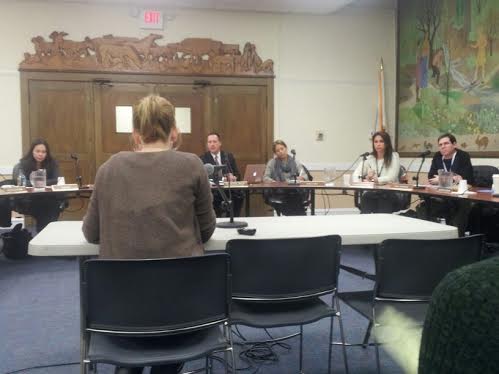
Traffic issues, an unprecedented public expenditure and concerns regarding the educational development of fifth graders were some of the issues raised by Highland Park residents during the public comment session of the North Shore School District 112 board of education meeting Tuesday.
The majority of public comments, which as a whole lasted nearly two hours, were opposed to a proposed referendum that, if placed on the ballot and approved by voters in April, will condense district schools from 12 to seven and include a “middle school campus” that will include fifth, sixth, seventh and eighth graders at the current Red Oak/Sherwood site.
“I’m opposed to the seven building plan that will give Highland Park a big box middle school,” Cathy Shaw said. “Each building in the middle school will have more students than all of our competing towns and much more than the 700-800 ideal size.”
Find out what's happening in Highland Parkfor free with the latest updates from Patch.
“I’m not against change, just against this plan,” Shaw added, which seemed to be the theme of many of the speakers’ statements.
Davis Schneiderman, a member of Citizens Against the 112 Referendum (CARE) - a political action committee opposed to the referendum - delivered a passionate speech that included remarks that the large middle school campus that would contain approximately 2,000 students is “not the plan we asked for” and that the proposed expenditure, around $190 million, will “max out the district’s borrowing cap.”
Find out what's happening in Highland Parkfor free with the latest updates from Patch.
“This process is moving too quickly too fast and without enough information for the community to make an informed decision,” Schneiderman said following the meeting. “We are against a rushed plan that is being sold to us without enough time to respond. We are getting a traffic study within nine days before a vote and a flurry of meetings on transition issues within a week of the vote. We are asking the board and the district to slow down and work with us on a better plan.”
Marc Lawrence pointed out that the expenditure, which equates to about 3 percent of the entire market value of the tax base, is the “largest known expenditure in the history of Highland Park and Highwood.”
“It’s an enormous bill and the residents will be the ones who have to pay it and live with the consequences,” he said.
Traffic issues, which would be discussed in the form of a study later in the meeting, were brought up by Highland Park resident Rebecca Schechter, who expressed concerns that 95 percent of the students will require to be on the bus up to 45 minutes each way.
“The new plan requires busing for 95 percent of middle schoolers due to distance and/or serious safety hazards like train tracks or vehicular traffic. Bus transit times may be up to 45 minutes,” Schechter said.
A representative from Kenig Lindgren O’Hara & Aboona - a group commissioned to perform a traffic study at the current site of the proposed middle school campus - found that some intersections in the area could see as much as a 110 percent increase in traffic. For example, the intersection at Ridge Rd. and Strafford St. will see a possible 87 percent increase in traffic.
Schechter’s comments were echoed by Alexander Brunk, who shared his disappointment that his children will need to be bussed to a school across the highway instead of attending one within walking distance of home, which students from the other end of town would be bussed to the school near his home
“I appreciated the freedom to walk to school as a child, and that’s a freedom I’d like my kids to have,” he said.
Not all public comments were opposed to the plan, however.
Aaron Brooks said it’s “important to look at the big picture.”
“The current school situation is not sustainable,” he said. “If we don’t take radical change, the extracurricular programs that help make Highland Park unique would be in jeopardy.
“We need top notch facilities that will attract top notch educators,” he added in reference to the new combined middle school facility.
Janet Swartz, a member of the SCFFAC committee that researched multiple options and eventually agreed on recommending the six elementary, one middle school model, said she is excited about the STEM program that would be able to be available for students should the referendum pass.
“With how it looks currently, we’d have to make severe cuts,” she said. “This is a plan that respects our community’s high standards.
But Carla Arnell pointed to a pair of studies that indicated how different school sizes and the age of those children attend school with affect learning and behavior.
“Larger schools are more likely to negatively affect students’ learning, and in this plan we are asking them to go through more transitions,” she said. “By shifting our fifth graders into a new environment, they will be less likely to succeed.”
The board of education is expected to vote on whether or not the referendum will appear on the April 7 ballot at its next meeting scheduled for January 15.
Get more local news delivered straight to your inbox. Sign up for free Patch newsletters and alerts.