Politics & Government
Supreme Court Rules Against Highland Park In Bike Trail Lawsuit
Cities are not immune from liability for injuries on bicycle paths, the state's highest court ruled.


HIGHLAND PARK, IL — The Illinois Supreme Court ruled that people have the right to sue local governments when they are injured on bike paths, finding in favor of a Wilmette woman who sued Highland Park and Lake County.
Kathy Corbett was seriously injured in a cycling accident on Aug. 21, 2013 while riding with a group along the Skokie Valley Bike Path just north of Old Deerfield Road, according to court filings. A rider in front of her hit a bump in the path and crashed, blocking her path. She ended up riding over him and crashing, suffering a series of injuries.
Lawyers for Highland Park and Lake County successfully got her lawsuit dismissed in December 2015. Judge Christopher Starck bought their argument that bike paths should be covered by a clause in the Local Governmental and Governmental Employees Tort Immunity Act that says no public body or employee can be sued for injuries caused by the condition of "any hiking, riding, fishing or hunting trail."
Find out what's happening in Highland Parkfor free with the latest updates from Patch.
The Skokie Valley Bike Path is considered a "shared-use trail" by the Illinois Department of Transportation. According to documents in the court record, the land in question is leased to Lake County by ComEd and Highland Park was responsible for "routine maintenance" on the part of the path within city limits.
Corbett appealed the decision only with regard to Highland Park and dropped her claims against the county. In September 2016, a panel of the 2nd District Court of Appeals found in her favor – the city appealed to the state Supreme Court, which issued its ruling last month.
Find out what's happening in Highland Parkfor free with the latest updates from Patch.
Much of the argument revolved around the definition of "riding trail." The Supreme Court agreed that the blanket immunity from lawsuits inside natural, scenic areas does not apply to developed bike paths. Instead, the part of the same law that covers "any public property intended or permitted to be used for recreational purposes, including but not limited to parks, playgrounds, open areas," should apply. That clause only allows for lawsuits when "willful and wanton conduct" leads to injuries.
The Supreme Court agreed with the appeals court that Highland Park and Lake County were misinterpreting the law, but its reasoning was different.
Instead of relying on the dictionary definition of the word "trail," the court determined it was necessary to consider the context of the term – sitting in the midst of "hiking," "fishing" and "hunting." The court interpreted this context to mean the blanket immunity was only ever meant to apply to "primitive, rustic or unimproved trails."
Further, in an opinion issued Nov. 30, the state's highest court pointed out some of the absurdities of abiding by the local governments' arguments.
For instance, under the arguments put forward by Highland Park's attorneys a pedestrian who suffers an injury on a bicycle path passing through the middle of a public park "would be barred from suing for an injury caused by a condition of the path, while being able to sue for the exact same injury occurring on park grounds next to the path," according to the opinion.
The court found that interpretation did not hold water.
"After all, it seems strange," the court held, for municipalities to be able to build and maintain a bike trail, tell the public it is safe and encourage people to use it, "but then escape all liability for injuries caused by even the most egregious misconduct in failing to maintain it."
The case now returns to Lake County Circuit Court.
» Listen to oral arguments on the case from Sept. 19, 2017
» Read the complete opinion below:
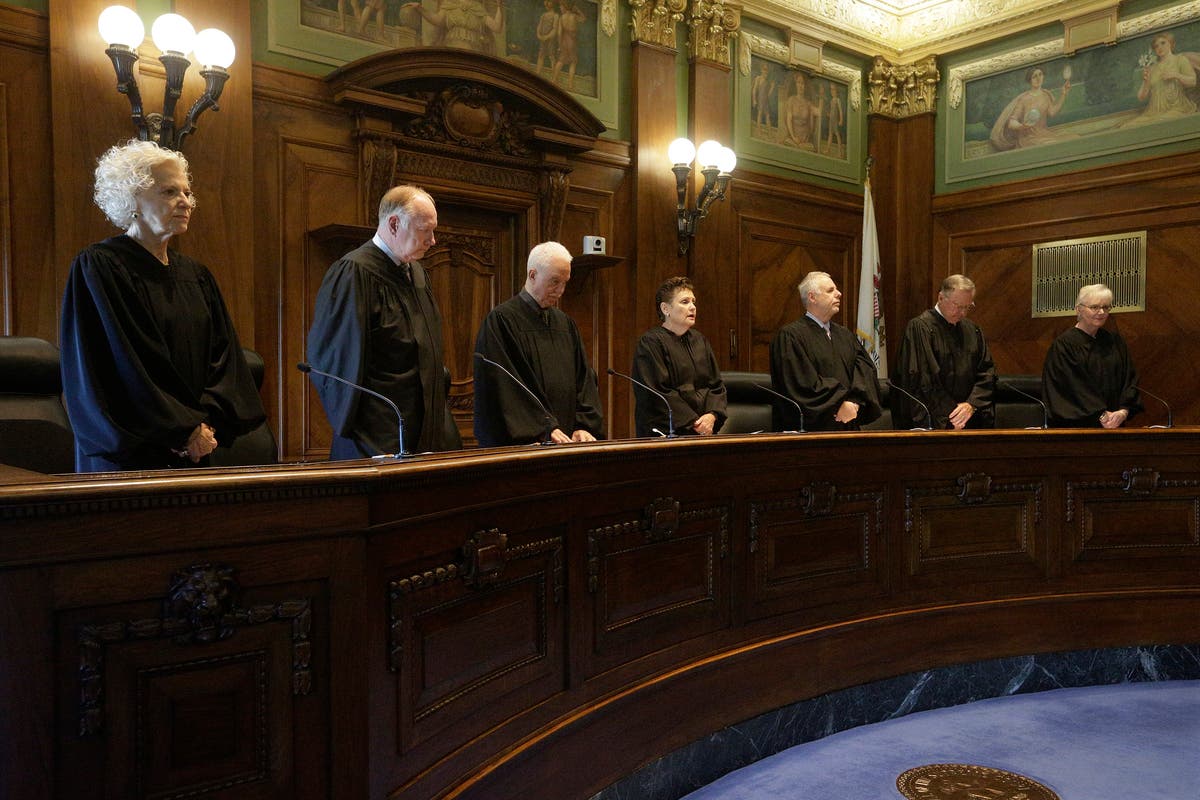
Top photo: Illinois Supreme Court Justices in October 2016 | AP Photo | Seth Perlman
Get more local news delivered straight to your inbox. Sign up for free Patch newsletters and alerts.