I have been in the process of writing a post about the Clarendon Hills Historical Society's efforts to raise funds. We have a Heritage Hall Transformation Fund Campaign at: www.gofundme.com/Heritage-Hall-Fund and a Daisy Cash Raffle under way. I then received the following letter from my fellow board member and long-time resident, Helen Justus. And I knew I could do no better than the following article she wrote about life before supermarkets. At the end of the article she writes her appeal and ticket information.
Chicago-Style Grocery Shopping B.S. (Before Supermarkets)
Find out what's happening in Hinsdale-Clarendon Hillsfor free with the latest updates from Patch.
By Helen Justus
In the olden days – but within living memory – grocery shopping involved a lot more physical activity than it requires today.
Find out what's happening in Hinsdale-Clarendon Hillsfor free with the latest updates from Patch.
For perishable goods, most people had ice boxes – wooden cabinets with a metal-lined top bin which could hold up to a 75 pound block of ice. A drain pipe led from the ice compartment to a pan at the bottom, hidden by a wooden toe flap, to collect the water from the melting ice. One soon learned not to forget to empty the drainage pan.
The ice man was a regular visitor. A card in the window indicated whether the homeowner wanted a 25, 50 or 75 pound block of ice. With a leather flap on his shoulder and a huge pair of tongs, the ice man made his deliveries. Little boys liked to snatch ice chips from the back of the wagon.
Refrigerators did exist, but most people could not afford them. Refrigerators, at the time, were metal cabinets standing on four legs with a circular motor cabinet on top. There were no freezer compartments.
Another door delivery was made by the milkman. His wagon was drawn by a very intelligent horse. While the milkman was delivering the milk, cream and butter to one house, the horse would move ahead to the next house to wait for the milkman and the empty bottles. Housewives left notes in the empty bottles with her milk order for the next delivery.
Another delivery man was the fruit and vegetable peddler. He didn't deliver in the winter. He drove his horse-drawn wagon through the alleys, calling in a loud, sing-song voice the fruits and vegetables that he carried. The housewives would come with pots and bowls to buy his produce.
Another workman that patrolled the streets but didn't sell anything would travel the streets with a little white push-cart and a brush and scoop. This was a much needed service in horse and buggy days.
Most people did not have cars, although there were a few, but very few women drove at the time. This meant that housewives needed to walk to get their errands done. There were many small bakeries in the neighborhoods. One could purchase a variety of breads, rolls, sweet rolls, coffee cakes, cookies, pies, cakes, donuts, éclairs, etc., at these shops.
Grocery stores sold baked goods too but with a more limited selection. Three kinds of breads were for sale -- white (Wonder and Silvercup), wheat and rye. White rolls, like present day hamburger and hot dog buns, were available too along with soda crackers, graham crackers and oyster crackers.
Meat was bought at butcher shops. The butcher cut off the section of meat that was needed from the carcasses hanging in the back room. Poultry and rabbits were live. You chose the one you wanted, and, a little later, it was waiting for you, ready to cook.
Many varieties of fish, lying on beds of crushed ice, were available to purchase at the fish shops.
Another shop sold coffee, tea and spices.
Grocery stores sold canned vegetables and fruits, jams and jellies, breakfast cereals, fresh fruit like oranges, apples and bananas, baking supplies like flour, sugar, yeast, syrups, molasses and honey. In winter, there were potatoes, cabbages, carrots, turnips and beets for sale. Pickle barrels were common and placed at a convenient spot in the stores. During the winter holidays, there were nuts and hard candies available, and some specialty cookies, not seen at the bakery shops like marshmallow cookies. These cookies were sold individually, and customers could pick out as many as they wanted. Packaged cookies, like vanilla wafers and ginger snaps, were also available but not chocolate chip. Chocolate chip cookies hadn’t been invented yet.
Shopping carts, as we know them, didn't exist. Items were collected and taken to the check-out counter. Every store had a large roll of white paper stationed at the counters. Items were wrapped in the paper and then placed in large paper bags – no plastics. Some people brought their own large cloth bags or brought little folding carts. Clerks jotted down the price of each item on a piece of paper, added up the purchases, entered the total in the cash register, collected the cash and handed back the change. No calculators to be found. Just good ol’ pencil and paper.
In Chicago’s Loop, there was a gourmet food shop called Stop ‘n Shop which had all kinds of exotic foods available as well as a larger selection of everyday foods. Housewives needed to take the street car or “el” to this store since it was located in Chicago’s business and retail district.
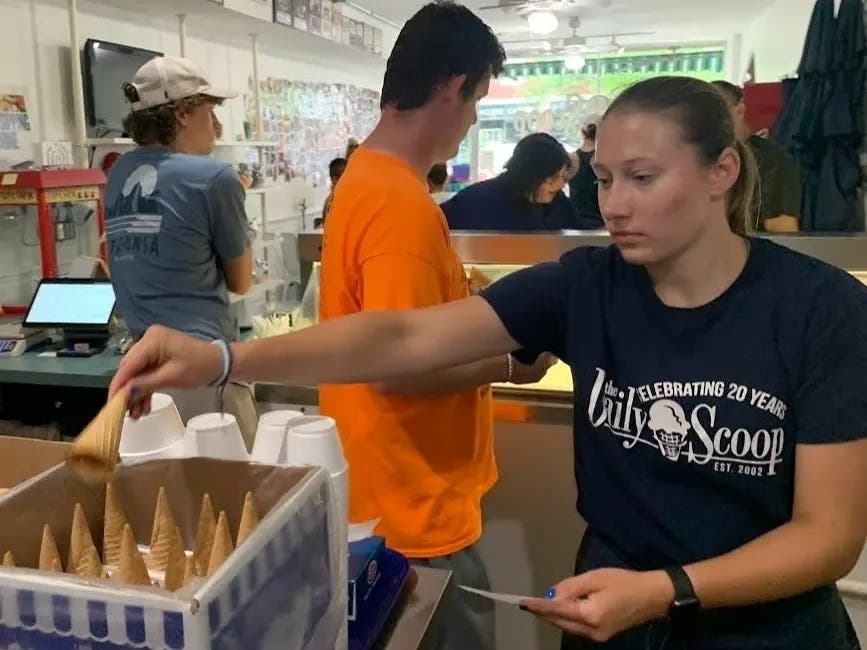
If you found this article informative and, possibly, interesting, please support the Clarendon Hills Historical Society. Daisy Cash Raffle tickets are available at the Clarendon Hills Library, the Clarendon Hills Bank, Ashley’s, the Daily Scoop, Starbucks and Clarendon Hills Hardware. Tickets are only $10 each, and three great cash prizes. The Drawing will take place Aug. 31st, 3:00 pm, at the Lions Park Pool. Winners need not be present.
I hope, after reading this wonderful remembrance you will buy a raffle ticket to help us collect, chronicle and house our village's rich history. In addition to those mentioned by Helen, tickets will also be available at the Lions Park Pool on weekends. Look for our table or call me for tickets at 630-915-5009.