Neighbor News
Could Your Child’s Struggle with Reading and Learning be Due to an Undiagnosed Vision Problem?
College of Optometrists in Vision Development, COVD, answers questions about why some children are struggling with reading and learning.

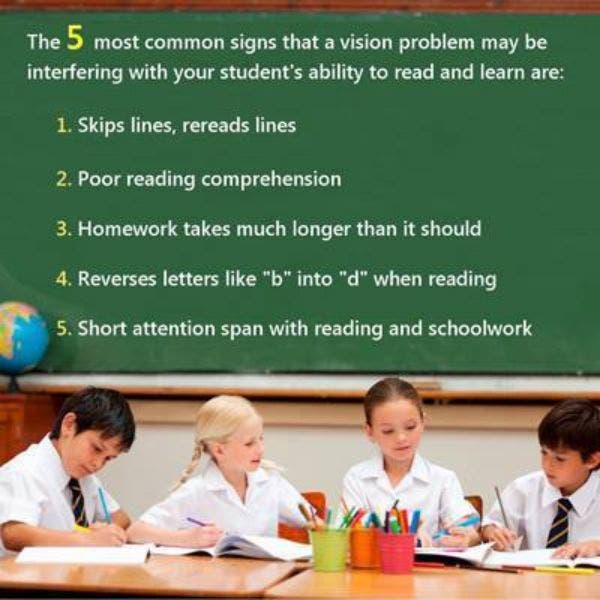
“Whether it is the mystery of the bright child who struggles with reading or the child who takes forever to do homework, the story is often the same,” shares Ida Chung, OD, FCOVD, President of COVD, “these
children continue to struggle until the underlying vision problem is identified and treated.”
Dr. Chung knows firsthand what it is like to struggle with reading because of her own unidentified vision problem. “I remember going to parent-teacher conferences with my mother so I could translate what
the teacher had to say. And I remember the teacher saying ‘you have to get your daughter to read more; have her read 20 minutes a day.’ So my mother began the nightly ordeal of forcing me to read for 20 minutes. I
couldn't wait for those 20 minutes to be over because I just didn't like reading.”
Even though Dr. Chung’s mother took her for yearly eye exams, it wasn't until she was in her first year of optometry school that her vision problem was identified and finally treated. She had an eye coordination disorder, convergence insufficiency, which is very common. The actual symptoms will vary depending on
how severe the disorder is, but convergence insufficiency can make reading nearly impossible. Dr. Chung shares, “After a program of optometric vision therapy, I was able to read faster and found it more enjoyable.”
Find out what's happening in Hinsdale-Clarendon Hillsfor free with the latest updates from Patch.
While most vision screenings are not designed to test for eye coordination and eye movement disorders, one of the more common reasons these vision problems are missed is because they can easily be mistaken for behavior problems, attention problems, and even learning disabilities.
Another example of an undiagnosed vision problem is shown in the story for Jayden Catarra. “As a parent, when teachers are constantly saying your child is distracted, unorganized, unable to stay on task,
disruptive, etc... your instinct is that it is a ‘behavior’ issue and not a physiological issue,” shares Corrie Catarra. “My son, Jayden, could see... he didn't need glasses (according to the first eye doctor
we saw) and the concept that his eyes could be the issue was hard for us to comprehend.”
Find out what's happening in Hinsdale-Clarendon Hillsfor free with the latest updates from Patch.
“Jayden had a terrible time doing homework. We dreaded homework time with Jayden,” Mrs. Catarra continues. “When he would come home from school he would have to take some time to ‘re click’ as I called it.
Most kids would come home and do their homework right away so that they could play. Jayden HAD to play first. He needed time away from academics until after dinner. Then homework that took his peers about an hour to do would take him 2 or 3 times as long... depending on how his day went. He was very capable of doing the work but he was exhausted and often unable to stay focused without getting overwhelmed.”
Fortunately for Jayden, one of Mrs. Catarra’s co-workers had a daughter with a similar problem. Her co-worker found that optometric vision therapy made all the difference for her daughter, so Mrs. Catarra decided to give it a try.
Mrs. Catarra shares that after completing vision therapy, “The classroom setting is definitely easier for Jayden now that he can copy things off the board easily, stay on task, and track the teacher. Since he is able to keep up with the class his confidence and self-esteem have soared. He is able to complete homework as soon as he gets home with very little frustration. He is able to watch an entire movie without losing interest and yes... he is better at video games now!”
Locally, Dr. Monika Spokas, a Developmental Optometrist at Clarendon Vision Development Center in Clarendon Hills, is an expert in vision development. She offers a comprehensive functional vision exam for those students who struggle with reading, comprehension, learning and even the ability to pay attention. This exam includes tests for eye coordination and eye movement disorders which may be the root cause. Treatments including vision therapy are then prescribed to remediate the vision difficulties, clearing the way for more efficient reading and learning.
About Dr. Monika Spokas, Developmental Optometrist
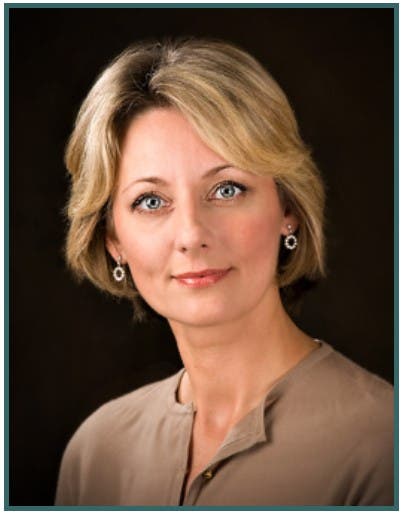
Dr. Monika Spokas is a clinical director of Clarendon Vision Development Center. She has completed extensive post-graduate studies in vision development, vision therapy and visual rehabilitation therapy. Her clinic specializes in diagnosing and treating vision problems which stand in the way of a child ability to read, to learn, to comprehend and even to pay attention. Dr. Monika Spokas is a member of the American Optometric Association, the American Academy of Optometry, the Neuro-Optometric Rehabilitation Association and the College of Optometrists in Vision Development. For more information call 630-323-7300 or visit www.ClarendonVision.com
About COVD
The College of Optometrists in Vision Development (COVD) is an international, non-profit optometric membership organization that provides education, evaluation, and board certification programs in
behavioral and developmental vision care, vision therapy, and visual rehabilitation. The organization is comprised of doctors of optometry, vision therapists and other vision specialists. For more information on
learning-related vision problems, vision therapy and COVD, please visit www.covd.org